With the rapid rise of AI, brands are no longer merely experimenting. They are working to balance innovation with business outcomes. They are using AI to deliver brand value, amplify creativity and fuel measurable growth at enterprise scale. The question is not if a company should use AI but rather how to weave it into their DNA without losing the human why.At a recent roundtable, Cecilia Garzella, data editor at Campaign US, sat down with brand, agency and media leaders to explore the pivot from using AI-powered tools for one-off tasks to building an AI-centered organization.Participants included Gil Blattner, group VP, client partner, Razorfish; Ameetess Dira, CMO, Petzey; Will Ferguson, chief growth officer, Razorfish; Lori Goode, CMO, Index Exchange; Ali Gwin, head of product marketing, The Weather Company; Mac Hagel, president, head of media at Razorfish; Jason Harvey, EVP and GM at BET+; Yadira Harrison, cofounder, Verb; Jenny Huang, director, B2B brand marketing, USA Today; and Sol Medvidofsky, senior manager, marketing, CRM, Silversea Cruises.The path to integrationThe transition from being AI-powered to AI-centered begins with a fundamental shift in infrastructure. For many leading organizations, AI is already deeply embedded in the business process.“We have so much AI capability in our product and infrastructure,” Goode said. “Machine learning and everything that we need to process an excessive amount of data requires AI.”For agencies, the focus is currently on standardization and upskilling. Razorfish, for example, is driving a common protocol language to ensure systems remain operable. To support this, it offers bootcamps on the art of prompting and mandatory weekly sessions. “Nobody is an expert but it's a learning practice so we try to do knowledge sharing,” Hagel said.While every organization is at a different stage of readiness, “the three most important things are efficiency both for us and our clients, innovation for us and our clients, and then platform,” Ferguson emphasized.(L-R) Sol Medvidofsky, Jenny Huang, Cecilia Garzella, Yadira Harrison and Will Ferguson. (Photo credit: Anna Barnat for Haymarket Media)Solving for signal qualityA significant hurdle for heritage companies is years of accumulated, siloed data. Moving to an AI-centered model requires a concerted effort to unify disparate signals into a single data stack.The AI infrastructure enables smarter business decisions. By bringing first-party data into one stack, BET+ created nonlinear autoregressive exogenous models (NARX) to optimize marketing span. “We do gradient-boosted decision trees to help us understand which subscribers have the propensity to churn and then we push those scores into our CRM to prevent people from leaving and roll them back,” Harvey explained. For attribution, they employ the Markov Chain.However, data migration remains a challenging process for most organizations. “It's the historical data that we have from prior platforms and getting it cleaned up with the data taxonomy and usable in our new platforms,” Medvidofsky explained.Agility in a rapidly evolving marketWith approximately 95% of generative AI pilots failing to take off, many organizations are facing tool fatigue. In this environment, leaders argue that agility is more important than finding a single, perfect solution.Building proprietary tools that fit into existing workflows can enhance human output. “It’s about having that amazing tool that is only from our brains and our foundation that then can churn out things a little faster and ideally cheaper for our clients,” Harrison said.Brands should embrace the “messy middle” rather than wait for the perfect tool that may soon become obsolete. “I think we're going to be stuck in the messy middle for a number of years before saying, as a company, this is the one tool we're aligning on,” said Goode. “If I wait for perfect, we’re a million years behind,” she continued. “I want us to be agile; I want to keep testing even if it means that we’re going to transition again.”The output paradox and the human whyWhile AI increases efficiency, it has created a paradox: a massive increase in output that doesn’t always translate into more strategic time. “We thought we would have more time to work on strategy but it's almost all gone into output,” Medvidofsky said. “We’re doing way more now. It’s almost a race to the bottom at this point.”In practice, “efficiency and speed should be aspirational byproducts of an outcome that’s being delivered versus the goal,” Blattner said.However, AI has helped pave the way for unprecedented personalization. “I only want you to get content from me that is relevant to where you are, what kind of animal you have and what life stage,” Dira said. “Before that would have been ridiculously expensive and we didn’t have the budget, the resources or even the brain space to do something like that. Now it’s possible.”Creating personalized AI solutions requires a strong foundation. “Everything starts with audience and connectivity, and AI lives as this decision engine over everything,” Ferguson explained. “You’re only as good as what’s underneath, the data and the infrastructure.”Despite AI’s ability to help predict behavior, the technology still fails to explain consumer motivation. “AI is really good at the what and the when, even the how, but it doesn't get the why,” Harvey said. BET+ supplements AI’s analysis with monthly surveys, focus groups and social sentiment to gain a deeper understanding of behavior.Decision intelligence and empathyOrganizations need to employ AI for “decision intelligence” or the ability to understand the deeper context behind data. For example, the integration of health, sales and neuroscience data helps The Weather Company understand why a 50°F day in Miami triggers different consumer behavior than the same temperature in Chicago.“Human over the loop is really important,” Gwin explained. “We’re ultimately trying to reach people, but it’s not just about getting eyes on a screen—it’s about maintaining the empathy that technology can’t replicate.” This is a common sentiment among leaders. “Human intervention and creativity should still prevail over everything that you create using AI,” Dira added.In the future, the competitive advantage will not be defined by those with the most tools, but by those who have the best systems for change. “The companies that don’t lose their imagination will always win,” Harrison emphasized.Change is inevitable. “But if you’ve built the process and the system and the people around you to understand that, then you’ll be ready for it and you’ll be flexible enough to move on to the next,” Ferguson said.While technology enables more innovative solutions, humans provide the curation. “None of this machine stuff means anything without taste and curation and understanding all of that why,” Medvidofsky concluded. “AI is just a collection of everything we’ve done; it doesn’t originate; it’s like the poet versus parrot.”
From AI-powered to AI-centered: Moving beyond one-off use cases
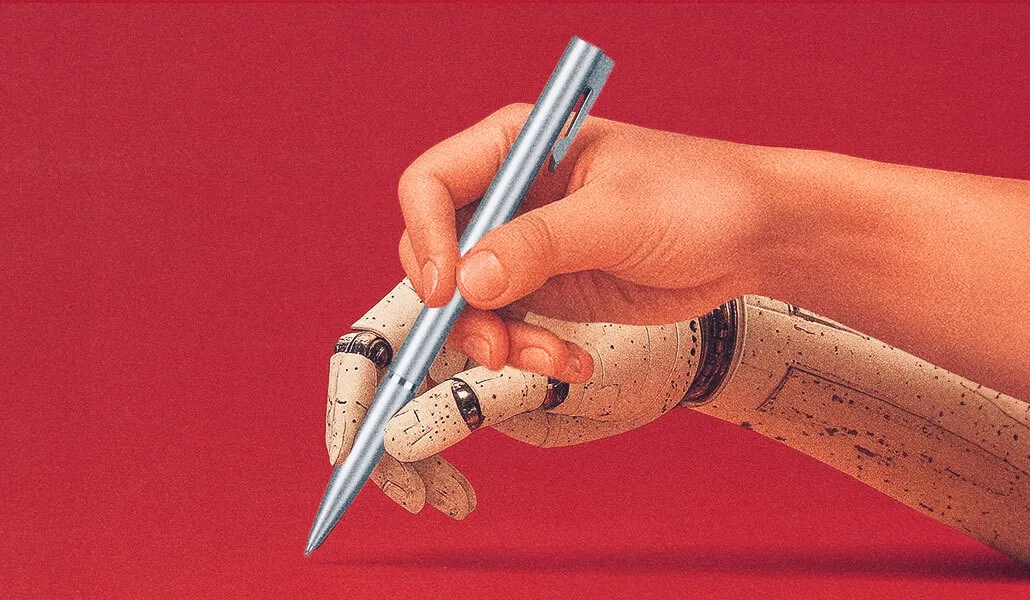
How brands are shifting from experimental tools to building a marketing infrastructure for an AI-first future.
1,087 words~5 min read