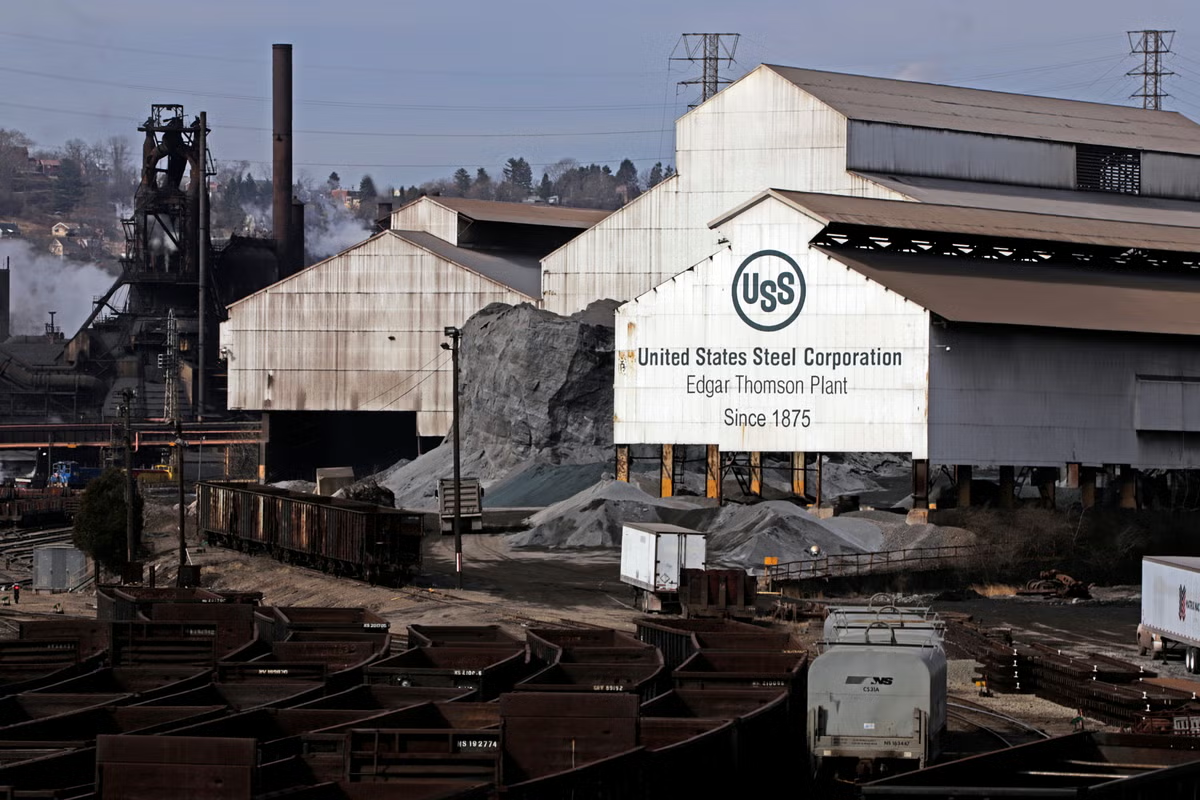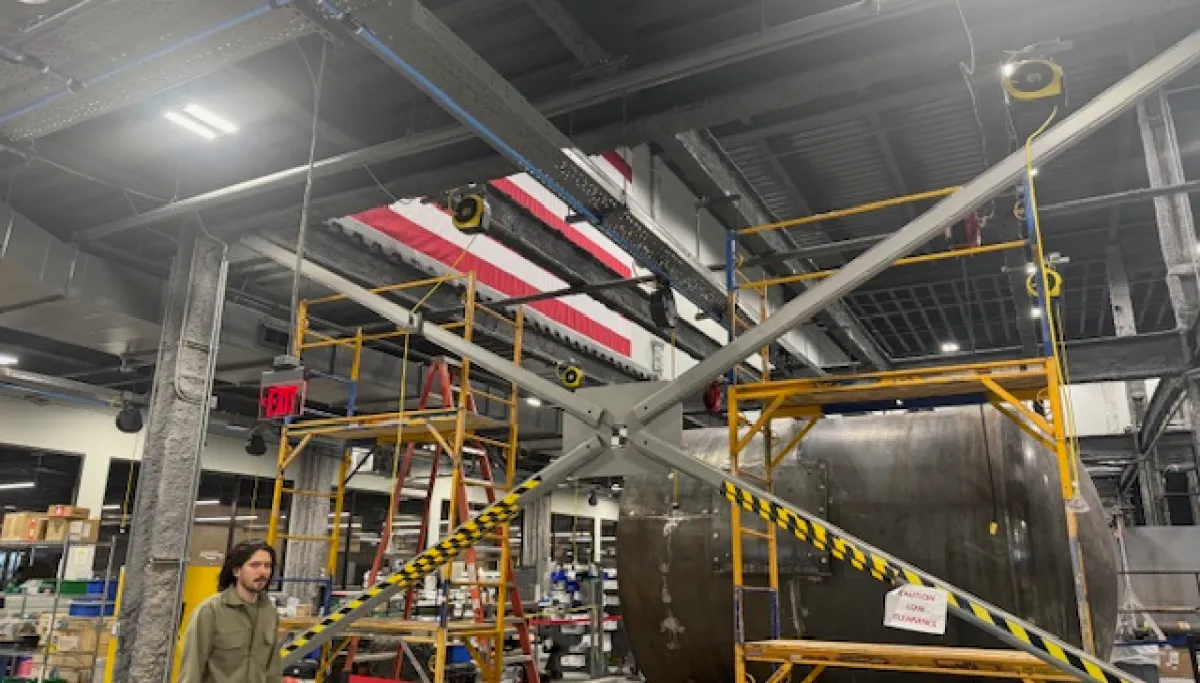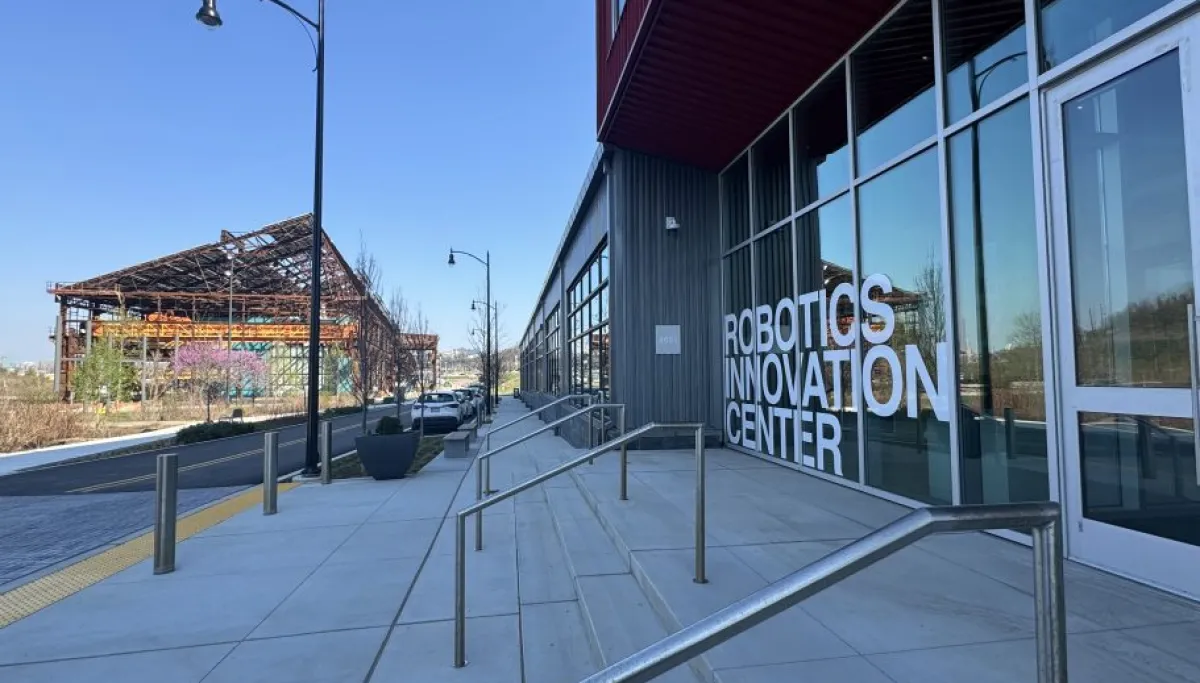
PITTSBURGH, Pennsylvania — The familiar hum of a coal barge pushing the region’s black gold up the Monongahela River holds the same low rumble it did a century ago, softly echoing through the valley towns where steel once defined the American identity. But follow the Monongahela River just upstream from Pittsburgh, toward the historic Hazelwood Green site, and the landscape begins to change. This was once the home of the Jones and Laughlin Steel Company, a sprawling 178-acre industrial complex that began producing iron and steel in 1887. For generations, its rail lines, blast furnaces, and mills helped power America’s industrial rise.Today, several of the site’s massive rust-colored steel skeletons still stand, most notably Mill 19. For decades, they loomed over the riverfront like sentinels from another age, waiting to be useful again. Now they are. As part of Carnegie Mellon University’s new Robotics Innovation Center, the old mills are being reborn, and the sharp scent of hot steel is giving way to the rhythmic whir of robotic joints.
Here, Pittsburgh workers forged much of the steel that helped meet America’s World War II demands and later built the roads, bridges, factories, and suburbs of the postwar boom. But after the steel collapse of the 1980s hollowed out city neighborhoods such as Hazelwood and river towns throughout the valley, this once-mighty industrial space sat waiting for a new purpose. Now it has one.It is the birthplace of a new American renaissance. Pittsburgh is quietly cementing its status as the Silicon Valley of Appalachia, anchoring a new industrial revolution by marrying blue-collar trades with high-tech intelligence and high-stakes military strategy.The industrial convergence