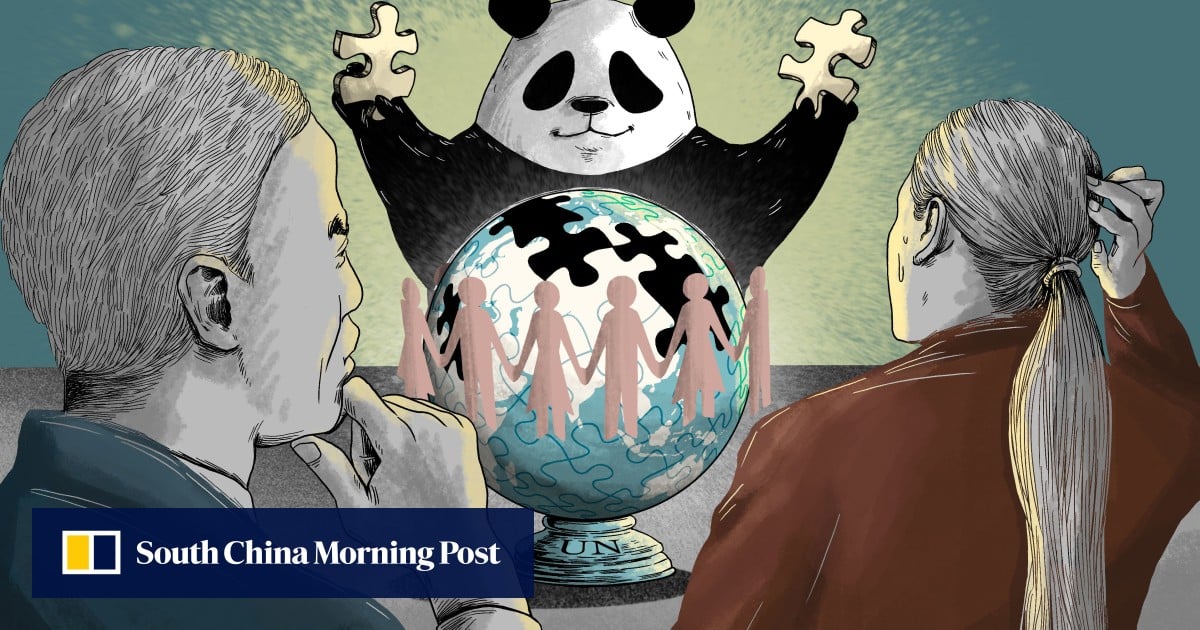
‘A close reading of China’s diplomacy shows that it is not simply defending the post-war order. Rather, it is selectively revising it’
| Photo Credit: Getty Images/iStockphoto
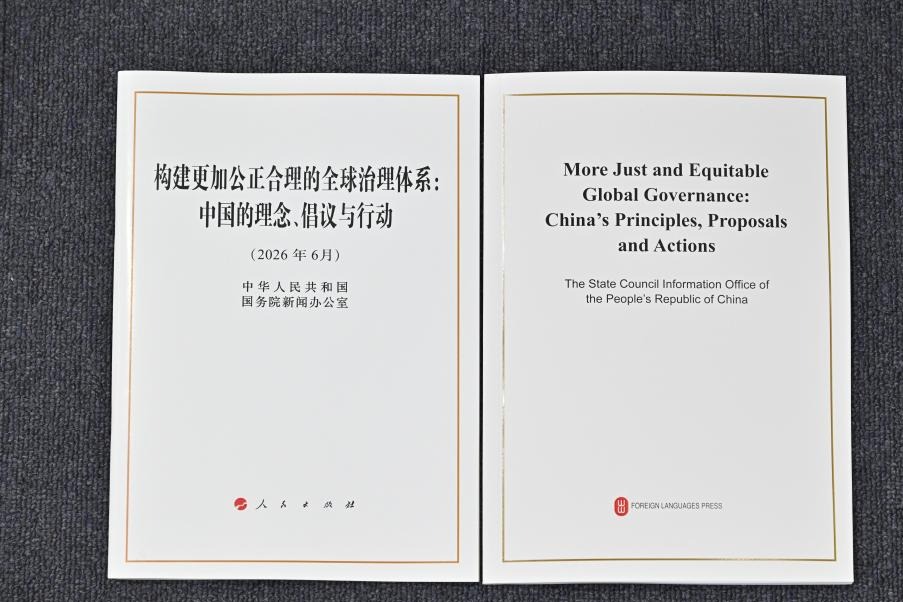
The sheer destructiveness of American foreign policy under United States President Donald Trump is obscuring a quiet but consequential shift in global politics. Mr. Trump’s Liberation Day tariffs, the disastrous war against Iran, and systematic alienation of allies and partners have dominated headlines and consumed diplomatic bandwidth. And rightly so. The U.S., architect of the post-war international order, is now taking a machete to the very frameworks it built. But the chaos emanating from Washington is drawing attention away from what China is doing with the space this creates.The Chinese alternativeLast week, Beijing released a white paper on global governance, which offers a systematic articulation of how it is reshaping the world order. As expected, the paper presents China as a defender of the international system, warning that humanity must not be allowed to return to “the law of the jungle”. Beijing argues that it has paid its United Nations dues ahead of schedule in 2025; it has backed the restoration of the WTO’s Appellate Body; and its four global initiatives are a demonstration of its responsibility as a great power. This is not, however, the full picture. A close reading of China’s diplomacy shows that it is not simply defending the post-war order. Rather, it is selectively revising it, largely preserving the institutional scaffolding while quietly rewriting the normative substance that gives it meaning.Understanding this requires disaggregating the international order into two dimensions: the institutional and the normative. The institutional order comprises the UN system, the Bretton Woods institutions, and the multilateral architecture built in the years following the Second World War. The normative order encompasses the principles that animate these institutions, from Westphalian norms of sovereignty and non-interference to liberal norms of human rights, democratic governance, free markets, and the rule of law. On the institutional front, Beijing is deeply invested. It is the second-largest contributor to the UN budget, having raised its share of the UN regular budget from under 1% in 2000 to over 20% in 2025, a proactive participant in WTO reform, and a builder of complementary institutions such as the Asian Infrastructure Investment Bank, the New Development Bank, and the Shanghai Cooperation Organisation. These are not designed to replace the existing system but to expand China’s authority within it while creating parallel platforms that advance its agenda. This is institutional revisionism, not revolution.Normative ambitionsThe real action, however, is in the normative domain, where China’s ambitions are far more transformative. Beijing’s four global initiatives —on development, security, civilisation, and governance — collectively represent a sustained campaign of norm entrepreneurship. Individually, each sounds benign. The Global Development Initiative links itself to the UN Sustainable Development Goals. The Global Civilization Initiative (GCI) calls for respecting civilisational diversity. The Global Security Initiative (GSI) emphasises sovereignty and non-interference. And the Global Governance Initiative explicitly says that reform “does not mean to overturn the existing international order”.But look closer. The GSI’s emphasis on taking “legitimate security concerns of all countries seriously” has been operationalised to dilute Ukraine’s sovereign right to choose its own alliances, a position that conveniently serves Beijing’s broader interest in weakening the North Atlantic Treaty Organization. The GCI’s call for diverse interpretations of universal values is, in practice, an effort to recast human rights as culturally contingent rather than universal, shielding authoritarian governance from scrutiny. And China’s redefinition of democracy in explicitly outcome-based terms, where legitimacy derives from material delivery rather than political participation, institutional independence, or accountability, represents a fundamental departure from liberal norms.Meanwhile, China’s own behaviour reveals the limits of its professed commitment even to the Westphalian norms it champions. In the South China Sea, it rejected the 2016 Permanent Court of Arbitration ruling as “null and void”. Along its borders with India and Bhutan, periodic standoffs persist. The Belt and Road Initiative, while framed as development cooperation, has often blurred the line between external partnership and internal influence in recipient states.A different worldSeen in this light, what emerges is a picture not of a revolutionary power seeking to torch the existing system, but of a sophisticated selective revisionist — one that preserves the institutional architecture it finds useful while systematically hollowing out the normative foundations to align with its objectives. Beijing supports sovereignty when it suits its interests and dilutes it when it does not. It endorses multilateralism in trade while practising selective openness and securitisation at home.This matters enormously at a moment when reckless American policies appear to be making Beijing’s revisionism seem palatable to many. The risk is not that the institutional order collapses. Both Washington and Beijing, for different reasons, remain invested in its survival. The risk is that the principles animating that order are gradually redefined in a way that undermines the sovereign equality of states, weakens civil society and individual rights, and erodes the rule of law. This is a future that does not align with India’s strategic interests.Manoj Kewalramani is the Chairperson of the Geostrategy Programme at the Takshashila Institution Published - June 23, 2026 12:08 am IST