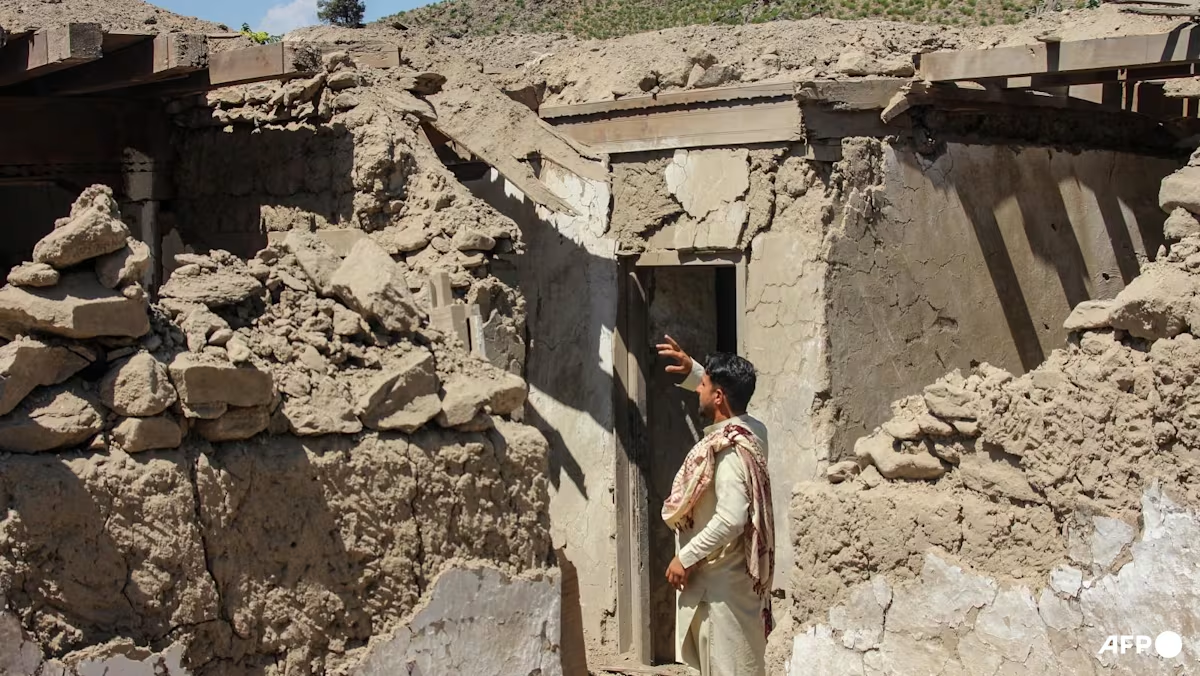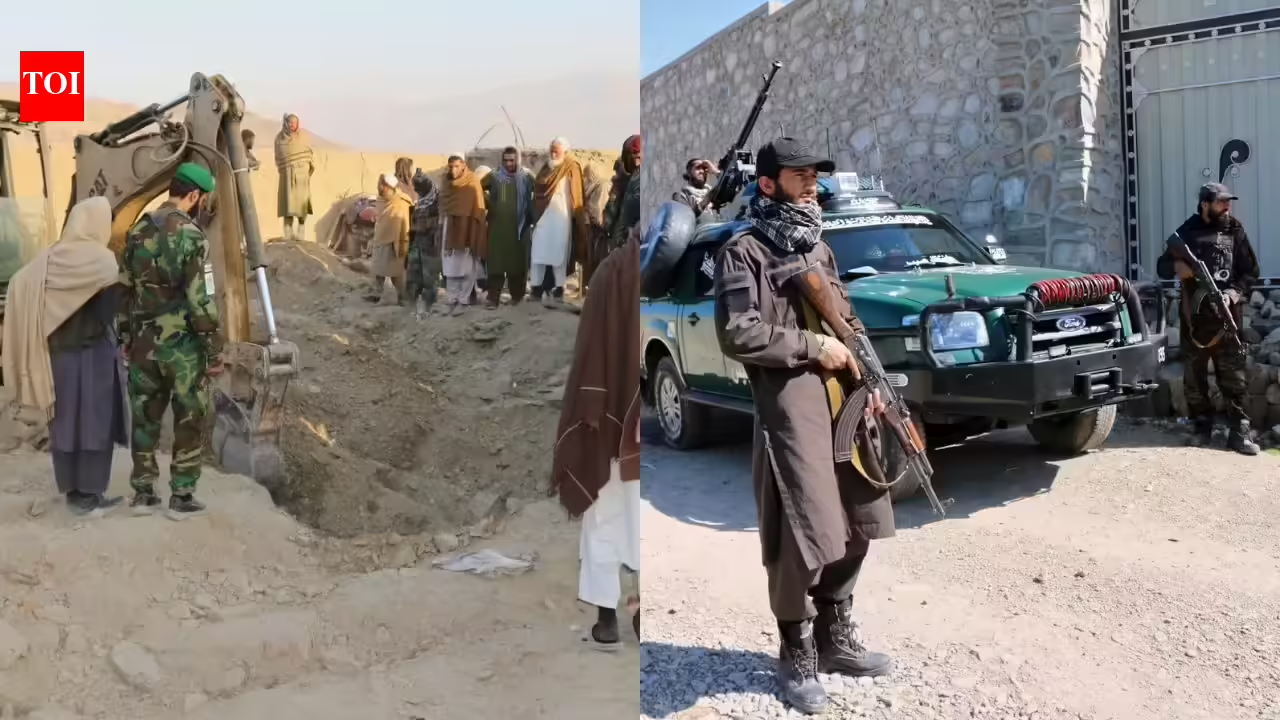
Pakistan’s campaign against militant networks operating from Afghan territory appears to be entering a new phase. Over the past several months, Pakistani security forces have increasingly targeted not only militants responsible for attacks inside Pakistan, but also the broader infrastructure that supports them. Airstrikes in Nangarhar, Khost, and Paktika in February 2026, the launch of Operation Ghazab lil-Haq, and precision strikes in Khost, Kunar, and Paktika in June 2026 all signaled a shift from reactive defense toward a more proactive campaign against militant networks operating along the Afghanistan-Pakistan frontier.
The pressure comes as Pakistan faces a worsening security environment. The Tehreek-e-Taliban Pakistan (TTP) continues to conduct attacks across Khyber Pakhtunkhwa and the former tribal areas. The Balochistan Liberation Army (BLA) has demonstrated an increasing ability to coordinate large-scale operations in Balochistan, including its Herof 2.0 campaign. Islamic State Khorasan Province (ISKP) remains active on both sides of the border, presenting a separate but overlapping challenge.
While these organizations differ in ideology, objectives, and operational methods, they share a common requirement: access to terrain, facilitators, safe houses, logistics networks, and transit routes connecting Afghanistan’s border regions to operational areas inside Pakistan. While the Taliban’s relationship with these organizations differs significantly, Pakistan’s efforts to disrupt cross-border movement affect all of them.