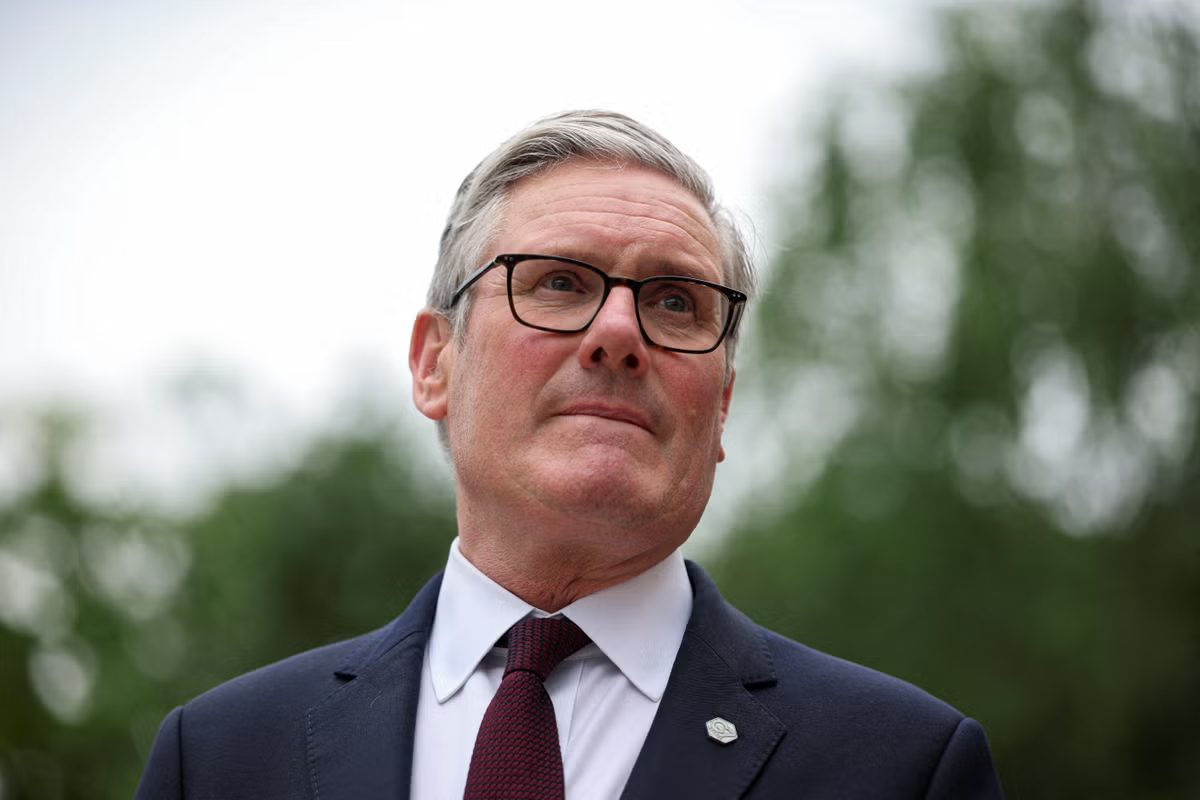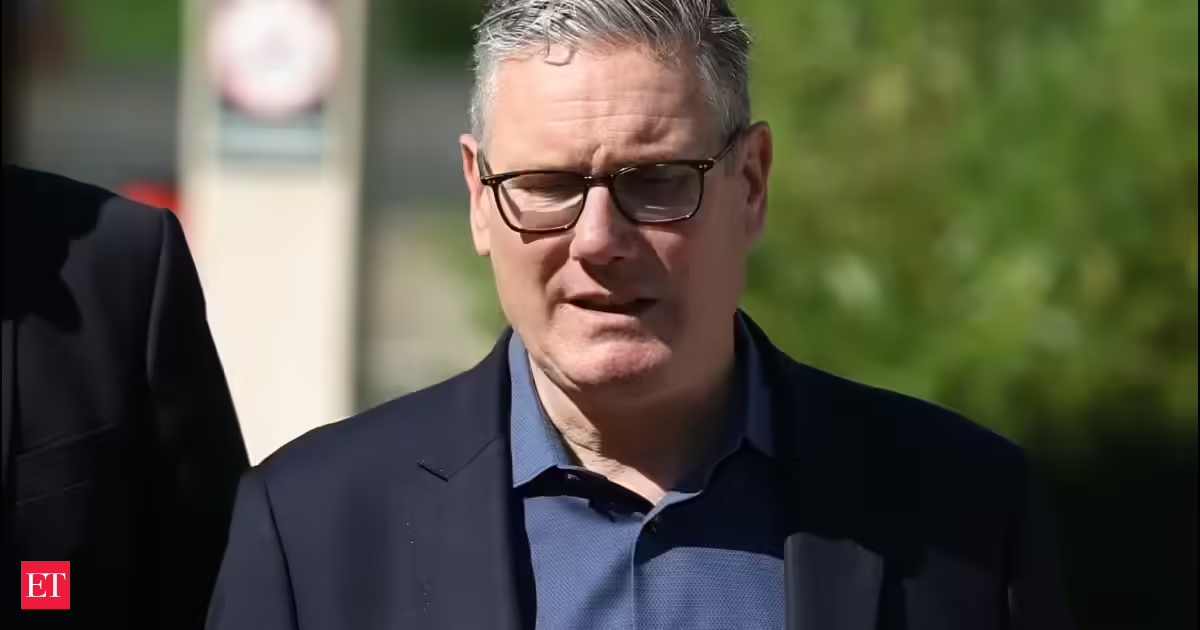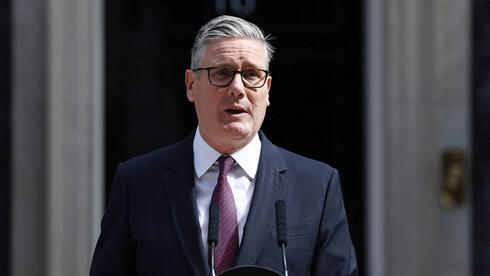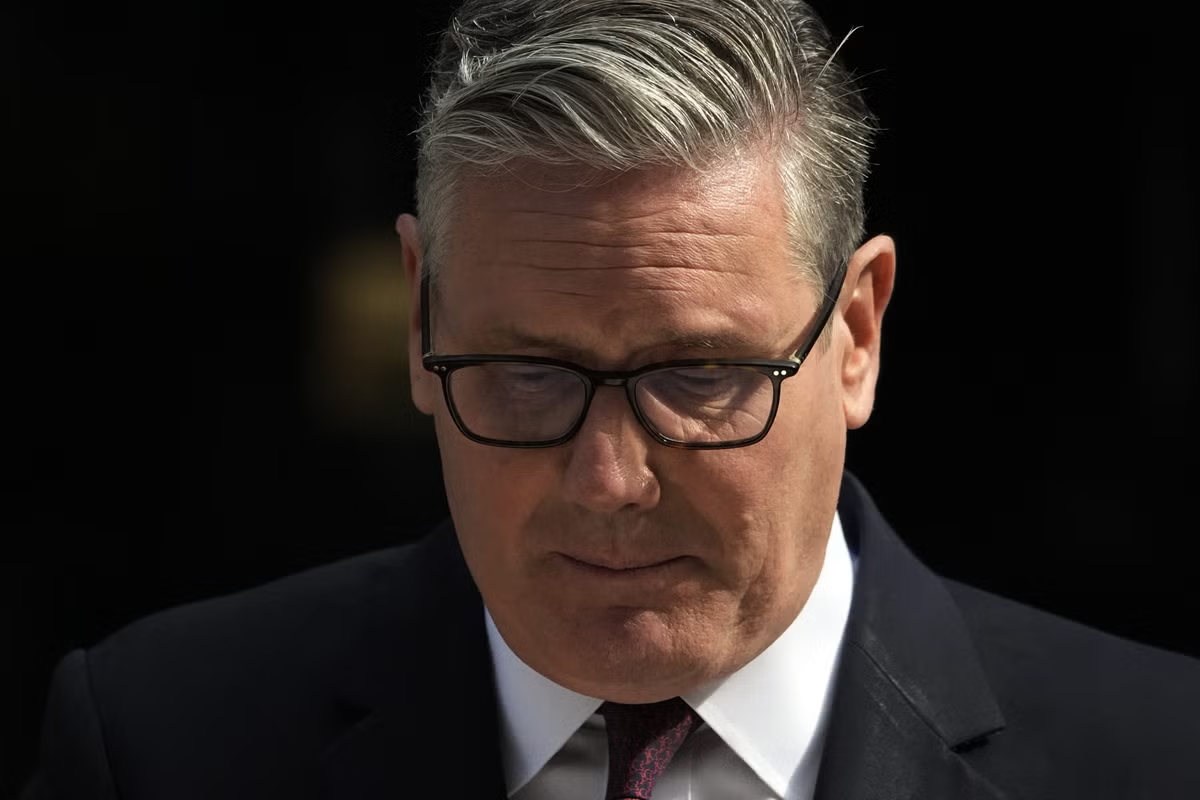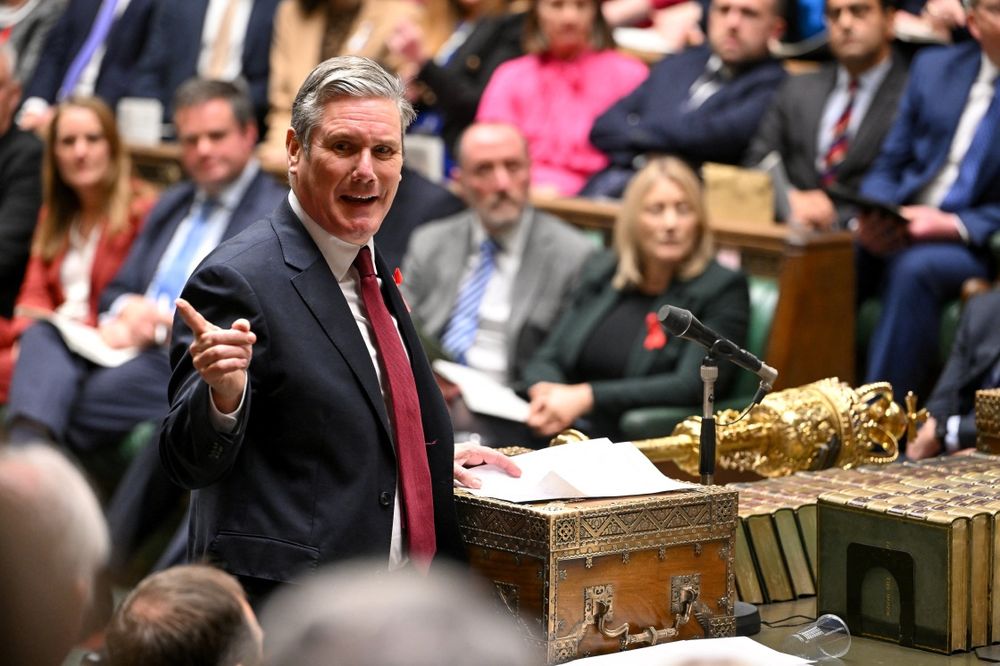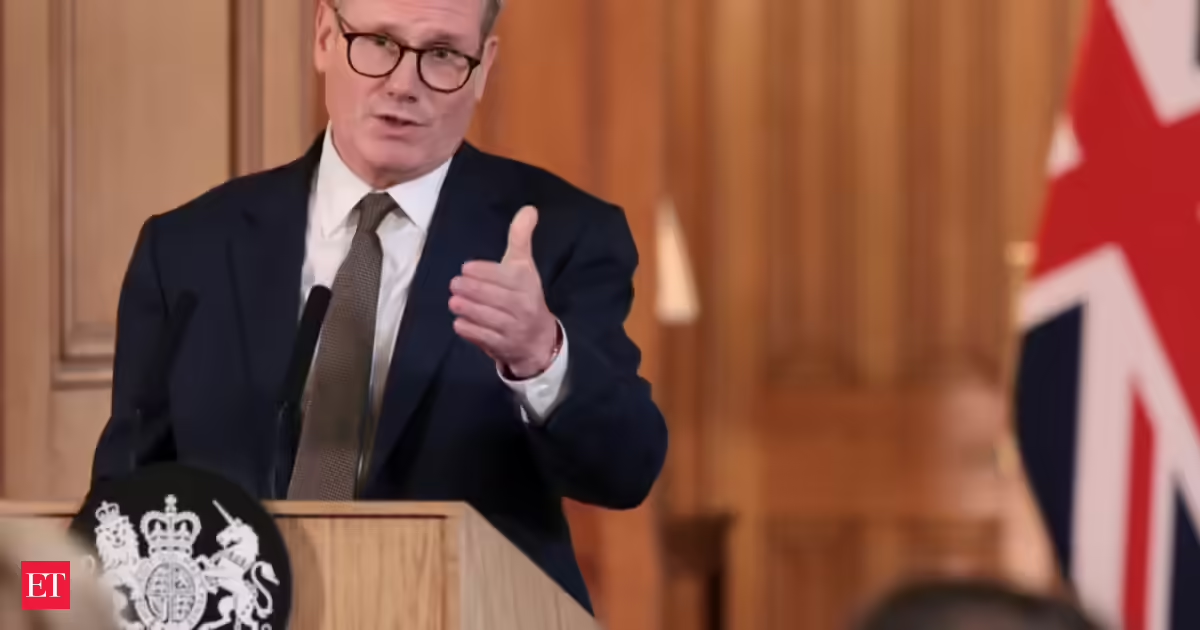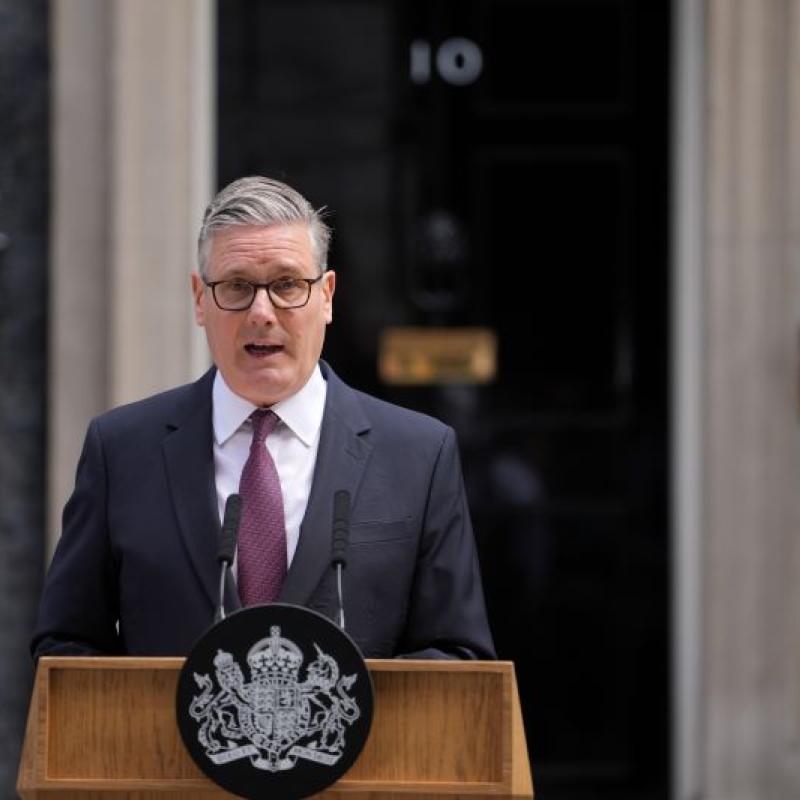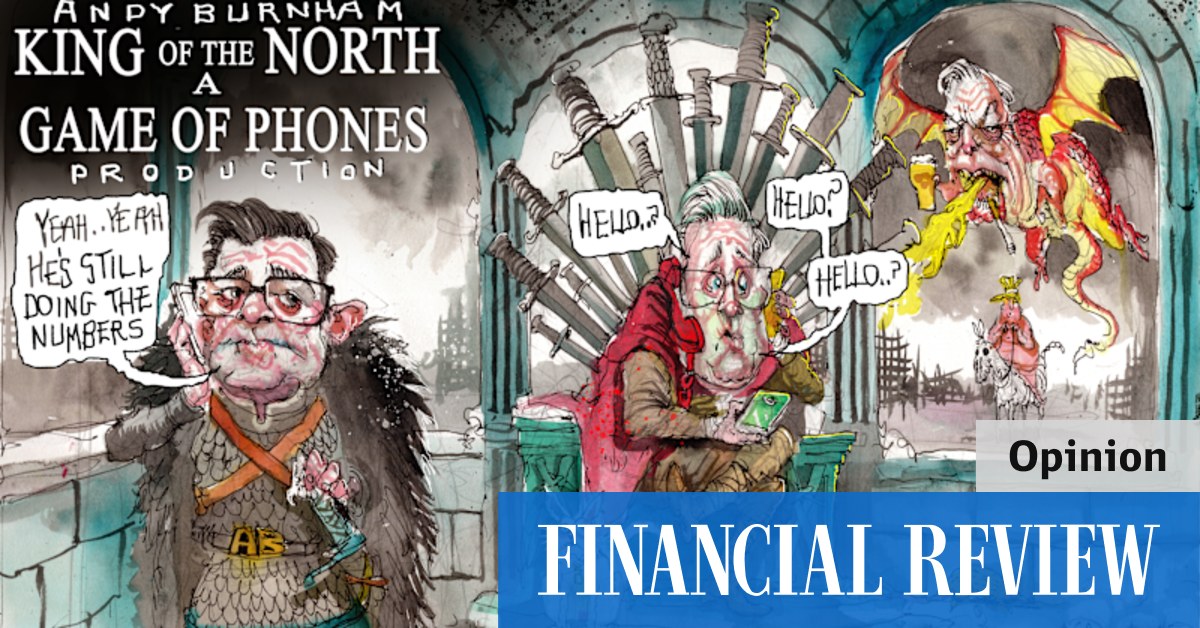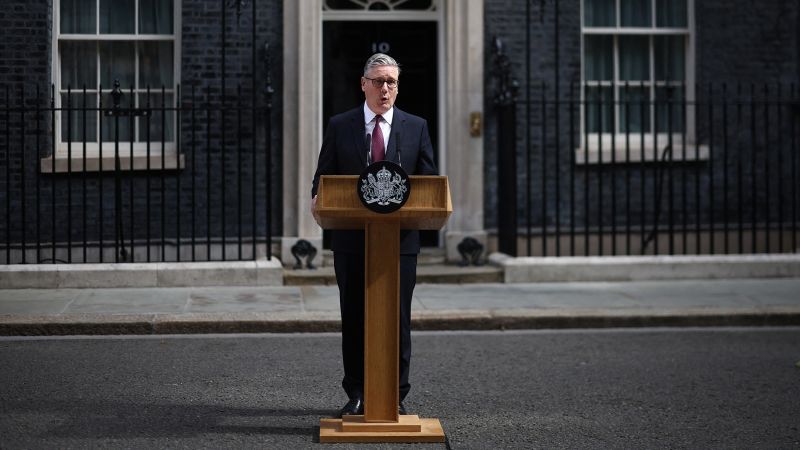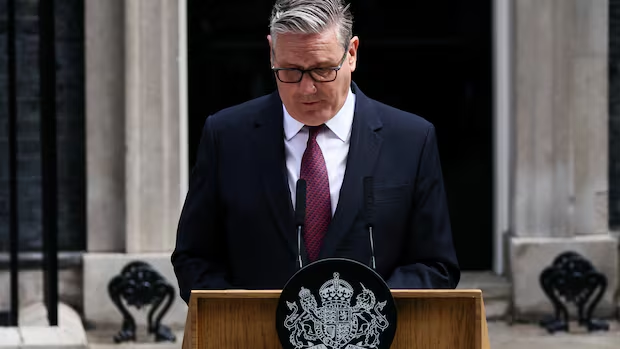
The silence over the weekend from Prime Minister Keir Starmer’s front bench was both deafening and telling. Barely a single member of Starmer's cabinet emerged to publicly implore the embattled leader to remain at his post — not even two years after he led a historic election win, and with his job on the line and adversaries circling.By the time Monday morning rolled around, and the familiar wooden podium was moved outside the iconic door of the prime minister's residence at 10 Downing Street, that silence foretold the decision that had essentially been forced on Starmer. “The question my party is asking now is whether I am best placed to lead us into the next general election,” he said. “I have heard the answer of my parliamentary party to that question. And I accept that answer with good grace.”Starmer said he will remain as caretaker prime minister throughout the summer, until his party can organize a leadership convention — which is already looking more like a coronation for Andy Burnham, Greater Manchester's long-time mayor who was just re-elected to Parliament on Thursday.Starmer’s resignation “marks the beginning of a transition,” Burnham posted on social media. "I will put myself forward as part of this process."WATCH | Starmer's resignation remarks:U.K. PM Keir Starmer is resigning: Hear some of his speech from 10 Downing Street4 hours ago|Duration 2:48British Prime Minister Keir Starmer says he will step down as leader of the Labour Party. Starmer, who informed King Charles of his decision Monday morning, says he will stay on as prime minister until the contest to choose his successor is complete.Striking downfallWhile Starmer’s leadership has been under scrutiny almost since Day 1, the speed of his downfall is nonetheless striking.Knighted for his long years heading up the country’s public prosecution service and praised for his tenacious work before that as a humanitarian lawyer, Starmer projected a capable confidence on the opposition benches. Taking over from the polarizing Jeremy Corbyn, who was on Labour’s hard left, Starmer presented Labour as a moderate, centrist party. He promised to bring stability to Britain after the turbulence of Brexit, the COVID-19 pandemic and the implosion of the Conservative Party, which burned through four prime ministers in short succession. Starmer was rewarded with a huge majority, decisively ending 14 years of Conservative rule. He won an impressive 411 seats, increasing Labour’s benches by a remarkable 209 MPs.Keir Starmer, leader of Britain's Labour Party, and his wife Victoria Starmer greet supporters as they celebrate his win in the election at the Tate Modern in London in July 2024. (Suzanne Plunkett/Reuters)“I think the thing that the prime minister will be remembered for is the way that he rescued the Labour Party from the grip of the hard left and turned things around so spectacularly,” James Lyons, a former senior advisor for Starmer, told BBC.Starmer perhaps had his greatest successes on the foreign policy front, managing a difficult relationship with U.S. President Donald Trump and being a strong backer of Ukraine. But domestically, Starmer struggled to articulate a resonating narrative.British Prime Minister Keir Starmer to resign, will stay on until successor chosen this summerLabour's Andy Burnham wins byelection, setting up showdown with Keir Starmer to lead BritainHis plans to claw back more than five and half billion pounds from the welfare budget enraged many Labour MPs, triggering a rebellion that ultimately forced him to back down. He also backtracked on a pledge to cut tuition fees and watered down a commitment to move the U.K. away from oil and gas production. Especially damaging was Starmer’s appointment of Peter Mandelson as U.S. ambassador. WATCH | Mandelson arrested in Epstein-linked probe:Former U.K. ambassador to U.S. arrested in misconduct probe linked to EpsteinFebruary 23|Duration 4:15British police have arrested Peter Mandelson, former U.K. ambassador to the U.S. and an instrumental figure in the country's politics. Mandelson is under investigation over documents suggesting he passed sensitive government information to Jeffrey Epstein in 2009.Starmer fired Mandelson after revelations in the Jeffrey Epstein files indicated the latter had a much closer relationship with the convicted sex offender than he had led people to believe. Still, observers blamed the prime minister for ignoring warnings from the civil service about Mandelson’s background and many backbenchers believe he should have seen the problems coming.Even when Starmer succeeded — such as with reducing immigration and stemming the flow of migrants arriving in the U.K. via small boats across the channel — he seemed unable to leverage those wins into greater political capital.Decisive blows“Starmer’s biggest failure was in communication,” said Alex Prior, with London South Bank University. “Tough political decisions need to motivate people with an effective story. Starmer never delivered one.”Battered from the political right by the far-right Reform UK and the left from a resurgent Green Party, many in Labour lost faith that Starmer could course-correct in time for the next U.K. election, still three years away.Local elections in May proved to be the decisive blow. Labour suffered massive losses while Reform and the Greens surged.WATCH | Burnham's plans, post-Starmer resignation:Burnham asked about his plans after Starmer's resignation2 hours ago|Duration 0:54Andy Burnham, who recently served as mayor of Manchester, took questions about the U.K. prime minister's resignation and what's next for him as he arrived in London on Monday to be sworn in as a member of Parliament.Meanwhile, Burnham, seen for months as a potential Starmer replacement, stepped down from his mayoral post and decisively beat the Reform candidate in last week’s byelection.Winning almost 55 per cent of the vote this time around, Burnham’s win validated supporters who said Labour’s best chance to maintain power was for Starmer to step aside and for Burnham to take over.More countries are pushing for youth social media bans. Is the world reaching a tipping point?AnalysisFrom riots to 'regularization,' U.K. and Spain show opposing attitudes to migrantsPolarized nationOf course, none of the problems that plagued Starmer have gone away, and Burnham will struggle with the same intense polarization that has doomed so many other recent U.K. prime ministers, say analysts.“Brexit was a catalyst for a destabilization of the party system,” said Colm Murphy, with Queen Mary University of London. “Since 2016, the U.K. has been really volatile. Voters have shopped around with different parties."That's particularly true on issues like immigration, Murphy said, on which neither traditional party has adjusted accordingly.Pro-Brexit demonstrators carry placards and Union flags as they gather in Parliament Square in central London in March 2019. (Daniel Leal/AFP/Getty Images)Burnham is seen as being more on Labour’s left than Starmer, but his views on most major policies remain somewhat of a mystery.“The simple truth is we don't know what an Andy Burnham premiership will look like,” said Jonathan Tonge, of the University of Liverpool, on BBC.As mayor, Burnham focused on attracting private-sector investment into Greater Manchester, Tonge said.“Trying to replicate that at a national level is mighty difficult, though.”A stylistic differenceOne major difference between the two politicians may be more of style than substance.Whereas Starmer has been criticized as being a stiff, wooden speaker, Burnham is more polished and often speaks without notes.Still, many voters feel a sense of disillusionment that is likely too much for any single politician to resolve, said Harry Quilter-Pinner, executive director at the Institute for Public Policy Research.Far-right Britain First party co-leaders Paul Golding, centre, and Ashlea Simon, centre-right, lead supporters on a 'March for Remigration' calling for mass deportations, in Manchester, England, in August 2025. (Peter Powell/AFP/Getty Images)"I think what we are seeing is ... people feeling that the central promise of liberal capitalist societies, which is basically that things will get better, your kids will do better than you do and your wages will go up and your living standards will improve," he told BBC. "That deal is fundamentally broken.”On Monday morning, among those offering advice to Burnham was none other than Boris Johnson, the former Conservative prime minister who himself was forced out of the job by angry MPs after winning a majority government.Family of victim urges Belfast knife attack not be used 'to fuel hostility' after fiery scenesBrexit scholar says Alberta referendum gives him 'a feeling of déjà vu'“You may be full of brilliant ideas for levelling up your country and you will have a wonderful agenda. But then, you know, some asteroid will hit you, like COVID or something,” said Johnson.“You know, so ... go fast."
ANALYSIS | How Keir Starmer's support evaporated in just 24 months | CBC News
Keir Starmer is out as Britain’s prime minister, but the country’s big problems remain. It's unclear how Andy Burnham plans to navigate a deeply polarized nation that has repeatedly turfed its prime ministers.
TL;DRAI
Questo articolo non rientra nello scope di **Warptech Tech News**. È pure politica domestica britannica (dimissioni PM Keir Starmer, successione Andy Burnham), senza connessione con tecnologia, business tech, AI, startup, o geopolitica rilevante per manager IT. Se hai un articolo tech, business, AI, o geopolitica tech-rilevante da riassumere, sono pronto.
1,391 words~6 min read