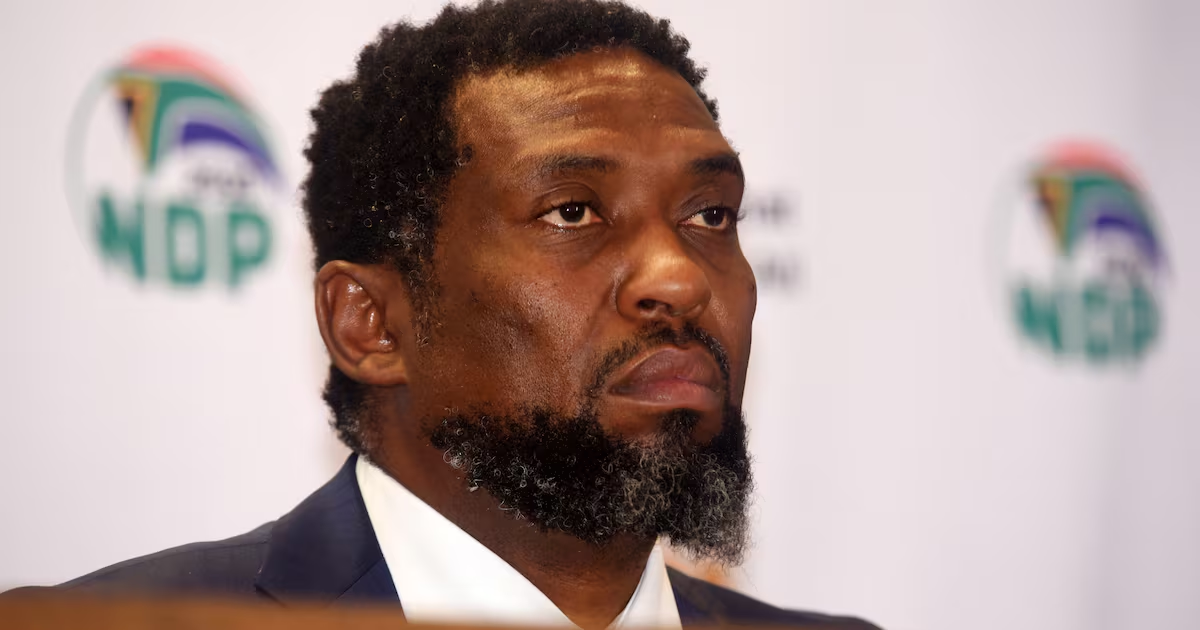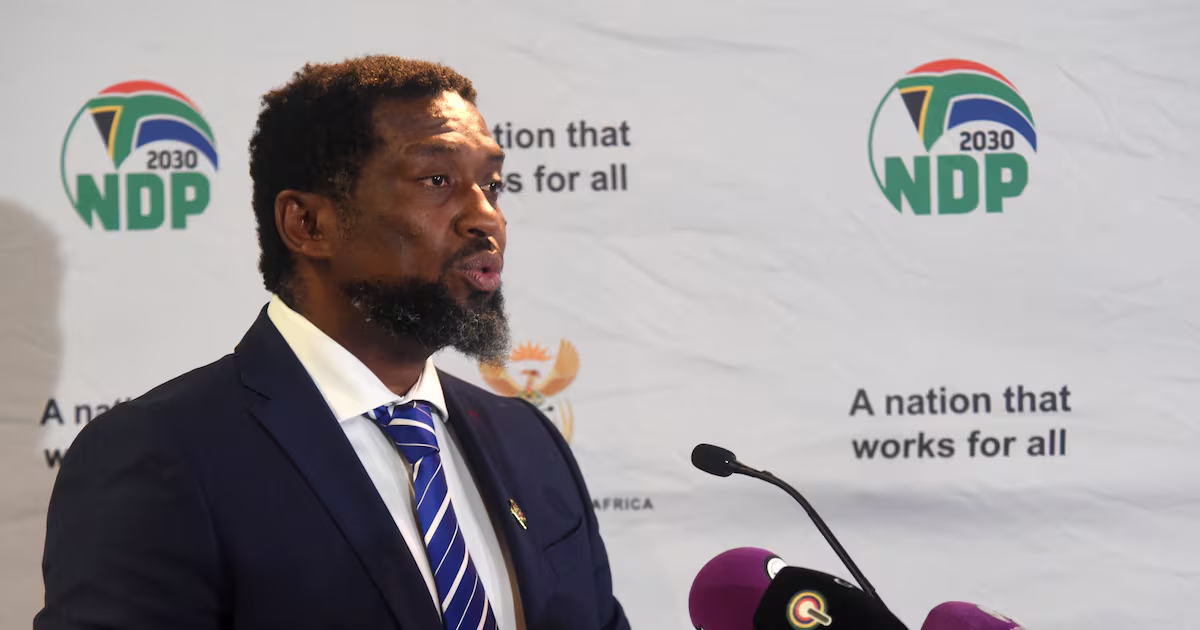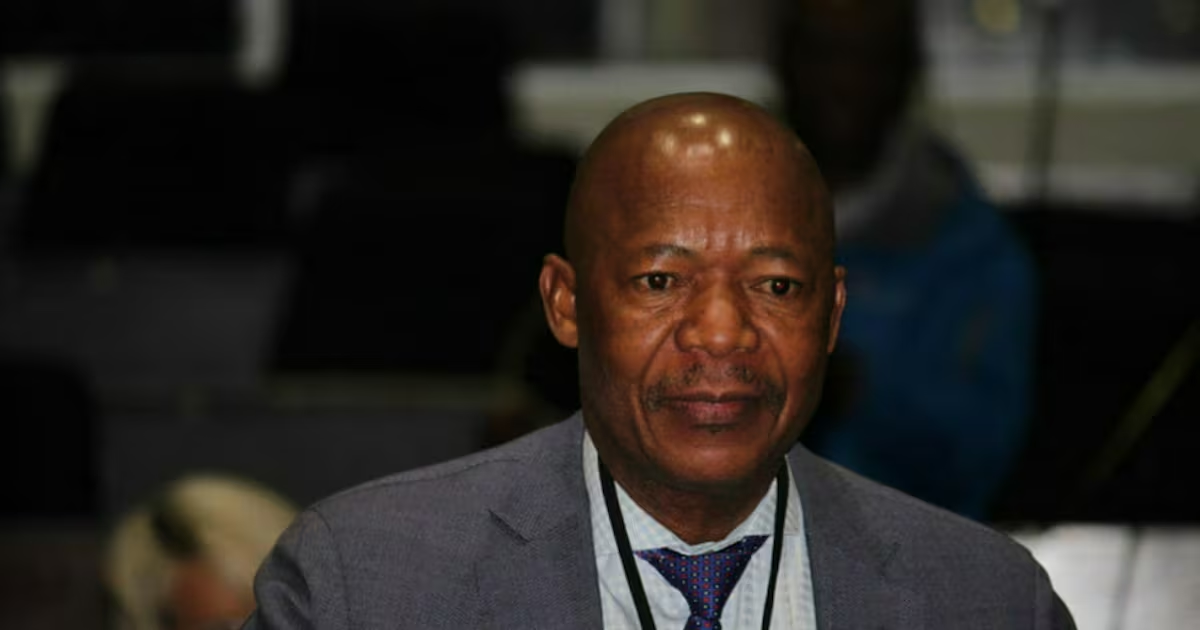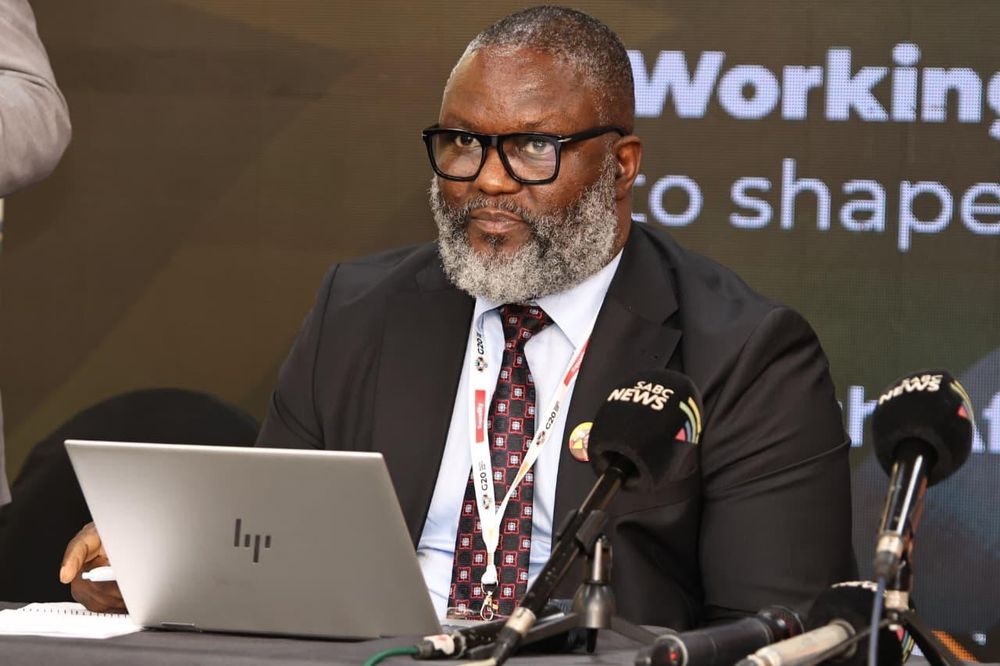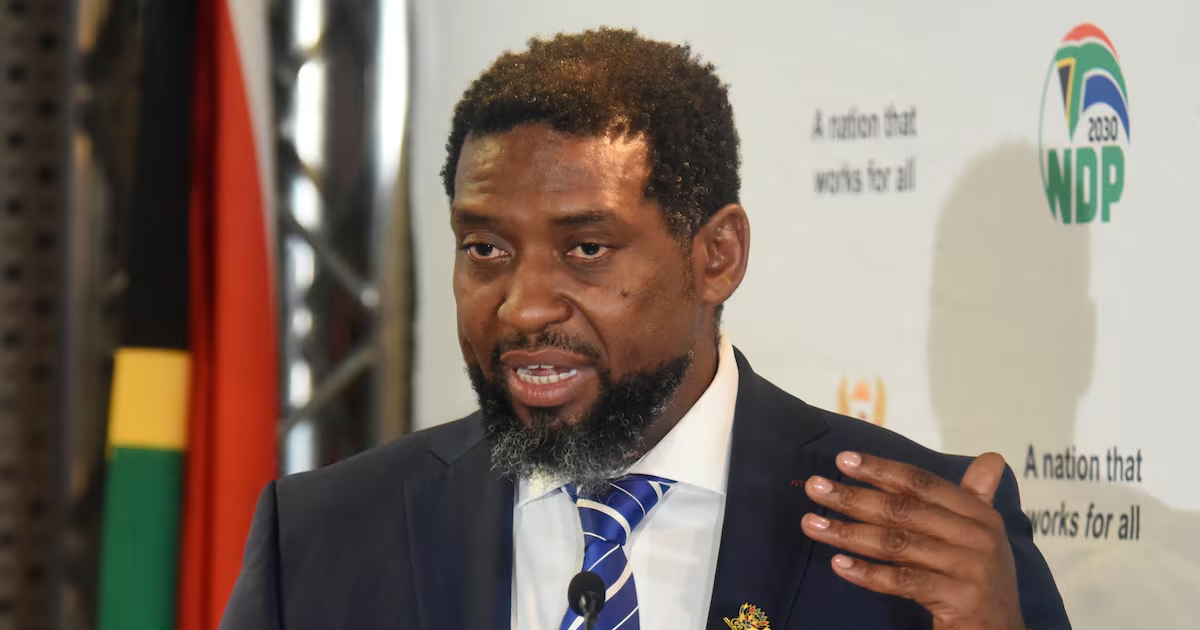
South Africa has a public entity problem, but it is not only a board problem. It is also a ministerial power problem. The governance storm at the Insurance Sector Education & Training Authority (Inseta) is a warning. Higher education minister Buti Manamela reportedly intervened to overturn the precautionary suspension of CEO Gugu Mkhize while ordering investigations into governance failures, unpaid student allowances and institutional instability. The minister said his intervention does not determine the merits of the allegations. The board has resisted, arguing that re-instatement could compromise investigations into the CEO’s appointment and conduct. One does not need to decide today who is correct in law to see the deeper problem. When a minister intervenes in a board’s decision concerning a CEO the public is left with a dangerous question: is the minister restoring legality or protecting an individual from accountability? The South African Tourism saga raised the same concern. In 2025 tourism minister Patricia de Lille dissolved the South African Tourism board after a governance dispute that included conflict over the board’s handling of the CEO. The minister relied on statutory intervention powers. Parliament later raised questions about the dissolution. Again, the public was left with the same uneasy uncertainty: was this decisive oversight or executive overreach? Then there is the National Gambling Board, the slow-burn version of the problem. The board was placed under administration in 2014 after serious governance concerns. More than a decade later, records still reflect an entity without an ordinary board and without a permanent CEO. Administration may have stabilised operations and preserved clean audits. But a 10 year “temporary” intervention is not a normal governance model. It is an emergency arrangement that has become institutionalised. This matters even more when one considers major procurement. The National Gambling Board’s national central electronic monitoring system contract, linked to limited pay-out machines, is a high-value, long-term regulatory contract. There is no public basis to say the minister selected the supplier. But where the ordinary board is absent and the accounting authority is minister-appointed, the question becomes unavoidable: who independently stress-tested the decision? These examples point to one conclusion: South Africa does not need weaker ministerial powers, it needs disciplined ministerial powers. Ministers are not spectators. Where a public entity is failing a minister must be able to act. Public money is at stake. Beneficiaries are at stake. In Inseta’s case delayed student allowances are not an abstract governance inconvenience. They affect real people. A minister who stands by while a public entity collapses would be failing in responsibility. But boards are not decorations. Accounting authorities carry fiduciary obligations. They are meant to protect the entity, safeguard records, oversee executives and act in the public interest. If a board believes reinstating a CEO under investigation may compromise evidence, intimidate staff or undermine an inquiry, it cannot simply surrender its judgment because a minister has issued a directive. Obedience is not governance. The danger lies in the grey zone between oversight and control. Ministerial intervention powers are necessary because public entities can be captured, dysfunctional or negligent. But the same powers can also be abused. They can be used selectively to punish inconvenient boards, shield favoured executives or turn independent accounting authorities into compliance units of a minister’s office. That is why South Africa needs a formal ministerial intervention protocol for public entities. Such a protocol should begin with a simple rule: every intervention must identify the exact legal power being used. “Executive authority” cannot be treated as a magic phrase. The minister must point to the statute, regulation or governance instrument that authorises the intervention. Second, written reasons must be compulsory. If a minister dissolves a board, reverses a suspension, appoints an administrator or instructs an entity to act against its own legal advice, the reasons must be recorded. In urgent cases, short reasons can be issued immediately and expanded later. But reasons must exist. Third, intervention must follow a proportionality ladder. The least invasive tool should be used first: request information, demand a report, issue a written directive, appoint an independent investigation, impose reporting obligations, and only then consider administration or dissolution. Dramatic remedies require dramatic justification. Fourth, where the dispute concerns a CEO under investigation the default should be operational neutrality. This does not mean guilt. It means the investigation must be protected. If a suspension process was defective the answer is not always immediate active reinstatement. A CEO can be placed on full-pay special leave, records can be secured, an acting CEO can be appointed, and an independent investigator can be mandated. Fifth, the administration must have an exit plan. The gambling board shows why. Administration can be useful at the point of crisis, but it must not become a parallel governance regime. Parliament should be told why administration is necessary, what milestones must be met, and when normal governance will be restored. Sixth, major procurement during administration should trigger enhanced scrutiny. Where there is no ordinary board, long-term and high-value contracts should be subject to additional reporting, independent probity checks and parliamentary visibility. That is not bureaucracy. It is protection against the appearance and risk of political influence. Finally, parliament must be notified when intervention reaches a serious threshold: board dissolution, administration, a board’s refusal to comply with a directive, or a ministerial reversal of a board decision involving a CEO. Portfolio committees should not learn about governance crises through media reports after the damage is done. The core principle is simple. Ministerial intervention powers are enablers when they restore legality, protect public funds and rescue failing institutions. They become instruments of political interference when they are opaque, personality-driven, selective or indefinite. The issue is not whether ministers should intervene. Sometimes they must. The issue is whether intervention is governed by rules strong enough to distinguish rescue from interference. Without those rules, every intervention will invite suspicion. Is the minister saving the institution, or saving someone inside it? Once that question becomes unavoidable, governance has already failed. Dr Tong-Mongalo is CEO and founder of Tong-Mongalo Corporate Services and deputy chair of the Companies Tribunal. Her doctoral research examined the accountability gap created when state shareholder representatives influence SOE governance without equivalent fiduciary discipline. She writes in her personal capacity.
MINAH TONG-MONGALO | Ministerial intervention powers need a rulebook, not more discretion
Without transparency, public trust in intervention erodes amid recurring scandals
1,036 words~5 min read