Story audio is generated using AI
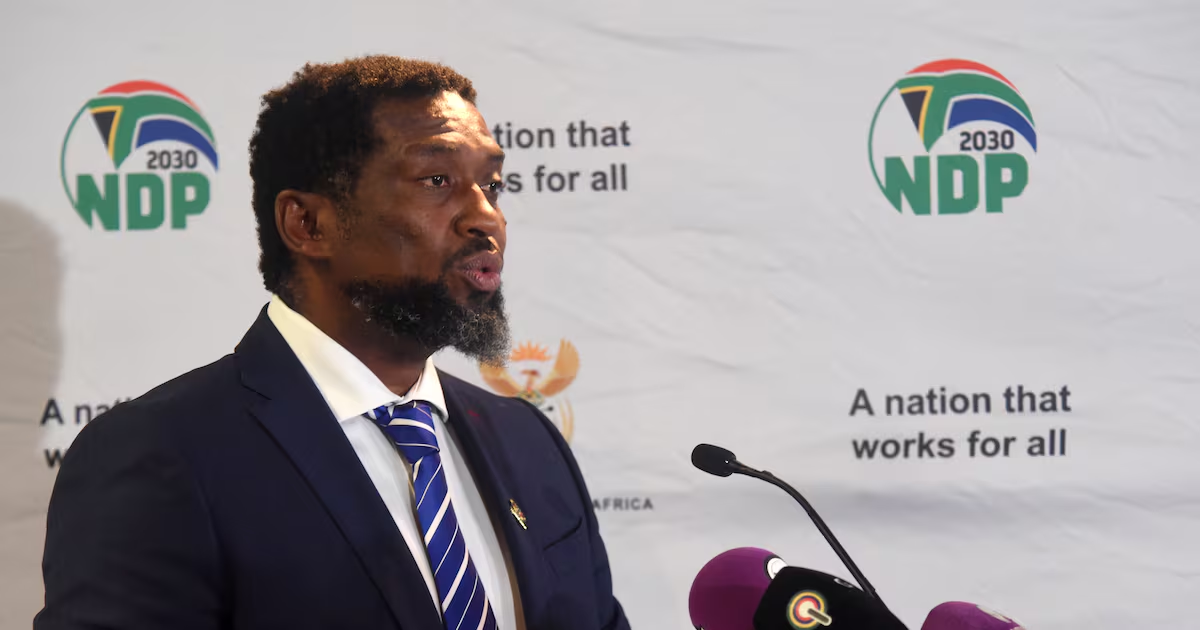
The Insurance Sector Education and Training Authority (Inseta) board has refused to comply with higher education and training minister Buti Manamela’s directive to reinstate the entity’s suspended CEO.Manamela instructed the Inseta board to immediately reinstate suspended CEO Gugu Mkhize. Setting the stage for a potential legal showdown, in a letter dated June 10 and signed by board chairperson Refilwe Matenche, the Inseta board told Manamela that it would not lift Mkhize’s precautionary suspension and instead requested that he withdraw the directive issued on June 8. The dispute comes against the backdrop of a multimillion-rand bursary payment crisis that left hundreds of students without allowances for the first five months of the academic year. Mkhize was placed on precautionary suspension on June 3 after concerns emerged over the administration of the Insurance Sector Student Fund (ISSF). Sunday Times previously reported that 879 beneficiaries were left facing threats of eviction, food insecurity and possible academic exclusion after payments failed to reach students, universities and accommodation providers. According to information seen by Sunday Times, Inseta paid intermediary service provider Mabophe Business Solutions nearly R70m in several disbursements during March. However, allegedly none of the funds reached the intended beneficiaries, prompting Inseta to make an emergency direct payment of R4.6m in May to prevent students from being evicted from their accommodation. In its response to Manamela, the board argued that reinstating Mkhize while an investigation into her appointment and conduct was under way would be inappropriate. “The minister’s own directive acknowledges that the conditions relating to the CEO’s appointment were not satisfied and that her conditions of service are invalid,” the board said. It further argued that because Mkhize occupies the most senior executive position within the organisation, allowing her to return to work could compromise the integrity of the ongoing investigation. The board stressed that the suspension was precautionary with full pay and not a disciplinary sanction. “Keeping her active would give her the capacity to inherently influence staff interviews and control records, jeopardising the integrity of the investigation,” the board said. Reinstating her at this early stage would create a public perception that the investigation is compromised, damaging public confidence and discouraging whistleblowers.— The boardThe accounting authority also challenged Manamela’s authority to order the reinstatement, arguing that under the Skills Development Act and the Inseta constitution, the power to place a CEO on precautionary suspension rests with the board and not the executive authority (minister). The board warned that reinstating the CEO at this stage would create a perception that the investigation has been compromised. “Reinstating her at this early stage would create a public perception that the investigation is compromised, damaging public confidence and discouraging whistleblowers.” The board also said that it had obtained legal advice indicating the minister’s directive was vulnerable to legal challenge and said it would seek urgent judicial clarification if the dispute could not be resolved through engagement. “The accounting authority would value your response hereto by no later than Friday, June 12 2026. Should you prefer an urgent meeting, the accounting authority will make itself available at any time convenient to you,” the board said. In his June 8 directive, Manamela said the board had failed to consult him before suspending Mkhize. “The Regulations for the Conditions of Service and appointment of the CEO of a Seta provide that the minister is responsible for appointing a CEO based on a recommendation from the accounting authority. It follows that the minister must decide on suspension based on such recommendation,” said Manamela. “The accounting authority is directed to lift the pre-cautionary suspension and reinstate the CEO with immediate effect. This directive does not deal with the merits of any allegations which must be tested through the appropriate process,” he said. The minister also criticised the board for failing to fulfil conditions attached to Mkhize’s appointment. “In my letter dated October 6 2025, I directed the accounting authority to investigate allegations against the CEO and the entity and submit a report with proposed corrective action. This has not been received,” said Manamela. Manamela said the accounting authority had further failed to satisfy the conditions of the CEO’s appointment, including the completion of background verification and the submission of a comprehensive report on the veracity of allegations. Manamela also highlighted delays affecting bursary recipients. “The delayed payment of Insurance Sector Student Fund allowances, affecting 263 beneficiaries across multiple institutions, is unacceptable and places the academic continuity of students at risk,” he said. He ordered the board to submit a detailed report within 15 working days outlining the status of outstanding payments, confirming whether beneficiaries had received allowances and detailing measures to prevent a recurrence. Meanwhile, the National Skills Authority (NSA) has launched an inquiry into alleged governance failures by the board and its chairperson. In a separate letter dated June 10, corporate law firm Cliffe Dekker Hofmeyr (CDH), acting on behalf of the board, said it would co-operate fully with the investigation but raised concerns about the process. CDH argued that board members had been given insufficient notice to prepare for interviews and that it was “near-impossible” to co-ordinate the availability of members representing various external organisations at such short notice. The law firm requested that the NSA provide all documents and evidence supporting the allegations by June 12 to allow board members to prepare adequately. CDH also sought clarification on whether board members would be permitted legal representation during interviews. The board meanwhile argued that several of the deadlines imposed by the minister were impractical given the number of overlapping investigations and the complexity of verifying student payment records across multiple institutions.