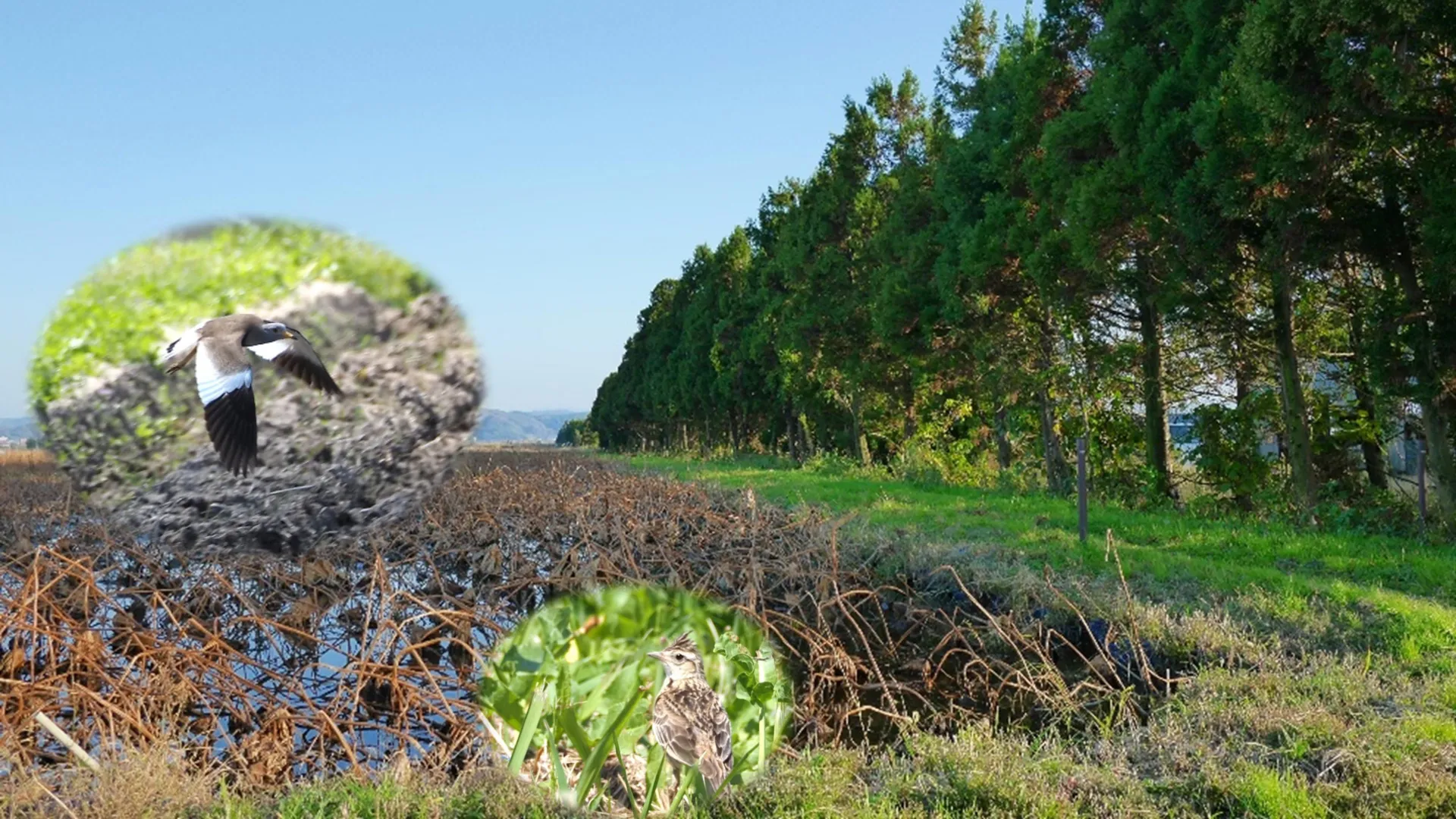
Trees planted along farmland to shield crops from strong winds are often viewed as a simple way to support biodiversity. But new research suggests the picture is more complicated, especially in agricultural wetlands where many bird species depend on open landscapes.
A team of researchers studying farmland wetlands on the western coast of central Japan found that shelterbelts, rows of trees planted as windbreaks, do not benefit all birds equally. While they provide habitat for some species, they can also reduce the abundance and diversity of birds that rely on open grassland and wetland environments.
The findings were published in the Journal of Environmental Management.
Tree Planting and Bird Conservation
Many agricultural conservation programs encourage farmers to plant trees and hedgerows to increase biodiversity. These woody landscape features, known as shelterbelts, are generally considered beneficial for wildlife.