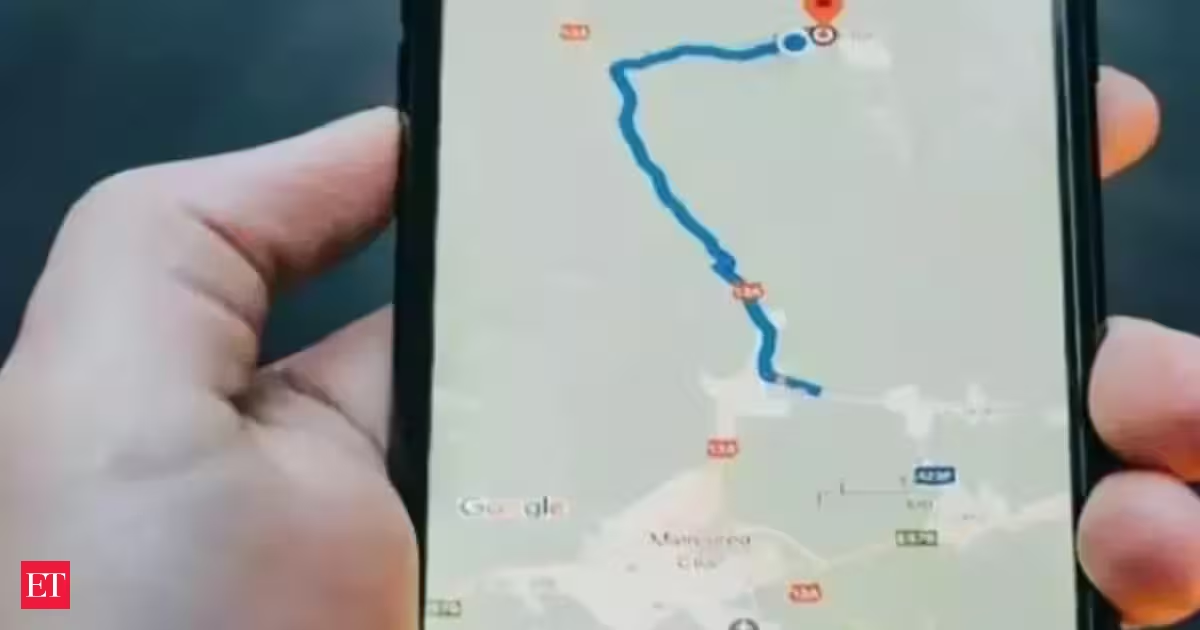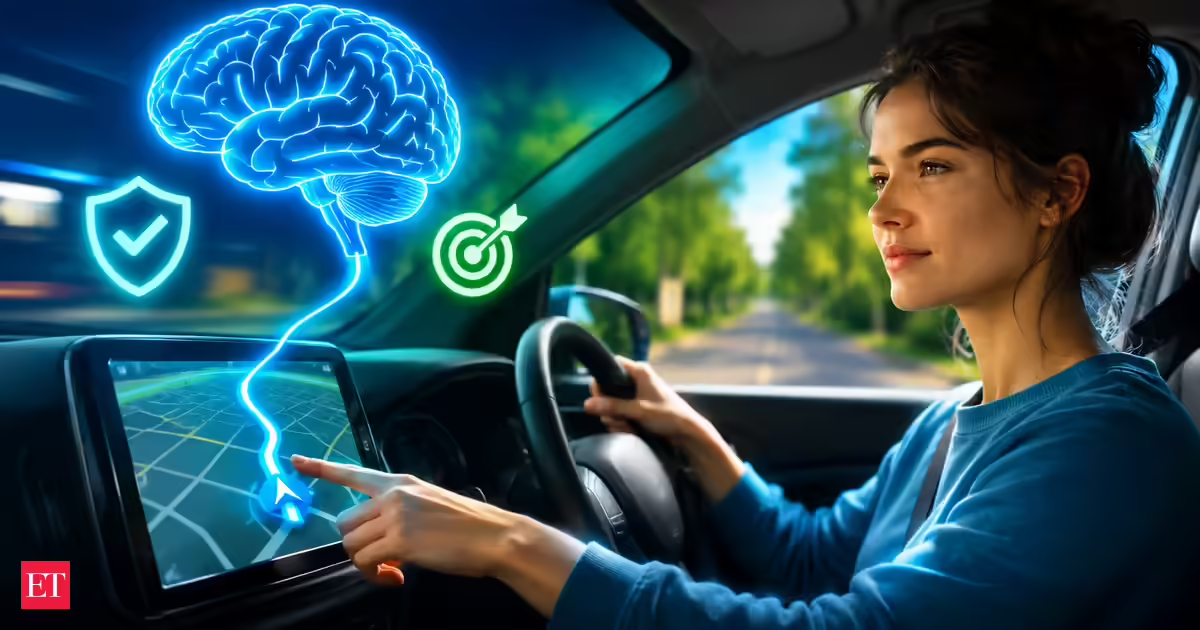
Many people do this every day. They are driving to work. They are going to a friend's house. They are visiting a supermarket they have been to dozens of times. Yet before starting the car, they still open Google Maps. To outsiders, this behavior can seem unnecessary. "You already know where you're going. Why use GPS?" Psychology suggests this habit is rarely about poor memory. For many adults, GPS has evolved from a navigation tool into a source of reassurance, predictability, and mental relief. In many ways, people are not searching for directions. They are searching for certainty.Why The Brain Loves Reducing Mental EffortOne explanation comes from Cognitive Offloading Theory. Humans naturally transfer mental tasks to external tools whenever possible. Calendars remember appointments. Phones store phone numbers. Navigation apps store routes. This behavior allows the brain to preserve energy for other tasks. Driving already requires attention. By outsourcing navigation, people reduce cognitive workload. The brain simply becomes more efficient.Why Humans Naturally Prefer CertaintyPsychologists also discuss Intolerance Of Uncertainty Theory. Humans are uncomfortable with unpredictability. Even familiar routes can suddenly change.There may be:Road closures.Traffic jams.Construction work.Accidents.Weather disruptions.GPS reduces these unknowns. The app quietly reassures the brain. "You're still on the best route." That reassurance itself becomes rewarding.Why GPS Can Become A Modern Safety BlanketPsychologists also connect this behavior to Compensatory Control Theory. People naturally seek systems that help them feel in control. Driving can involve dozens of unpredictable variables. GPS provides structure. Even if people never look at the screen, its presence offers comfort. The app becomes a backup plan. That sense of preparedness reduces anxiety.Why The Brain Is Outsourcing MemoryAnother explanation comes from Extended Mind Theory, developed by philosophers Andy Clark and David Chalmers. The theory suggests external tools increasingly function as extensions of our thinking. Today, smartphones store:ContactsSchedulesPasswordsBanking informationLocationsGPS has become an extension of spatial memory. People no longer feel obligated to memorize every route because technology already does it for them.Why This Habit Is Stronger In Busy AdultsPsychologists also point to Cognitive Load Theory. Modern adults process enormous amounts of information every day: Emails, work meetings, notifications, family responsibilities. The brain constantly juggles competing priorities. Reducing one small burden, such as navigation, creates additional mental space. The habit is less about dependence and more about efficiency.Why Anxiety Can Quietly Reinforce The BehaviorPsychologists also discuss Negative Reinforcement, a concept developed by B.F. Skinner. The cycle often looks like this: Person opens GPS. They arrive without problems. Stress decreases. The brain learns an important lesson."Using GPS makes driving easier."Over time, this association strengthens. The habit becomes automatic.Why Younger Generations Experience This MoreMillennials and Gen Z have grown up in a world where digital assistance is normal. They no longer memorize:Phone numbers.Street names.Addresses.Directions.Technology handles those tasks. This does not mean intelligence is declining. It means humans are adapting. Throughout history, people have always adopted tools that simplify life.Why Even Confident Drivers Still Use NavigationModern examples are everywhere. Someone may use GPS while commuting to work every day. Parents may activate navigation before school pickups. Professionals may use it for routes they have driven for years. The reason is often simple. People trust live information more than memory. A familiar road can change unexpectedly. The app provides real-time certainty.Why do people use GPS when they know their wayPsychology suggests people who always use GPS while driving are rarely forgetful. In general, they are responding to how the modern brain conserves energy and reduces uncertainty. Humans crave certainty. Humans crave efficiency. Humans crave backup plans. The most important insight is that people are not always asking GPS where to go. They are often asking it to remove invisible stress. Perhaps that is why this habit has become so common. Because in a world full of unpredictability, one reassuring blue line on a screen can make life feel a little easier.FAQsWhy do some people always use GPS even when they know the route?Psychology suggests they may be seeking certainty, reducing mental effort, and minimizing stress.Why does GPS feel reassuring?It reduces uncertainty by providing real-time updates and backup plans.
Psychology says people who always use GPS while driving even when they know the way are not forgetful: Why they trust certainty more than memory
Psychology suggests that people who always use GPS while driving are rarely forgetful. They are often responding to the way the modern brain conserves mental energy and minimizes uncertainty. Humans naturally seek predictability, and relying on GPS can reduce decision fatigue, ease stress, and create a greater sense of confidence while navigating unfamiliar or even familiar routes.
674 words~3 min read