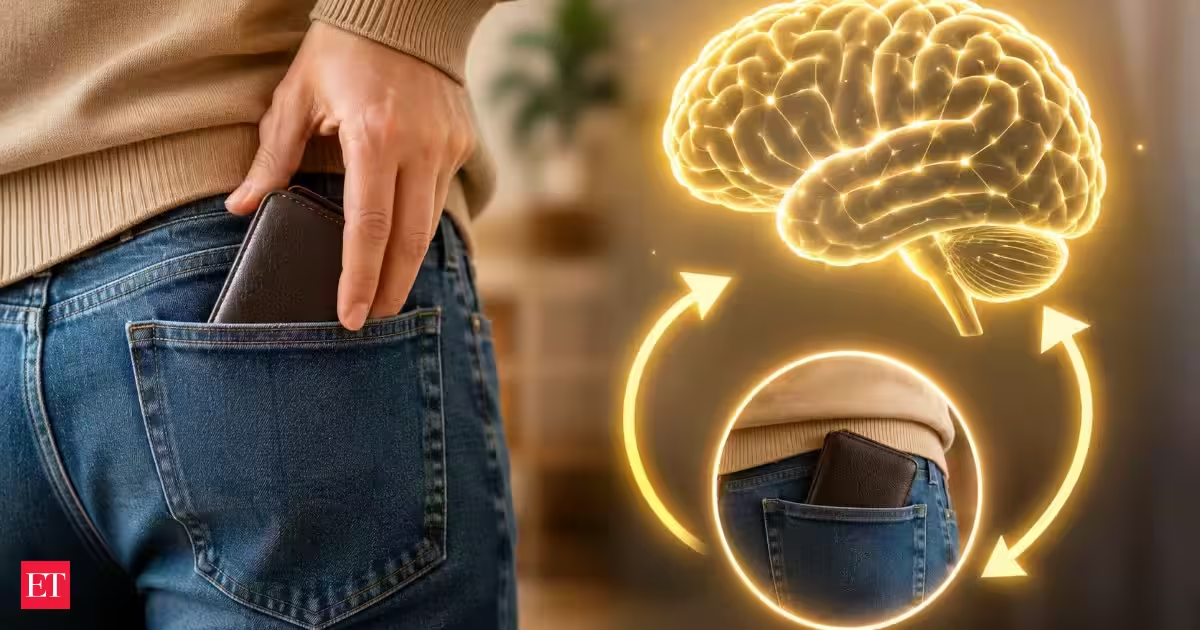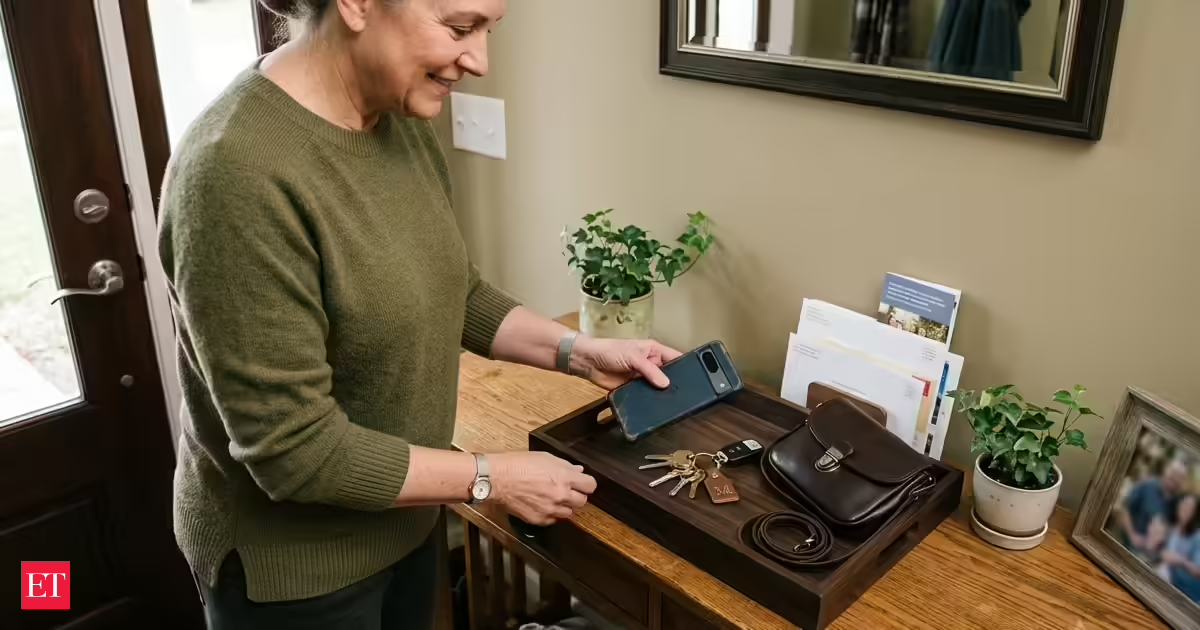
Psychology says people who keep keys, phones, purse on the same place every day aren't just following a simple routine. Many people return home and place their belongings in one fixed location without thinking much about it. Psychology explains that this habit may help reduce mental workload and improve daily efficiency. Instead of spending time searching for important items before leaving home, the brain relies on a repeated routine. This behavior is connected with habit formation, memory, and decision-making. It also helps people save time, avoid frustration, and maintain a predictable daily pattern.Psychology says people who keep keys, phones, purse on the same place every day aren't simply creatures of habitKeeping everyday belongings in one location may seem like a small action, but psychologists say it reflects the brain's preference for routines that reduce unnecessary thinking. Every day people make hundreds of decisions. Even simple choices require mental energy. By placing keys, phones, and purses in one location, the brain no longer needs to remember where those items were left each day.This routine creates consistency. It reduces the chance of misplacing important belongings. As a result, mornings become easier because less time is spent searching for missing items. Rather than showing rigidity, this behavior often demonstrates an efficient way of managing daily life.What psychology says?Psychology explains that repeated actions become habits through continuous practice. Once a habit develops, the brain performs the action almost automatically. Researchers often describe habits as behaviors that reduce mental effort. Instead of making fresh decisions every day, people rely on routines that already work.Keeping important belongings in the same place creates a stable environmental cue. The location itself reminds the brain where those objects belong. This reduces memory demands because people no longer need to actively recall where they last placed their belongings.You Might Also Like:What does this mean?This behavior may indicate that a person values structure and predictability. It does not necessarily mean someone is highly organized in every part of life. Instead, it shows that they have created one reliable system that helps manage everyday responsibilities.People who follow this routine often spend less time dealing with avoidable problems. Finding keys or phones quickly also reduces unnecessary stress before work, school, or appointments. The habit supports smoother daily transitions and lowers frustration caused by misplaced items.Why is it done?There are several reasons why people develop this habit.You Might Also Like:The first reason is convenience. Having a fixed place makes it easier to locate essential belongings.The second reason is repetition. Performing the same action every day strengthens the routine until it becomes automatic.The third reason is reducing cognitive load. The brain prefers systems that require less effort.Instead of remembering a different location every day, people depend on a familiar pattern that becomes part of daily life. Many people develop this routine without consciously planning it.Which psychology theory explains this behaviour?Habit Loop Theory helps explain this behavior. According to the habit loop model, habits consist of three parts.The first is the cue. Arriving home acts as the trigger.The second is the routine. The person places their keys, phone, or purse in the same location.The third is the reward. The next time those belongings are needed, they are easy to find.Over time, this cycle becomes automatic.The behavior is also linked to cognitive load theory, which suggests the brain tries to conserve mental resources by automating repeated tasks. Automatic routines leave more mental capacity for solving larger problems during the day.You Might Also Like:This psychology study saysResearch on habit formation has shown that repeated behaviors performed in stable situations gradually become automatic. Studies published in psychology journals have found that habits develop through consistency rather than motivation alone. Researchers have also shown that environmental cues play an important role in maintaining daily routines.A fixed location for everyday belongings serves as one of these cues. Memory research has also found that people recall information more easily when objects remain in predictable locations. This explains why people often experience less stress when they know exactly where important items are stored.Research explains why keeping everyday items in one place supports memoryA book titled The Psychology of Memory, written by Dr. Megan Sumeracki of Rhode Island College and Dr. Althea Need Kaminske of Indiana University, explains that forgetting where everyday items are placed is a common part of human memory. The authors say memory works in more complex ways than most people realize and is not designed to track the location of items like keys, phones, or wallets automatically. Instead, the brain remembers information more effectively when it is connected to meaningful situations. They also note that creating fixed routines, such as placing keys, phones, and purses in the same location every day, can reduce the chances of losing them. The book adds that common items people misplace include mobile phones, keys, sunglasses, purses, umbrellas, bank cards, tablets, documents, and wallets, with the average person misplacing several objects during daily life.The principle behind itThe main psychological principle behind this habit is reducing cognitive effort. The human brain constantly looks for ways to simplify repeated activities. Automating small daily actions allows people to preserve attention for more demanding tasks.This principle also supports prospective memory, which is remembering to carry out future actions. When belongings stay in one location, people are less likely to forget them before leaving home. The routine becomes part of the environment rather than something that must be actively remembered.What to learn from it?This behavior shows that small routines can have a large impact on everyday life. Creating designated places for frequently used items can reduce unnecessary stress. It can also save time during busy mornings.Simple routines help create consistency without requiring major lifestyle changes. People do not need complicated systems to become more organized. Sometimes one repeated habit is enough to improve daily efficiency.Life lessons from the behaviorThe habit teaches that success in daily life often comes from consistency rather than complexity.Small routines can prevent repeated problems.Reducing unnecessary decisions allows people to focus on priorities.Creating reliable systems also improves confidence because fewer things are forgotten.Daily organization often begins with simple actions that are repeated over time.Even placing keys, phones, and purses in one location every day can make routines smoother and reduce avoidable stress.
Psychology says people who keep keys, phones, purse on the same place every day aren't forgetful: What this daily habit reveals
Psychology says people who keep keys, phones, purse on the same place every day aren't simply following a routine without purpose. Psychology suggests this habit helps reduce mental effort, lowers stress linked to searching for everyday items, and supports better organization. The behavior may reflect planning, consistency, and habit formation. Experts also say this routine allows the brain to focus on more important tasks instead of repeated small decisions.
1,035 words~5 min read