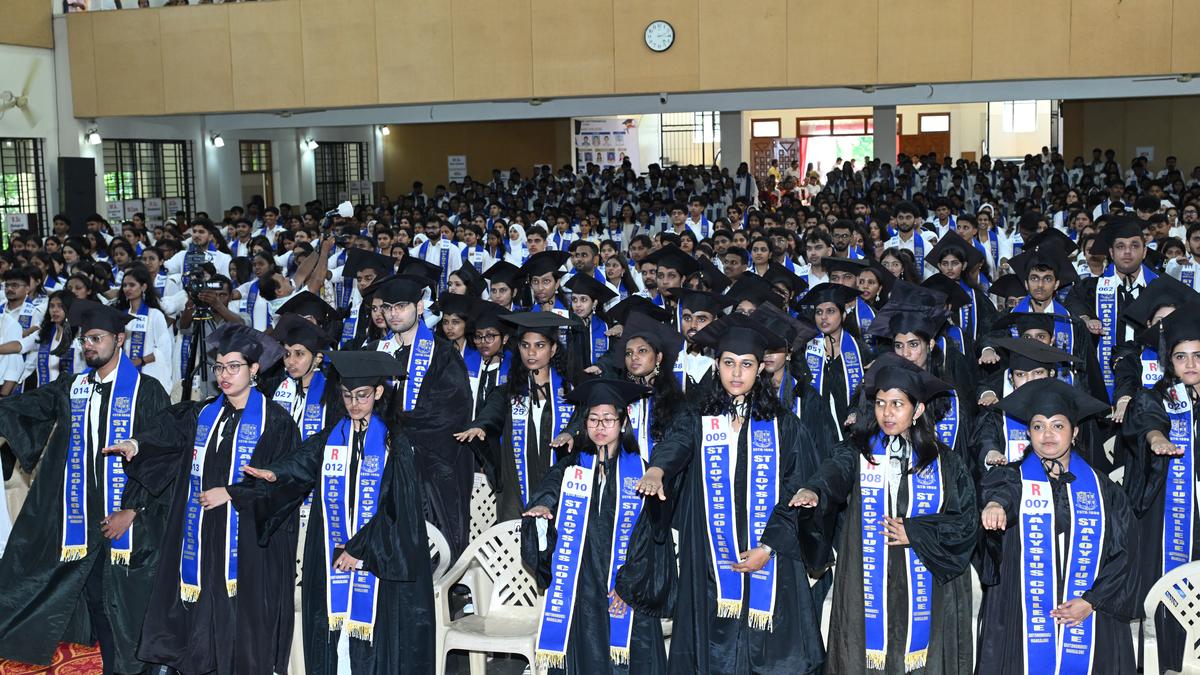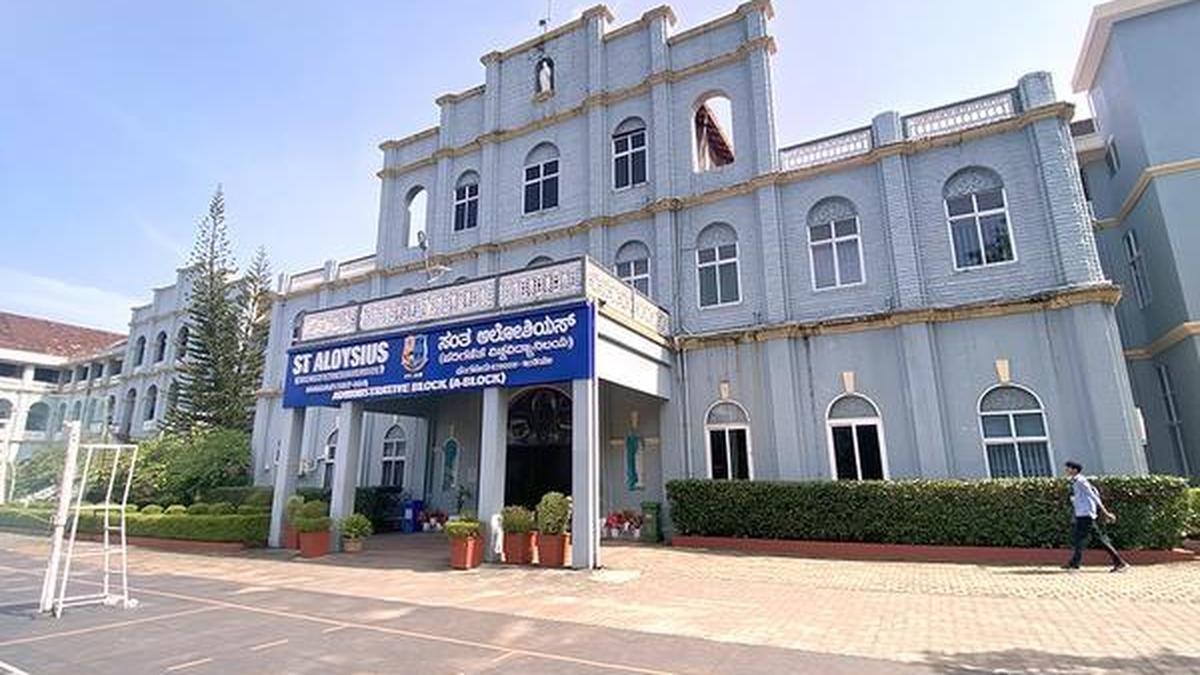
St. Aloysius (Deemed to be University), Mangaluru, has secured the Category-I status under the University Grants Commission (UGC) Graded Autonomy Regulations, according to the university’s Vice-Chancellor Praveen Martis.Addressing presspersons here on Monday he said that the category has placed the university among an elite group of India’s highest-performing higher educational institutions.He said the institution becomes the second Deemed to be University in Karnataka to be granted Category-I status by the UGC. The other one being S-VYASA, Bengaluru.Among the 157 Deemed to be Universities in the country, only 26 institutions have earned Category-I status and among 1,292 universities in the country only about 45 universities have earned Category -I status, Mr. Martis said.The Category-I recognition has been conferred based on the University’s performance in quality assessment and accreditation. The university holds a NAAC A++ Grade with a CGPA of 3.67 on a four-point scale.Under the UGC Regulations, Category-I universities enjoy substantial freedom in academic decision-making and institutional development. The university can introduce new academic programmes, departments, schools, centres, diploma courses, certificate programmes, and interdisciplinary initiatives without requiring prior approval from the UGC. This flexibility will allow St. Aloysius to rapidly respond to emerging disciplines, industry requirements, technological advancements, and societal needs, the Vice-Chancellor said.The university can also establish constituent units and off-campus centres within its geographical jurisdiction without prior approval, thereby expanding access to quality higher education, he said.One of the most transformative aspects of Category-I autonomy is the freedom to establish research parks, incubation centres, innovation hubs, entrepreneurship ecosystems, and university-society linkage centres.The regulations further empower the university to recruit internationally renowned faculty members from globally ranked institutions, thereby enriching academic quality and strengthening internationalization efforts.The university can also appoint foreign faculty members up to 20% over and above its sanctioned faculty strength, creating opportunities for global knowledge exchange and world-class academic engagement, he said.The Category-I status also enhances the university’s ability to attract international students by permitting admissions beyond the approved domestic intake, the Vice-Chancellor said.Another significant benefit is the freedom to establish academic collaborations with leading international universities without prior UGC approval, provided they meet prescribed global ranking criteria. This provision will facilitate the development of joint research projects, collaborative academic programmes, faculty exchanges, student mobility initiatives, dual-degree programmes, twinning arrangements, and international centres of excellence, Mr. Martis said.The university also gains greater flexibility to introduce skill-based programmes aligned with the National Skills Qualification Framework (NSQF), offer innovative certificate and diploma programmes, establish industry-oriented learning pathways, and explore opportunities in open and distance learning, he said.Universities under this category are automatically deemed to be covered under Section 12B of the UGC Act and are exempted from several routine regulatory approvals and inspections, the Vice-Chancellor said. Published - June 22, 2026 05:59 pm IST
UGC grants Category-I status to St. Aloysius University
St. Aloysius University in Mangaluru achieves UGC Category-I status, enhancing academic freedom and international collaboration opportunities.
TL;DRAI
St. Aloysius University earned Category-I status from UGC—only 26 of 157 Deemed Universities in India hold it. Autonomy now permits research parks, 20% excess international faculty recruitment, and global partnerships without UGC approval, signaling India's structural shift toward industry-academia R&D collaboration and tech talent pipelines.
455 words~2 min read