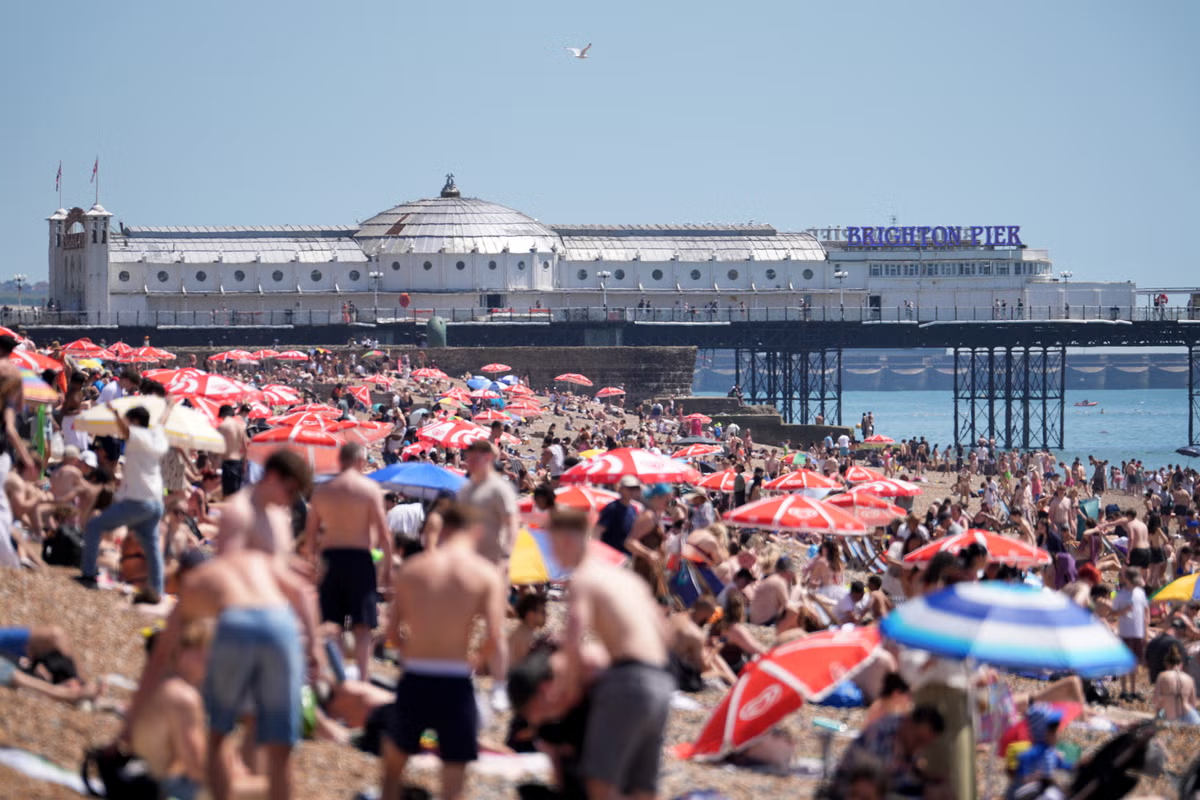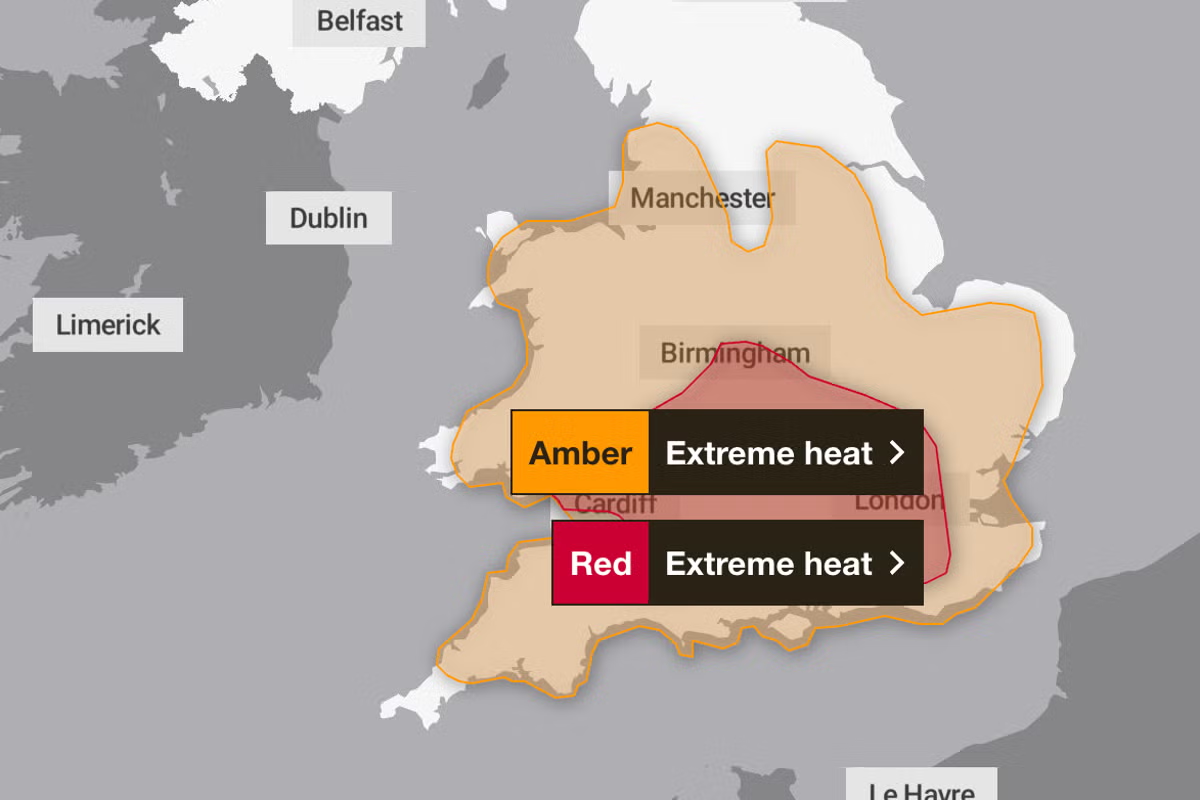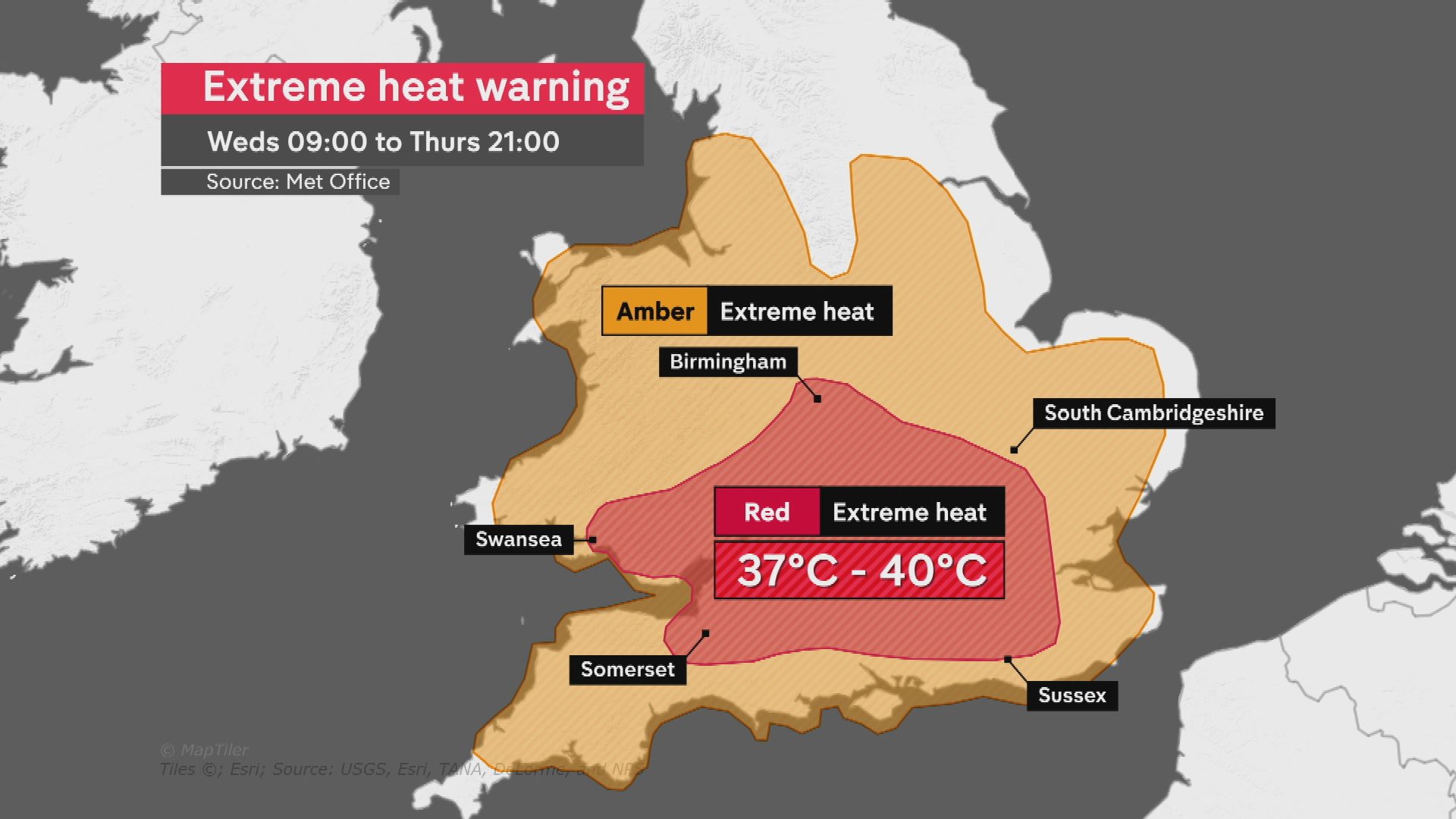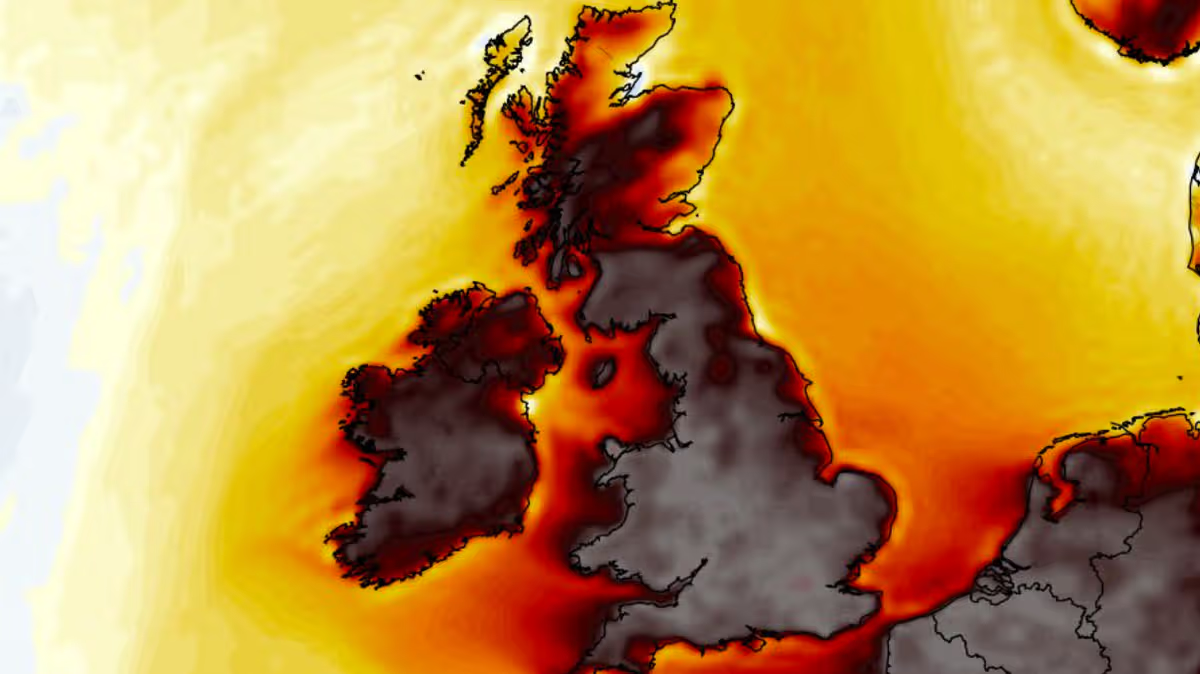
The UK’s Met Office forecasters have issued a rare red weather warning for Wednesday and Thursday in the face of extreme heat and humidity.It covers southern Wales as far west as Swansea, and an area of England that includes London and runs from the inland areas of Kent and Sussex, all the way across to Somerset, as far north-west as Birmingham, and as far north-east as southern Cambridgeshire.People in those areas have been told to take immediate action to keep themselves safe as the UK prepares for dangerously high temperatures this week.The “area now looks increasingly likely to see a two- to three-day period where maximum temperatures in the shade exceed 37C, perhaps rising to 38 to 40C in some places”, forecasters said. “The heat will be accompanied by high humidity, exacerbating the potential for discomfort and health impacts, with very warm and humid night times also reducing the ability for people to recover overnight.“Significant disruption to daily life is likely and the public should take every effort to make precautions and adapt their daily routines where possible to cope with these levels of heat, which up to now have been extremely rare for the UK.”An amber warning – serious in its own right – also incorporates almost all of the rest of Wales, and most of the rest of England across to Cornwall, and up to Yorkshire and Lancashire.A red weather warning, which indicates high degrees of both likelihood and impact on people’s lives, is rare in the UK. It means “dangerous weather is expected and, if you haven’t already done so, you should take action now to keep yourself and others safe”.Met Office forecasters say such severe conditions present a genuine risk to life, with “substantial disruption to travel, energy supplies and possibly widespread damage to property and infrastructure”.Bill McGuire, professor emeritus of geophysical and climate hazards at University College London, said temperatures of more than 43C are now possible in the UK’s current climate, with heatwaves lasting for several days.But the country’s health services, energy infrastructure and transport are “simply not built for these conditions”, he warned. “As 40+ temperatures become ever more common, expect many thousands sleeping in the streets as poorly insulated homes become uninhabitable heat traps, widespread power cuts as power cables sag and break, transport chaos as rails, overhead wires and signalling fail, and A&E departments overwhelmed by the old, very young, and vulnerable suffering from overheating.”Gareth Redmond-King, head of the international programme at the Energy and Climate Intelligence Unit, said: “That the health and weather alerts have just been raised from amber to red this week is a stark reminder of how dangerous this weather is to our health. This is particularly true of the most vulnerable – especially the very old and very young – but as June’s 50-year-old temperature record looks set to be blown out of the water this week, it is clearly a threat to us all, across a huge swathe of the country.“The heatwave also hits in the week MPs will debate the UK’s plans to cut our emissions to net zero – which remains the only scientifically credible solution we have to halt climate change – and prevent these temperatures continuing to hit even more dangerous levels for many years to come.”
UK Met Office issues rare red weather warning for Wednesday and Thursday
People in southern Wales and area of England from Kent and Sussex to Somerset and Birmingham urged to protect themselves from extreme heat
546 words~2 min read