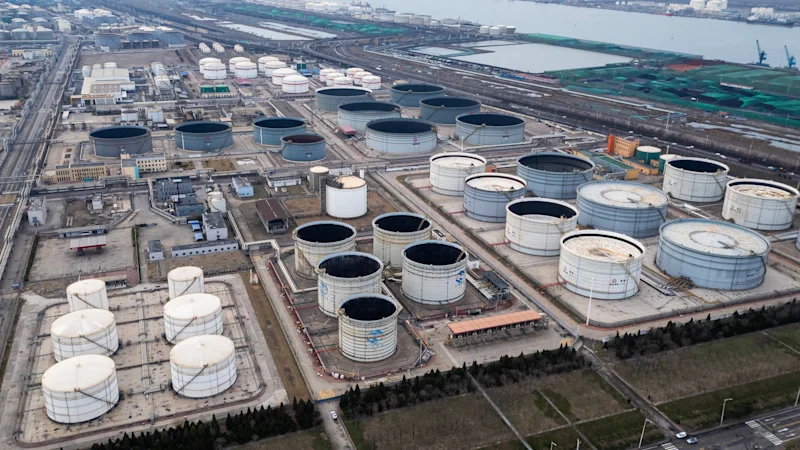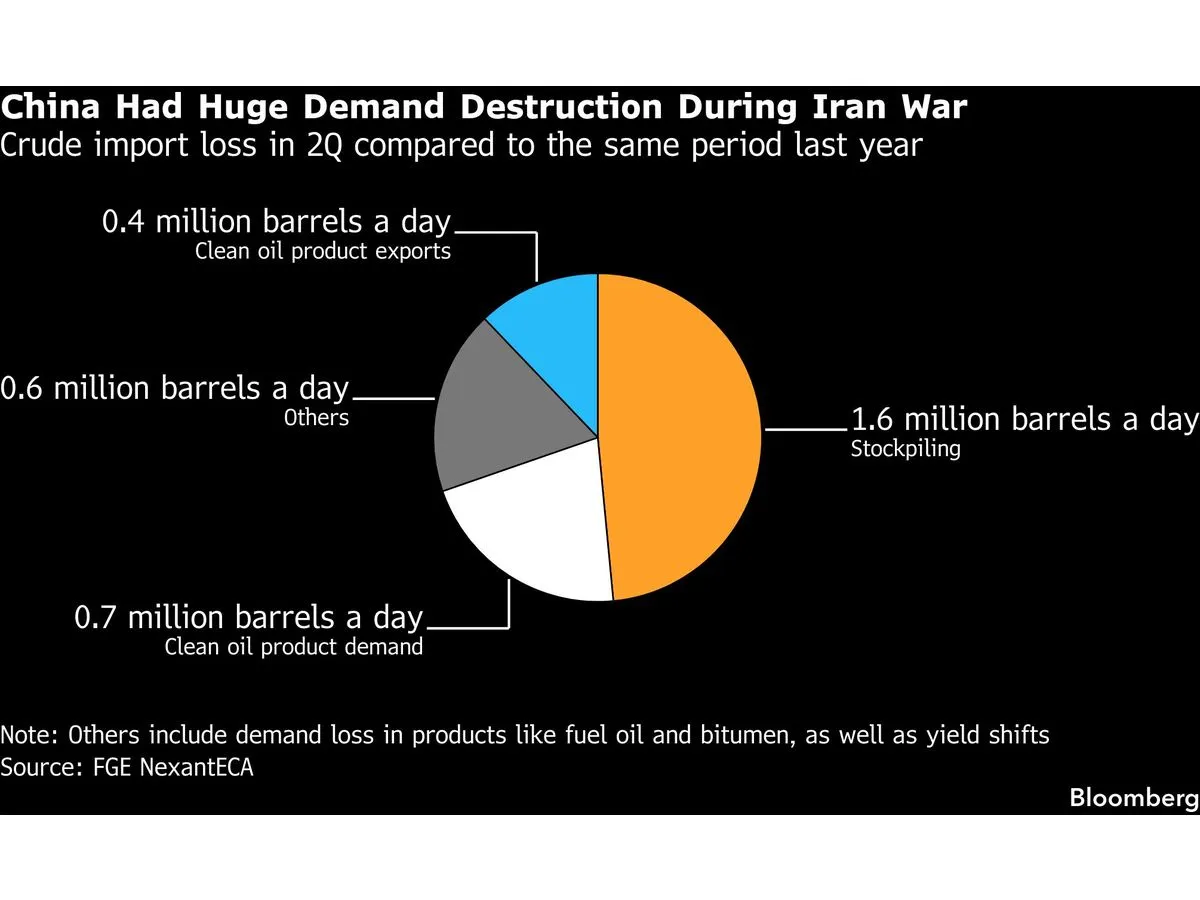
Skip to Content News Archives Economy Energy Oil & Gas Renewables Electric Vehicles Mining Commodities Agriculture Real Estate Mortgages Mortgage Rates Finance Banking Insurance Fintech Cryptocurrency Work Wealth Smart Money Wealth Management Investor Personal Finance Family Finance Retirement Taxes High Net Worth FP Comment Executive Women Puzzmo Newsletters Financial Times Business Essentials More Innovation Information Technology FP500 Podcasts Small Business Lives Told Tails Told Shopping Financial Post Store Obituaries Place a Notice Advertising Advertising With Us Advertising Solutions Postmedia Ad Manager Sponsorship Requests Classifieds Place a Classifieds ad Working Profile Settings My Subscriptions Saved Articles My Offers Newsletters Customer Service FAQ News Economy Energy Mining Real Estate Finance Work Wealth Investor FP Comment Executive Women Puzzmo Newsletters Financial Times Business Essentials HomePMN BusinessChinese Oil Imports May Never Fully Recover From Iran WarChinese oil imports may never fully recover from the Iran war, with analysts saying the conflict accelerated a permanent shift away from fuels like gasoline and diesel.Author of the article: You can save this article by registering for free here. Or sign-in if you have an account.dcm8yhff420{m2hw90wao9wz_media_dl_1.png FGE NexantECA(Bloomberg) — Chinese oil imports may never fully recover from the Iran war, with analysts saying the conflict accelerated a permanent shift away from fuels like gasoline and diesel.Subscribe now to read the latest news in your city and across Canada.Exclusive articles from Barbara Shecter, Joe O'Connor, Gabriel Friedman, and others.Daily content from Financial Times, the world's leading global business publication.Unlimited online access to read articles from Financial Post, National Post and 15 news sites across Canada with one account.National Post ePaper, an electronic replica of the print edition to view on any device, share and comment on.Daily puzzles, including the New York Times Crossword.Subscribe now to read the latest news in your city and across Canada.Exclusive articles from Barbara Shecter, Joe O'Connor, Gabriel Friedman and others.Daily content from Financial Times, the world's leading global business publication.Unlimited online access to read articles from Financial Post, National Post and 15 news sites across Canada with one account.National Post ePaper, an electronic replica of the print edition to view on any device, share and comment on.Daily puzzles, including the New York Times Crossword.Create an account or sign in to continue with your reading experience.Access articles from across Canada with one account.Share your thoughts and join the conversation in the comments.Enjoy additional articles per month.Get email updates from your favourite authors.Create an account or sign in to continue with your reading experience.Access articles from across Canada with one accountShare your thoughts and join the conversation in the commentsEnjoy additional articles per monthGet email updates from your favourite authorsSign In or Create an AccountorRystad Energy estimates that 200,000 to 600,000 barrels a day of transportation demand lost during the conflict from the world’s biggest crude importer may not return this year. Energy Aspects Ltd. puts the permanent loss at about 300,000 barrels a day.China’s crude imports will fall by 3.3 million barrels a day this quarter from a year earlier, according to FGE NexantECA, as supply disruptions coincide with a halt in stockpiling, run cuts and a ban on fuel exports. While much of that decline is down to slower stockpiling activity, losses in transport fuel demand are likely to be more durable. Imports of crude averaged around 12.6 million barrels a day in February.Get the latest headlines, breaking news and columns.By signing up you consent to receive the above newsletter from Postmedia Network Inc.A welcome email is on its way. If you don't see it, please check your junk folder.The next issue of Top Stories will soon be in your inbox.We encountered an issue signing you up. Please try againThe spike in oil prices in the early stages of the war looks to have accelerated the electrification of China’s transport fleet. Registrations of fully electric vehicles accounted for almost 42% of the total in April, from around 38% in March, according to the China Automotive Technology and Research Center. Prices for new and used gasoline cars have also slumped as the oil shock from the conflict cooled demand.“Consumer behavior can be a bit sticky,” said Lin Ye, the vice president of oil markets at consultancy Rystad Energy. “For those who shifted to electric cars during the war, there might be little reason to switch back unless fuel prices becomes substantially cheaper.”The war has also exposed how much of China’s oil demand had been driven by stockpiling rather than consumption. While inventory buying could return as Middle Eastern supplies recover, demand lost to electrification is unlikely to come back, potentially leaving China less able to absorb surplus barrels.The implications extend far beyond China. Long viewed as the oil market’s buyer of last resort, the country helped cushion one of the largest supply shocks in decades by curbing imports and consumption during the war. As Middle Eastern crude returns, the extent to which Chinese buyers re-enter the market could become a key determinant of global oil prices.Part of the crude demand recovery could come from renewed stockbuilding, higher refinery runs and potentially looser fuel export curbs. Industry consultant JLC said that Beijing is likely to ease wartime restrictions on fuel exports, with about 17 million tons of quota still available this year, paving the way for gasoline and diesel shipments to return toward pre-war levels. Beijing would probably only rebuild inventories if crude falls to about $65 to $70 a barrel, FGE NexantECA Chairman Emeritus Fereidun Fesharaki said in a Bloomberg Television interview this month, noting that strategic and commercial reserves still cover roughly 100 days of demand.The International Energy Agency expects China’s average oil demand this year to go down by 360,000 barrels a day, the “first significant annual drop” since the oil crises of the 1970s and early 1980s, it said in its monthly report in June. It appears that utilization of EVs has risen substantially since the increase in oil prices, and there are indications that EV charging in cities is also accelerating, the agency said.“There will be a number of people that find electric vehicles more attractive than previously, and you will have a slight uptick in terms of switching,” from gasoline and diesel fuel, said Rogan Quinn, a senior analyst at Rhodium Group. “This is primarily a trend that coincided with the conflict and then was exacerbated by the conflict.” On the WireChina warned that supply chains may become disconnected as key trading partners mull new measures to address growing imbalances and reduce rare earths dependencies.China has imposed export controls on two US rare earth producers that are part of Washington’s effort to establish alternative supply chains for minerals critical to advanced manufacturing and defense. The Iran war caused one of the biggest supply shocks to ever hit the aluminum market, but the runaway price surge that many were bracing for has been blunted by the ingenuity of producers from the Middle East to China. China’s exports of some critical minerals to Japan remained at low levels in May, extending a downturn amid a political dispute between the two countries.This Week’s Diary(All times Beijing)Monday, June 22China sets monthly Loan Prime Rates, 09:00China International Supply Chain Expo in Beijing, day 1Tuesday, June 23Summer Davos forum in Dalian, day 1China International Supply Chain Expo in Beijing, day 2Wednesday, June 24CCTD’s weekly online briefing on coal markets, 15:00China Nonferrous Metals Mining Conference in Xining, day 1Summer Davos forum in Dalian, day 2China International Supply Chain Expo in Beijing, day 3Thursday, June 25China Nonferrous Metals Mining Conference in Xining, day 2Summer Davos forum in Dalian, day 3China International Supply Chain Expo in Beijing, day 4Friday, June 26China Nonferrous Metals Mining Conference in Xining, day 3China’s weekly iron ore port stockpilesSHFE’s weekly commodities inventory, ~15:30Saturday, June 27China’s industrial profits for May, 09:30(Updates with published item and diary sections) Join the Conversation This website uses cookies to personalize your content (including ads), and allows us to analyze our traffic. Read more about cookies here. By continuing to use our site, you agree to our Terms of Use and Privacy Policy.
Chinese Oil Imports May Never Fully Recover From Iran War
Chinese oil imports may never fully recover from the Iran war, with analysts saying the conflict accelerated a permanent shift away from fuels like gasoline and die…
1,333 words~6 min read