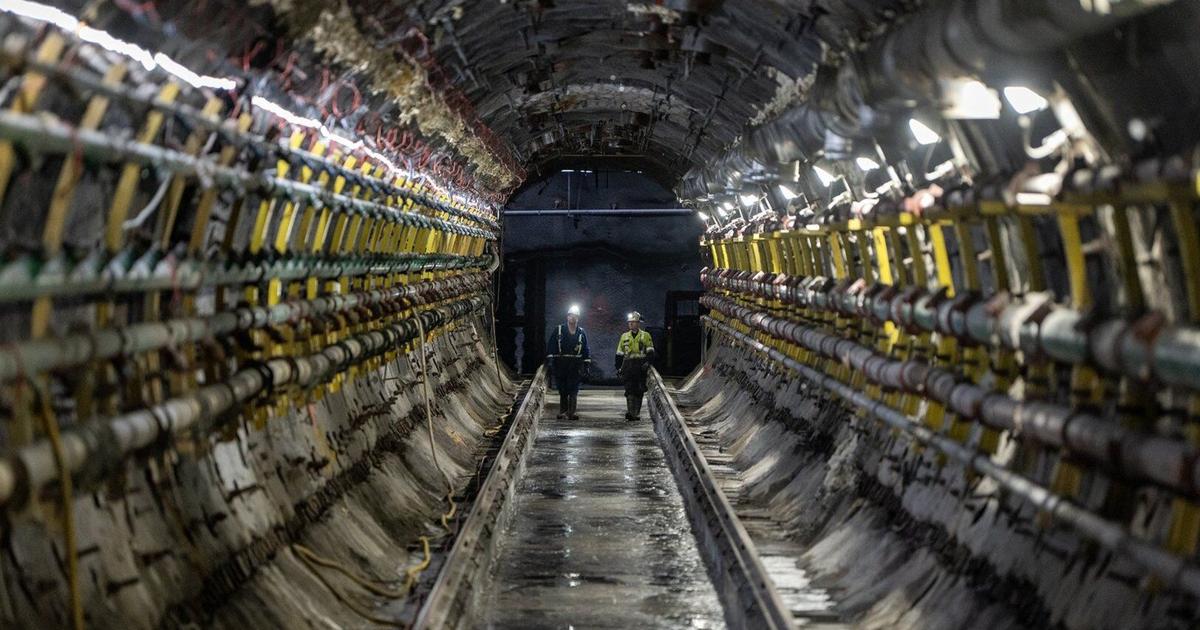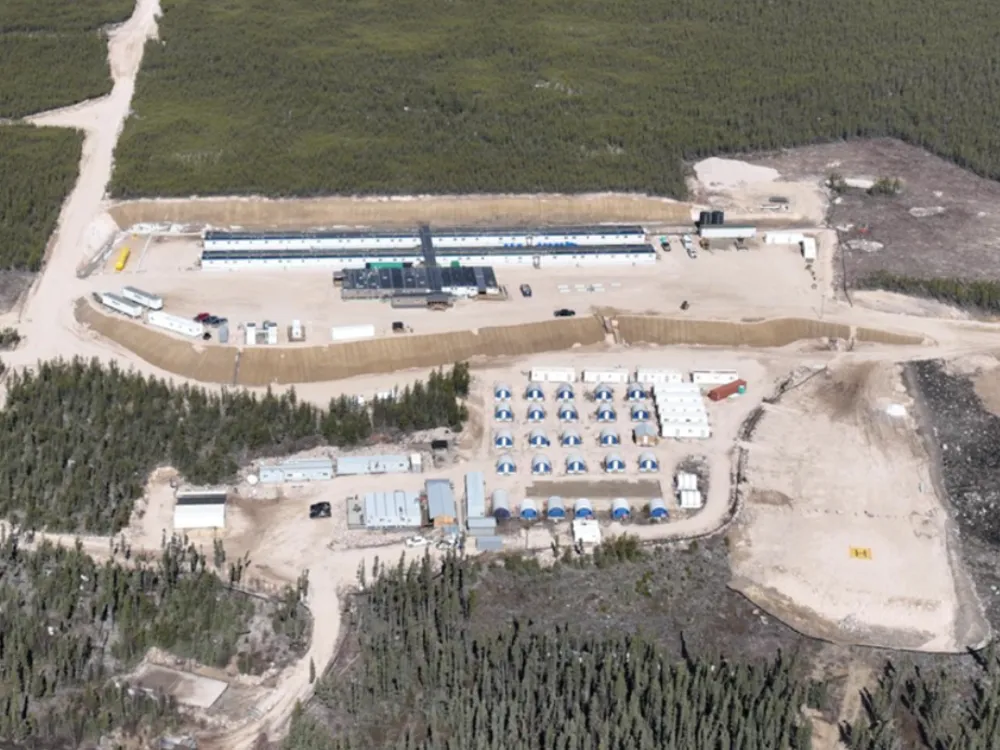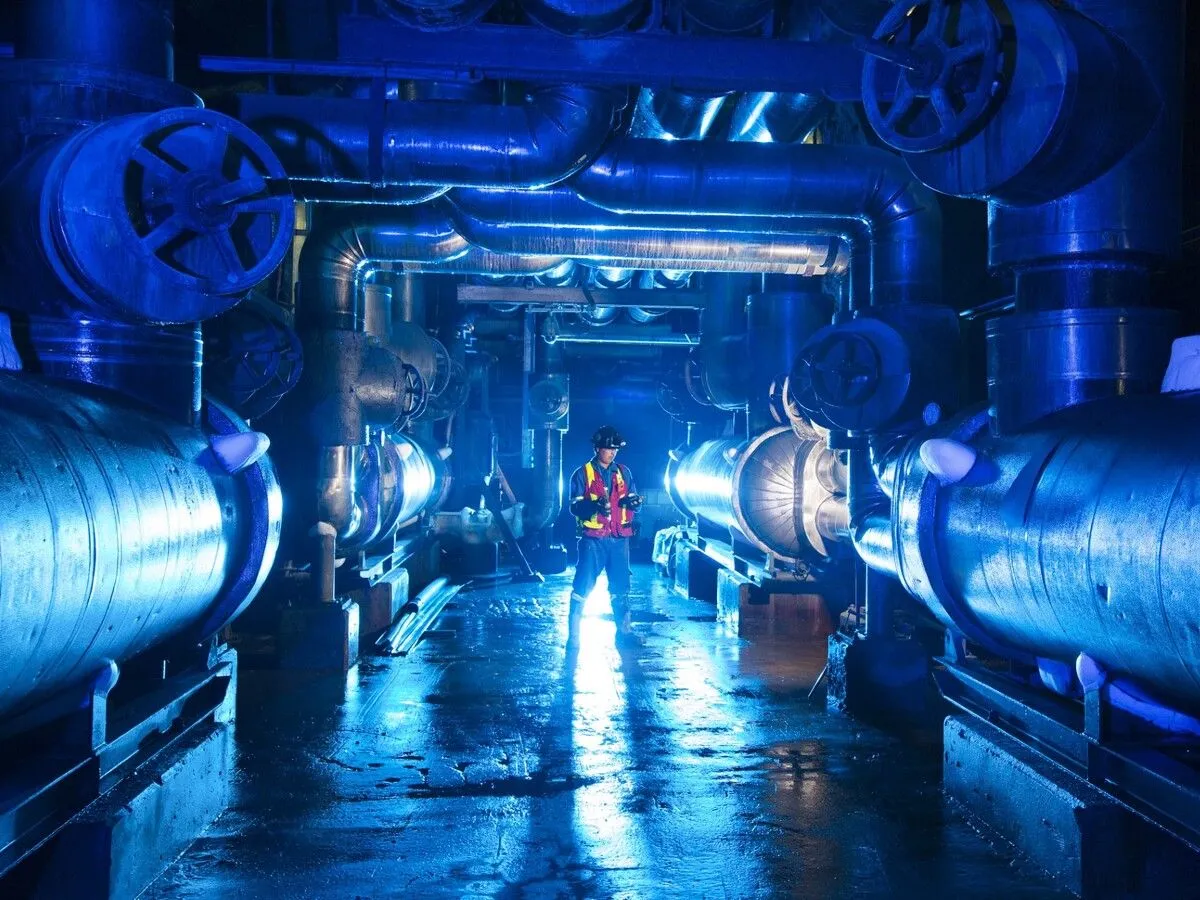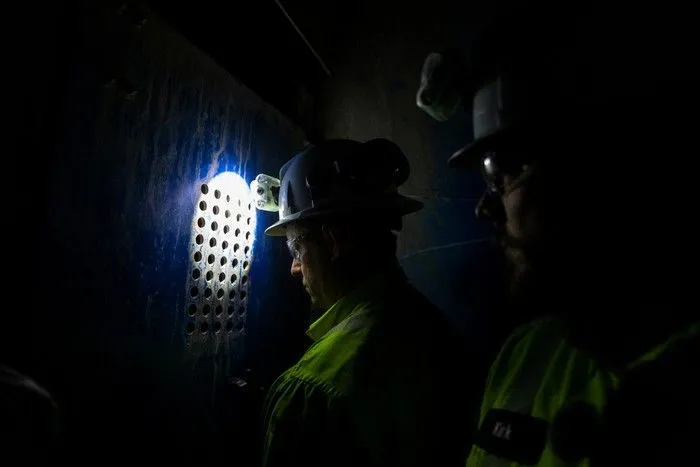
Skip to Content News Archives Economy Energy Oil & Gas Renewables Electric Vehicles Mining Commodities Agriculture Real Estate Mortgages Mortgage Rates Finance Banking Insurance Fintech Cryptocurrency Work Wealth Smart Money Wealth Management Investor Personal Finance Family Finance Retirement Taxes High Net Worth FP Comment Executive Women Puzzmo Newsletters Financial Times Business Essentials More Innovation Information Technology FP500 Podcasts Small Business Lives Told Tails Told Shopping Financial Post Store Obituaries Place a Notice Advertising Advertising With Us Advertising Solutions Postmedia Ad Manager Sponsorship Requests Classifieds Place a Classifieds ad Working Profile Settings My Subscriptions Saved Articles My Offers Newsletters Customer Service FAQ News Economy Energy Mining Real Estate Finance Work Wealth Investor FP Comment Executive Women Puzzmo Newsletters Financial Times Business Essentials EnergyMiningDown the cage: Life in a remote Saskatchewan uranium mineOne of the biggest uranium deposits in the world lies deep in the Athabasca Basin. Beyond the 400 people running the site no one else has laid eyes on the Cigar Lake mine since it opened over a decade ago — until nowPublished Jun 22, 2026 • Last updated 1 hour ago • 11 minute read You can save this article by registering for free here. Or sign-in if you have an account.Vince Marshall, Mine General Supervisor at Cameco, left, looks on inside an elevator at Cigar Lake mine in Athabasca Basin of northern Saskatchewan, on Monday, June 15, 2026. Photo by Heywood Yu /Regina Leader-PostTaryn Roske steps into what’s called the cage, a mine shaft elevator that plunges 480 metres into the abyss — about the height of New York’s Empire State Building. She is sardined in this metal box with 21 other people.Daylight pours in from the gap above the latched steel doors just before a dark descent. It’s the last natural light she’ll see until she returns to the surface 13 hours later.Subscribe now to read the latest news in your city and across Canada.Exclusive articles from Barbara Shecter, Joe O'Connor, Gabriel Friedman, and others.Daily content from Financial Times, the world's leading global business publication.Unlimited online access to read articles from Financial Post, National Post and 15 news sites across Canada with one account.National Post ePaper, an electronic replica of the print edition to view on any device, share and comment on.Daily puzzles, including the New York Times Crossword.Subscribe now to read the latest news in your city and across Canada.Exclusive articles from Barbara Shecter, Joe O'Connor, Gabriel Friedman and others.Daily content from Financial Times, the world's leading global business publication.Unlimited online access to read articles from Financial Post, National Post and 15 news sites across Canada with one account.National Post ePaper, an electronic replica of the print edition to view on any device, share and comment on.Daily puzzles, including the New York Times Crossword.Create an account or sign in to continue with your reading experience.Access articles from across Canada with one account.Share your thoughts and join the conversation in the comments.Enjoy additional articles per month.Get email updates from your favourite authors.Create an account or sign in to continue with your reading experience.Access articles from across Canada with one accountShare your thoughts and join the conversation in the commentsEnjoy additional articles per monthGet email updates from your favourite authorsSign In or Create an AccountorShe uses this brief moment to rest before a long shift ahead.Get the latest headlines, breaking news and columns.By signing up you consent to receive the above newsletter from Postmedia Network Inc.A welcome email is on its way. If you don't see it, please check your junk folder.The next issue of Top Stories will soon be in your inbox.We encountered an issue signing you up. Please try again“I just zone out and close my eyes for the three-minute ride and try (to) get a little bit more sleep,” Roske says.She works at Cigar Lake, a uranium mine in northern Saskatchewan. It’s home to over 400 employees and contractors at any given time, keeping the operation moving around the clock.Jet bore operator Taryn Roske says the days can go by really fast because in the mine you don’t really have a sense of time. Photo by Heywood Yu/Regina Leader-PostHere in the Athabasca Basin, one of the biggest uranium deposits in the world, there are more bears and wolves than people occupying a remote boreal shield. All employees fly in and fly out from the site, which is complete with lodgings, gym amenities, boats to take them onto a lake and a buffet that serves four set meals a day.Cameco Corp., the mine’s operator and majority owner, has marshalled this small army in service of unearthing a radioactive metal that has become a precious commodity in a world thirsty for power.Uranium is so effective that just one year’s worth of production from this site alone — 18 million pounds — could power Saskatchewan’s electric grid for 22 years.Only around 80 workers spend as much time in the concrete underground tunnels as Roske, who operates machinery that steadily chisels away at uranium ore with high-pressured water. The jet boring system, a mining process developed specifically for Cigar Lake, radiates a constant low hum both below and above ground.“The days can go by really fast when you’re down there because you don’t really have a sense of time,” Roske says.The mine is a feat of engineering. It took a decade of trial and error for Cameco to figure out how to extract uranium from the sandstone — saturated with nearby lake water — so that the mine wouldn’t flood.The novel method has given way to a gusher of wealth. A boom in nuclear power has led to soaring demand for the ore in these caverns. Utility companies have come knocking, wanting to buy Cameco’s high-quality fuel for new reactors popping up globally. Prices for uranium have seen an uptick, while governments are backing plans to boost energy production for growing populations.A mine shaft at Cigar Lake mine in Athabasca Basin of northern Saskatchewan, on Monday, June 15, 2026. Photo by Heywood Yu / Regina Leader-PostCameco’s seizing the moment with a massive US$80-billion partnership with the U.S. government for its joint-owned American nuclear power provider Westinghouse Electric Co. to deploy reactors across the country.Beyond the 400 people running the mine, no one else has laid eyes on the place since the boom started. Reporters are getting their first look since Cigar Lake opened just over a decade ago.For 16 years, Roske has worked her way up from monitoring and testing safety levels in northern Saskatchewan’s mines to actually operating the machinery to dig it out of the earth at Cigar Lake. She’s prioritized her career above other areas in her life, but she knows it’s not for everyone.“It’s tough on relationships, being away all the time,” she says.People either love camp life or they tend not to stick around very long.For those who do stay, it becomes a lifestyle that can be hard to describe to those who haven’t lived it themselves.“Since I started, I’ve only had four Christmases off in 16 years.”That’s mostly on account of Roske giving her coworkers priority so they can see their kids open gifts on Christmas morning. She and her parents push their holiday into January, and they’ve grown accustomed to celebrating belated birthdays.This is life for many mining families across Saskatchewan. They spend so much time apart because their work takes them into the far reaches of the province.An aerial view of Cigar Lake mine can be seen through the window of an aircraft in Athabasca Basin of northern Saskatchewan, on Monday, June 15, 2026. Photo by Heywood Yu / Regina Leader-PostTwice a month, Roske boards a 44-passenger chartered flight from Saskatoon on the northern airline Rise Air. The commute can last as long as almost three hours, if the plane stops to pick up other Cameco workers stationed out in La Ronge, a northern hub for mining and forestry.The view from the passenger window is filled with plots of farmland that gradually give way to a dense, deep green boreal forest. The sloughs, rivers and lakes have a metallic shimmer from 21,000 feet overhead as they catch the sun.As the plane nears the Athabasca Basin, massive lakes dominate the terrain. Then, a long, bright beige dirt path appears, as if it’s been carved into the earth with a knife.Roads like it are essential arteries, maintained by Cameco for its heavy-duty semi-trailers to transport steel drums of uranium-sandstone slurry. The trucks take a meandering journey from Cigar Lake to a processing mill owned by Orano Canada Inc., Cameco’s partner in the mine.On a map, the mine and processing facility are only 70 kilometres apart. But the drive is over 1,000 kilometres long through an isolated network that moves south before taking a U-turn and heads north.Limited infrastructure in northern Saskatchewan is wildly inefficient for logistics, but the region is beloved for its natural beauty.As the plane nears the Athabasca Basin, massive lakes dominate the terrain. Photo by Heywood Yu / Regina Leader-PostSpruce and pine trees envelop the base, with Waterbury Lake flanking the north side.Originally from the northern town of La Ronge, a point where all paved highways end, Roske now lives in the province’s biggest city, Saskatoon. She feels like she gets to enjoy both worlds — the city and nature — which reminds her of spending summers at her family’s cabin at the lake.“Especially now that I’m (living) in the city, it’s like home away from home still,” she says.The chartered plane lands at the mine’s dirt-road airstrip. It’s just a short haul on a camp bus to get to the living quarters. The dormitory-style room is Roske’s for two weeks at a time. Someone else working on an alternate schedule claims it during her off weeks.Spending the last six years at Cigar Lake — she worked at two other mines before this one — there’s a familiar rhythm to the place. She’s got clothes and shampoo tucked away in a locker. And like clockwork, the buffet-style cafeteria will serve turkey on Sundays, prime rib on Wednesdays and steak on Saturdays.The entire site is walkable, with a cafeteria, offices and even the airstrip only a few hundred metres away from the main worksite.Dry, dusty roads blend with a dozen tan-coloured corrugated steel warehouses and buildings scattered around the landscape. Both mine shafts have matching exteriors.What you see above ground is in stark contrast to the world that lies below it.Workers wear lights in the mine’s dimly lit passages that are just large enough for forklifts to drive through. Photo by Heywood Yu / Regina Leader-PostIn the slow descent, the elevator passes by areas already mined and backfilled with cement. Cool, humid air creeps in, and the workers turn on the headlamps attached to their hardhats. They need the light to see around these dimly lit passages that are just large enough for forklifts to freely drive around.Roske even takes her coffee breaks down here.She’s proud of her work, especially as she’s paved the way for other women to be underground. Five years ago, she became the first woman to operate the jet boring system.“I wanted to prove that I could,” she says.The circular tunnels expand by two kilometres at the furthest points, with the entire system mostly traversed by foot. The 80 or so employees assigned to work underground walk through these caverns freely in steel-toed rubber boots, splashing through the occasional shallow puddles of water.A member of the media examines pipes carrying uranium-sandstone slurry. Reporters were getting their first look at the mine since Cigar Lake opened just over a decade ago. Photo by Heywood Yu / Regina Leader-PostPipes carrying uranium-sandstone slurry wrap around the corners of this tunnel system. Swirling particles rattle the steel pipes as Roske or another operator drills into the cavities overhead.“The Athabasca Basin is a big giant pit of sand and water,” says Kirk Lamont, general manager of the Cigar Lake operation.Cameco discovered the deposit back in 1981. But it took years to figure out how to mine the uranium tucked in between a sturdy basement of rock and unstable sandstone.“The ground moves all the time; we can’t stop it,” said Kirk Lamont, general manager of the Cigar Lake operation. Photo by Heywood Yu /Regina Leader-PostEngineers were able to stave off the constant threat of lake water flooding the mine by effectively freezing a barrier. They inject brine that’s cooled to minus 30 degrees Celsius into the ground. Over 1,340 holes, all six metres apart, make it possible to hold everything overhead so they can drill from below.Cameco’s contractors are now building an extension of the mine, which involves drilling many more of these holes for frozen brine. It takes two to five years for the freezing to set, which means the new section is on track for mining to start in 2030. It will extend the life of the mine until 2036.Still, the method has its own set of risks. Workers take extra care to look for any signs that the long burrows are at risk of collapsing as the earth shifts.“The ground moves all the time; we can’t stop it. (If) the earth wants to move, the earth is going to move,” Lamont says.Drill cars, part of the Jet Boring mining system, are also called rhinos. Photo by Heywood Yu/Regina Leader-PostWhile an underground mine might conjure up images of dusty, dirty coal operations, there’s none of that debris here. Instead, three drilling cars, also called rhinos, are connected to interior pipes that flush watery slurry into an underground basin. The heavy uranium drops to the bottom for a clamshell excavator to dredge it up.It’s a roundabout way to mine, but the uranium ore found here has a grade 100 times higher than the world average, making it a profitable process.“There’s no other commodity like uranium,” says Cory Kos, Cameco’s vice-president of investor relations and communications.“There’s such a high value. We can use these admittedly inefficient mining methods.”At the end of the third quarter, Cameco reported that the cost of producing uranium across its entire segment was just over $58 per pound. The average realized price for uranium sold in the first three months of the year was just over $91 per pound, giving it a healthy profit margin of over a third above its costs.A watery slurry is flushed into an underground basin where the heavy uranium drops to the bottom and a clamshell excavator, seen here, dredges it up. Photo by Heywood Yu/Regina Leader-PostThe mine is jointly owned by Cameco and Orano, with the two still finalizing an acquisition deal to buy out TEPCO Resources Inc.’s five per cent stake. That recent move is expected to close in the third quarter.Canada and a number of other countries have returned to nuclear power in full force as countries hurry to cut emissions while increasing energy capacity. India is especially interested in the fuel as it signed a $2.6-million deal with Cameco earlier this year to buy 22 million pounds of uranium ore concentrate over a nine-year period to power its reactors.While there’s roaring demand for Cameco’s uranium, Lamont reminds his workers not to let that pressure get to them.“We build our plans so that we can execute that at a reasonable pace,” Lamont says.A sign hanging just before entering the entrance to the cage on ground level gives workers a reminder every time they enter the underground mine: “NO JOB IS SO IMPORTANT THAT WE CAN NOT TAKE THE TIME TO DO IT SAFELY!”Lamont said he would rather production halt than for safety to be sacrificed.He still remembers the Fukushima nuclear accident in 2011 that stoked fears around nuclear energy and “devastated” the uranium business. A tsunami cut the power supply, cooling three Japanese reactors and causing a mass evacuation. No lives were lost as a direct result of radiation sickness.“We ended up taking three of our four operations … into care and maintenance, so there were hundreds of people that became unemployed because of that,” Lamont says.After a long shift in the underground tunnels, workers return to the surface to shower and eat. Roske soaks in what’s left of the soft sunlight during her walk back to the quarters.While some return to their rooms to wind down for the evening, a fair number of workers begin socializing. In summer, it’s primetime fishing season as workers sign out Cameco’s boats to launch into Waterbury Lake.Camille Pouteaux, the senior coordinator of environment, quality and regulatory affairs at Cigar Lake, has worked for Cameco for 17 years in various roles.What keeps her coming back is the work-life balance. She arrives on site Monday and returns home to La Ronge Thursday evening. She says the fishing up here is some of the best in the province with lakes filled with walleye, lake trout and northern pike.“After a 12 or 13-hour shift, you’re still going out fishing for a few hours, and then fileting fish,” Pouteaux says. “People just make it work.”Camille Pouteaux, the senior coordinator of environment, quality and regulatory affairs at Cigar Lake, likes the work-life balance of the job. She arrives on site Monday and returns home to La Ronge Thursday evening. Photo by Heywood Yu/Regina Leader-PostIn the winter, the boats are switched out for ice-fishing shacks. Foraging becomes cross-country skiing.Not all northern mining sites allow workers to wander into the surrounding nature by themselves, Pouteaux says.And in some ways, the remote north is more convenient than the city. Here, the workers have an onsite gym with movie nights, kaiser card game tournaments and yoga clubs — the latter a social club Pouteaux set up herself.“You can do anything you want up here. If you have an interest in something, you can make it happen, so it doesn’t feel like you’re lacking or wanting anything,” says Pouteaux.But there are plenty of challenges, too. It can be tricky finding a partner who understands you have to be away for two weeks every month.Roske, who started working up here when she was 20, was single for most of her career. She met her partner at Cigar Lake when she was a contractor and their flight schedules were almost in sync.Now, her partner is back working in Saskatoon but they still get to share the weekends and evenings together when she’s home for two weeks at a time.Sometimes it feels like she lives in two different worlds. Onsite, she’s in a set routine and socializes with her coworkers after shift. While in Saskatoon, she recharges and mostly stays at home.She couldn’t imagine working in an office after having a taste of what it’s like working at camps up here. It makes sense to her that she would have found her partner onsite, someone who gets to see both of her worlds.“I feel like I live a double life,” she said. “There’s like work Taryn, and then home Taryn, and it’s like two different people.”NyKing@postmedia.com Join the Conversation This website uses cookies to personalize your content (including ads), and allows us to analyze our traffic. Read more about cookies here. By continuing to use our site, you agree to our Terms of Use and Privacy Policy.
Down the cage: Life in a remote Saskatchewan uranium mine
Cameco has enlisted a small army to work the Cigar Lake mine in a site so remote there are more bears and wolves than people.
3,179 words~14 min read