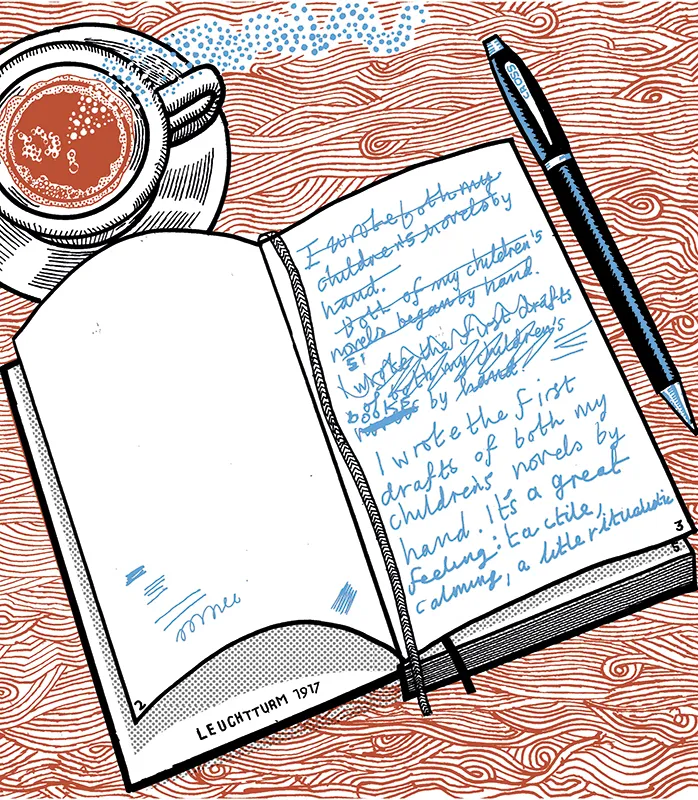
Before the sun rose, while her children slept, Toni Morrison hauled herself from her bed to her desk and began to write. Stephen King wrote at a child’s tiny desk in a trailer. In the basement of Powell Library, Ray Bradbury fed coins into a pay to play typewriter to write Fahrenheit 451. These routines have been used by many writers to set their own routines. I, too, have been that writer. When I’m in the throes of a book length work, I will give myself a stern talk each morning at 5 AM when my alarm goes off:Article continues after advertisement
“Toni Morrison didn’t become great because she slept in. Stephen King would never have written Salem’s Lot if he didn’t get out of bed. R.L Stine hasn’t been publishing for DECADES because he likes the warmth under the covers. Octavia Butler…” And on and on, listing authors who I admire until I drag myself up so I can write for a few hours.
It’s not just writers whose methods I emulate. In fact, I find the routines of other kinds of artists, at times, more fruitful. At the very least, they feel less like I’m badgering myself and more like I’m giving myself the freedom to create and experiment.
I’ve spent a day as Mozart, walking through the woods while contemplating my work and the world. I’ve hacked up my stories to see what stranger creations they’d become if I just reordered things—a bit like David Bowie. Exploring these new methods of creation have helped me keep the creative fire inside dancing. And on the days when my brain is clogged and run down, they have helped me find my way back to my stories.