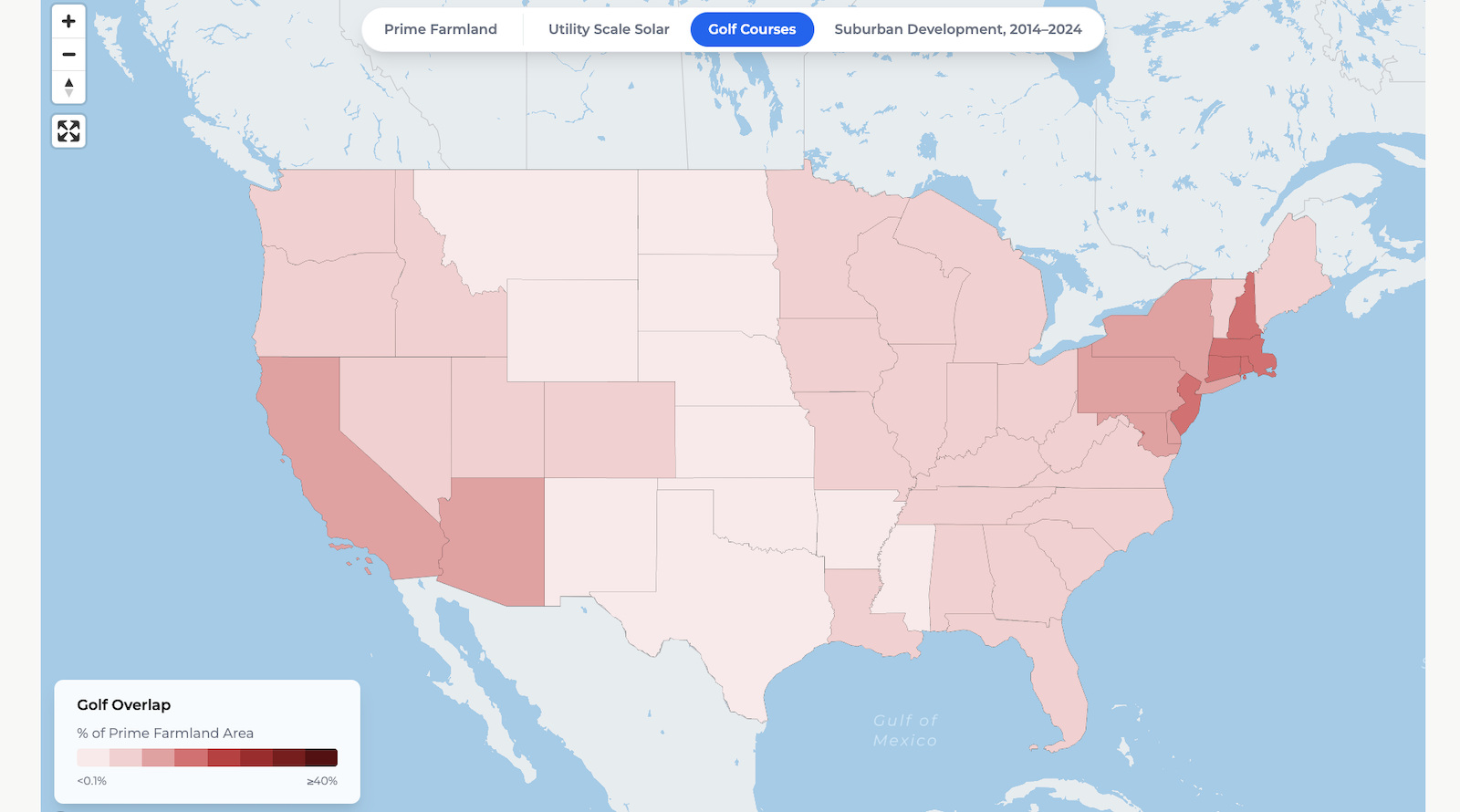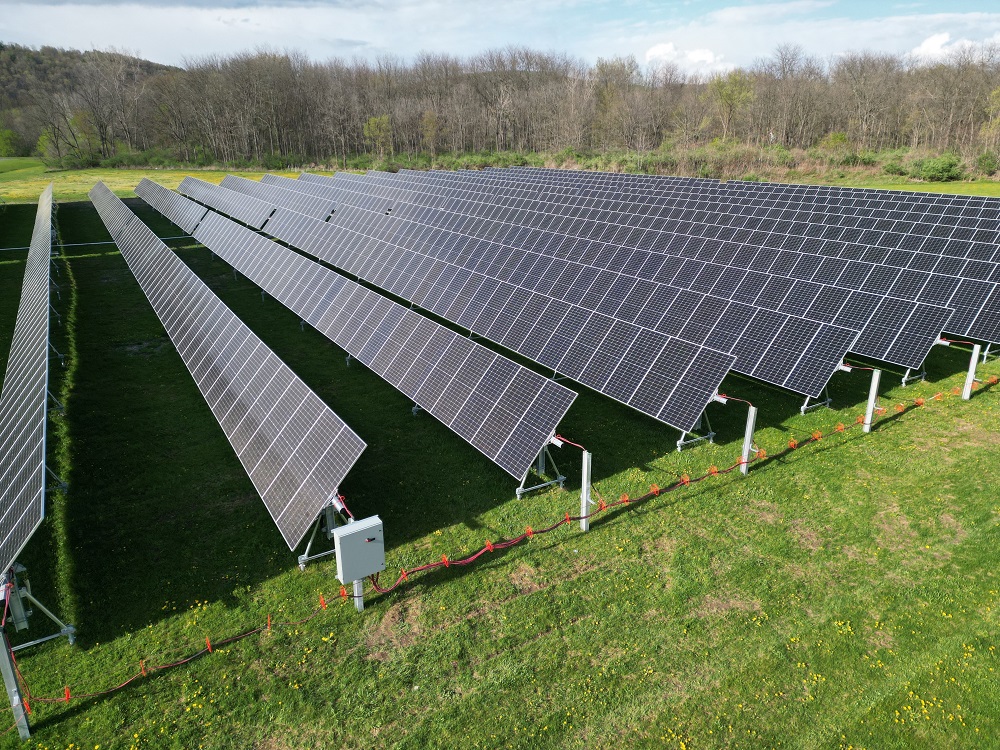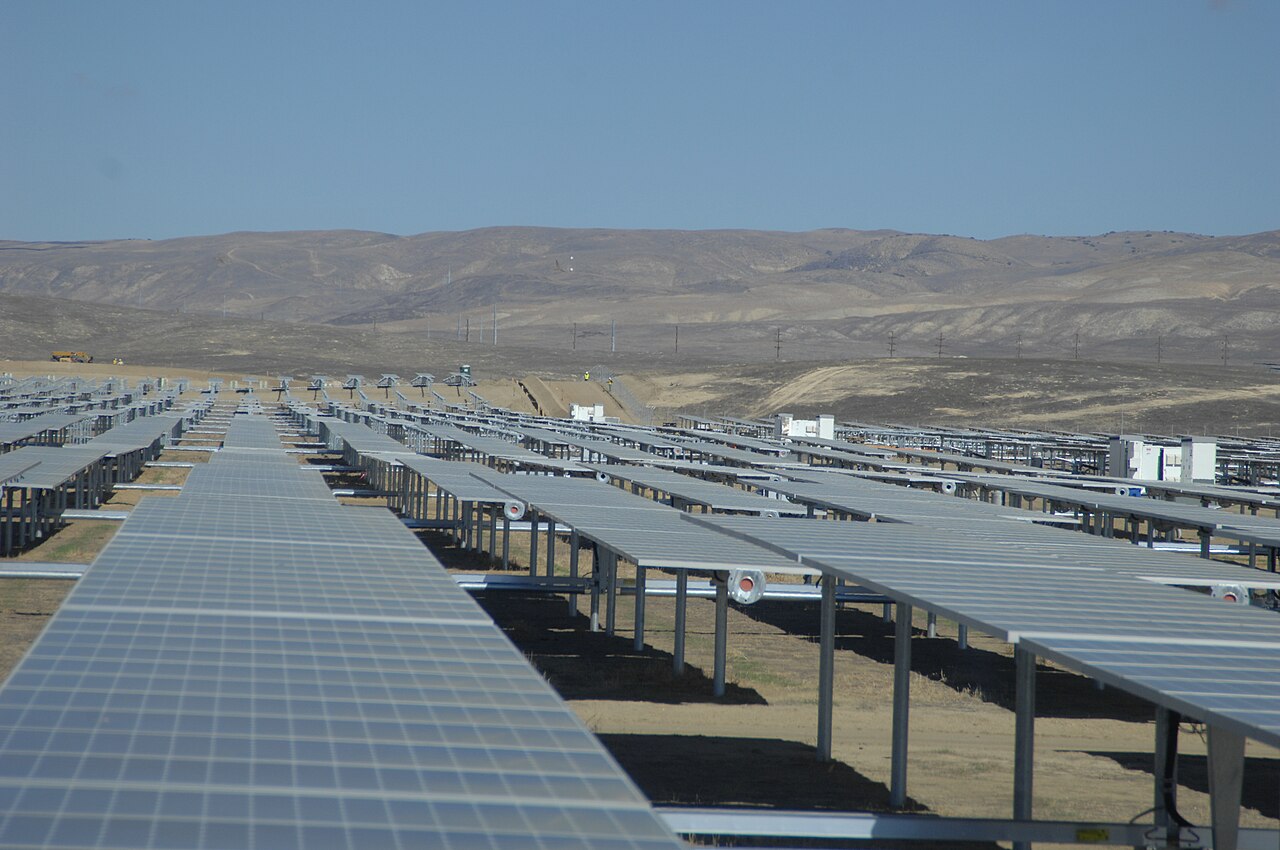
Released ahead of the U.S. Senate’s consideration of the 2026 farm bill, data shows that land used for utility-scale solar does not exceed 0.5% of prime farmland in any state, and is dwarfed by land used for golf courses and suburban development.
Studies of American opinions on clean energy development show that, in general, people have a slightly negative view of large-scale solar installations that replace farmland (although adding agrivoltaics uses to sites turns negative impressions neutral in even the strongest opponents).
Despite those concerns, new research by the Solar Energy Industries of America (SEIA) indicates that Americans don’t have much to worry about. The group says that utility-scale solar uses just 0.07% of U.S. prime farmland — far less than is currently used for golf courses and suburban development.
An interactive map tool produced by SEIA shows that in even the states with the highest solar penetration, the amount of prime farmland used for solar never exceeds 0.5%.
A screenshot of SEIA’s interactive map tool, showing low penetration of solar on prime farmland in the U.S. | Image: SEIA