Founder’s Briefs: An occasional series where Mongabay founder Rhett Ayers Butler shares analysis, perspectives and story summaries.
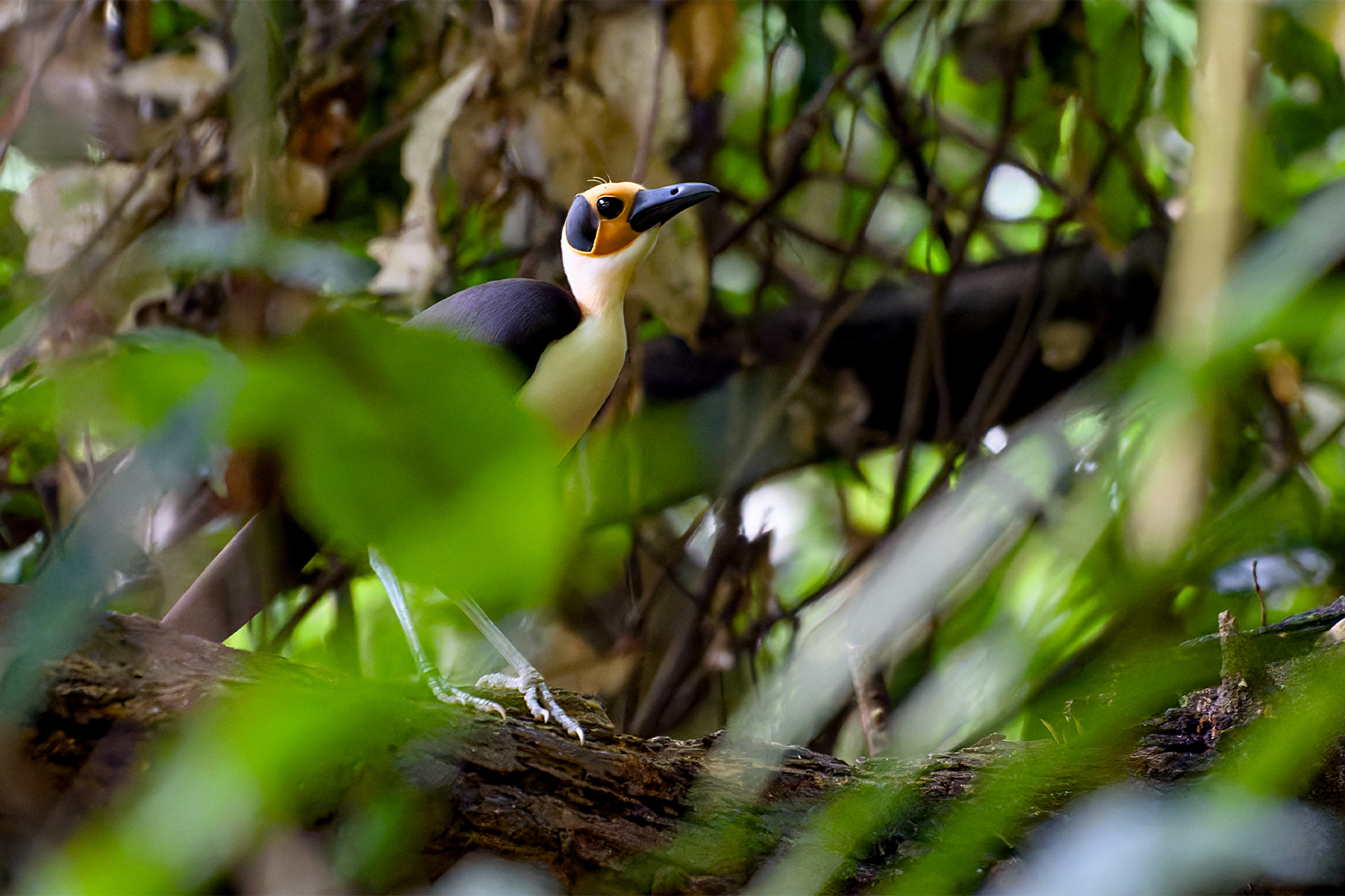
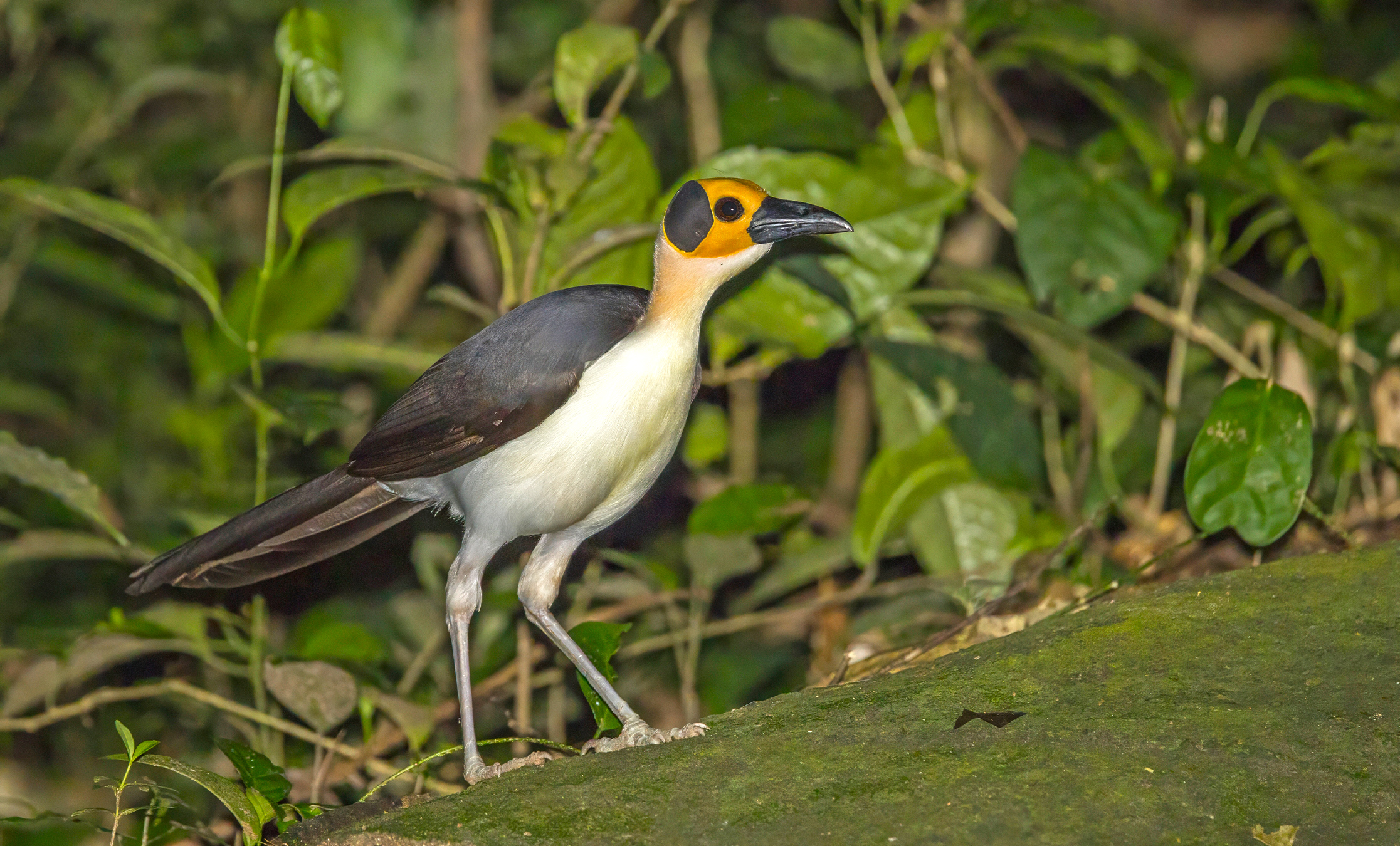
The white-necked picathartes is easy to miss. In Taï National Park, in southwestern Côte d’Ivoire, it nests beneath rocky overhangs, shaping mud cups against stone walls deep inside the forest. It may appear for only a few seconds, long enough to show its bare yellow head, black cheek patches, and long-legged frame, before it vanishes again into the trees.
The bird’s elusiveness reflects the kind of habitat it needs, reports contributor Ryan Truscott for Mongabay. Taï is the largest intact remnant of the Upper Guinean rainforest, a forest type that once stretched across much of West Africa. Its boulders, old animal trails, giant mahoganies, duikers, hornbills, monkeys, and river hogs are part of a system that still retains much of its original complexity.
The white-necked picathartes (Picathartes gymnocephalus) depends on rocky nesting sites and surrounding forest cover. Other species help maintain the forest itself. Hornbills, primates, and mammals move seeds through the canopy and across the forest floor, helping trees and lianas regenerate far from their parent plants.