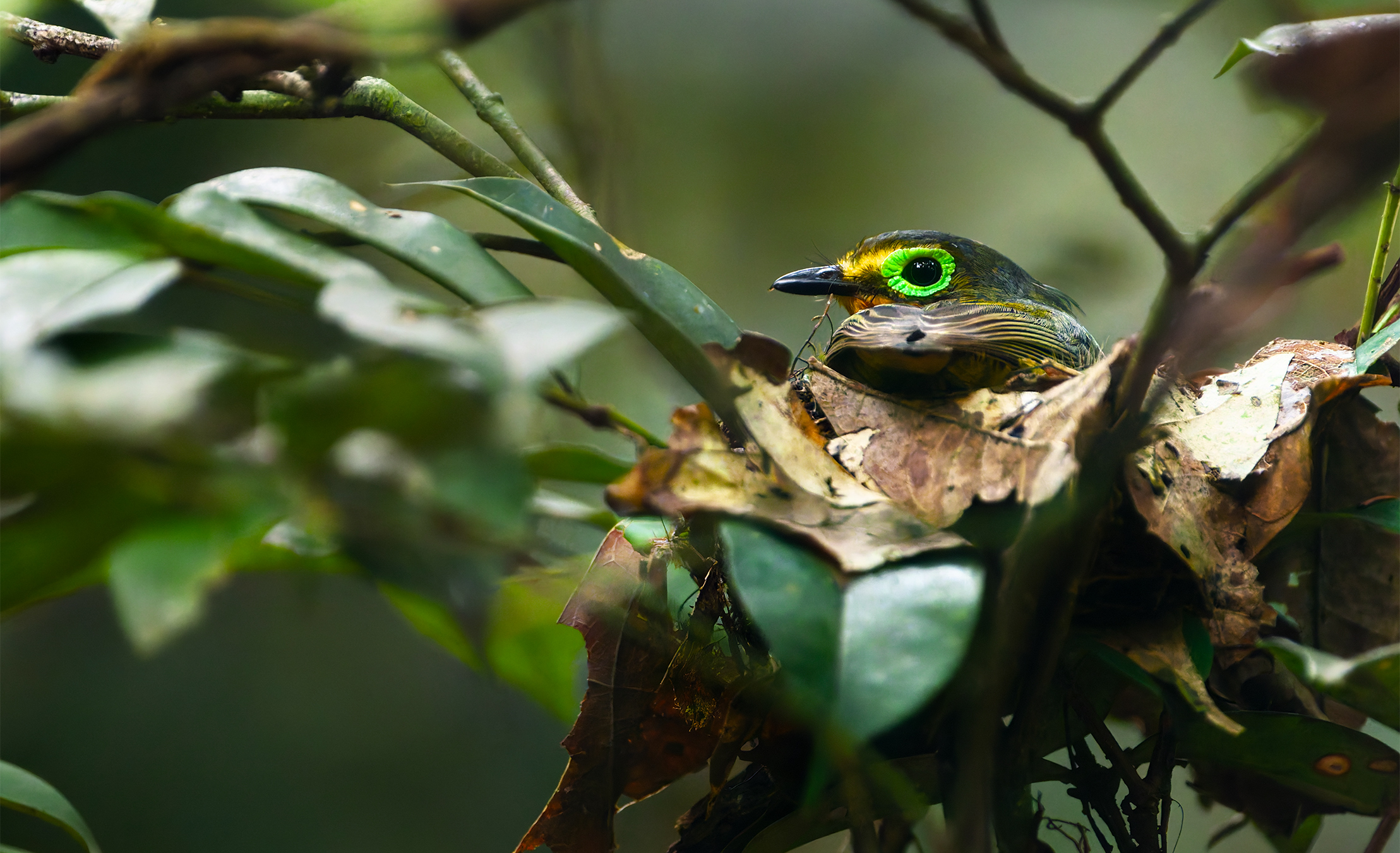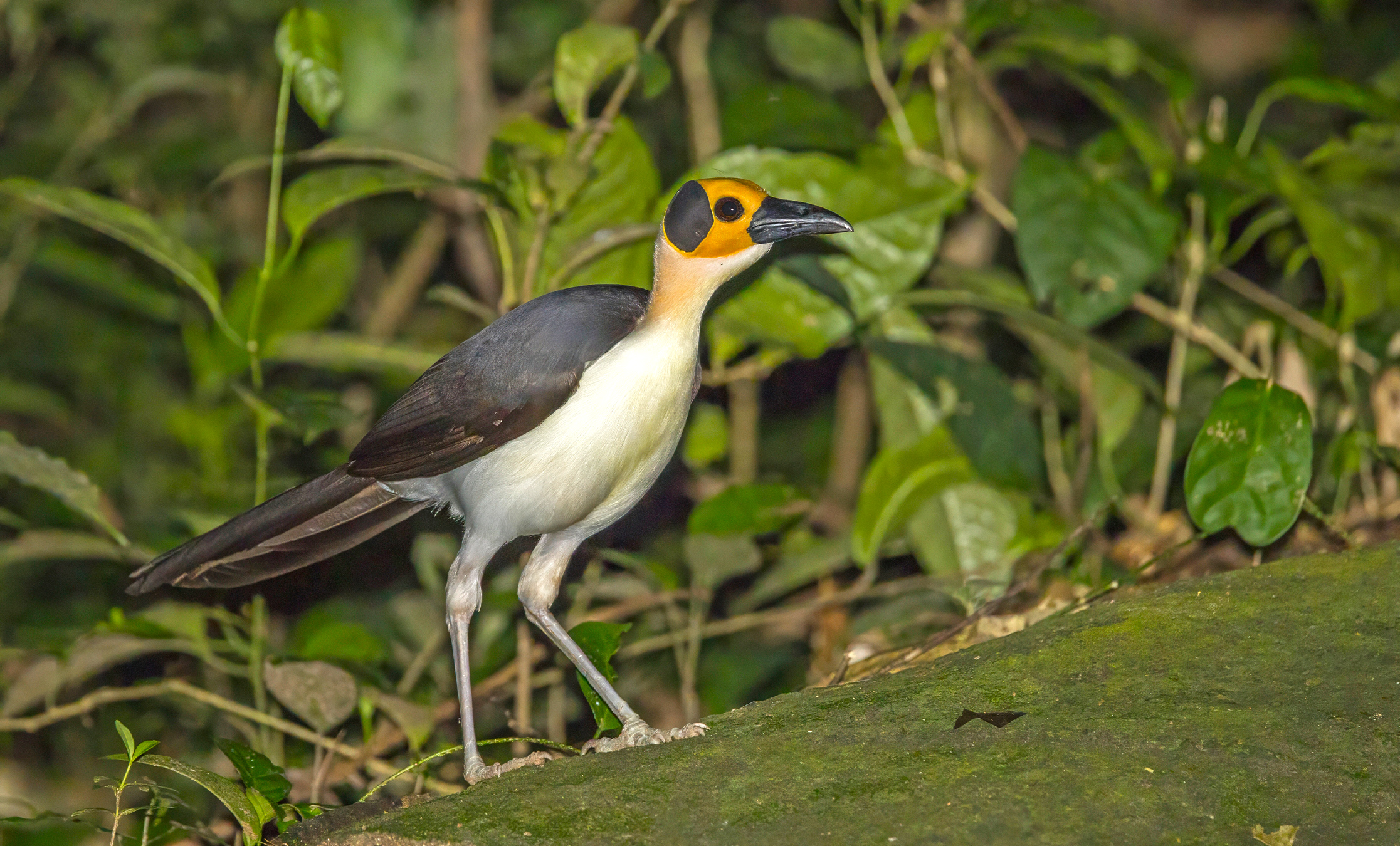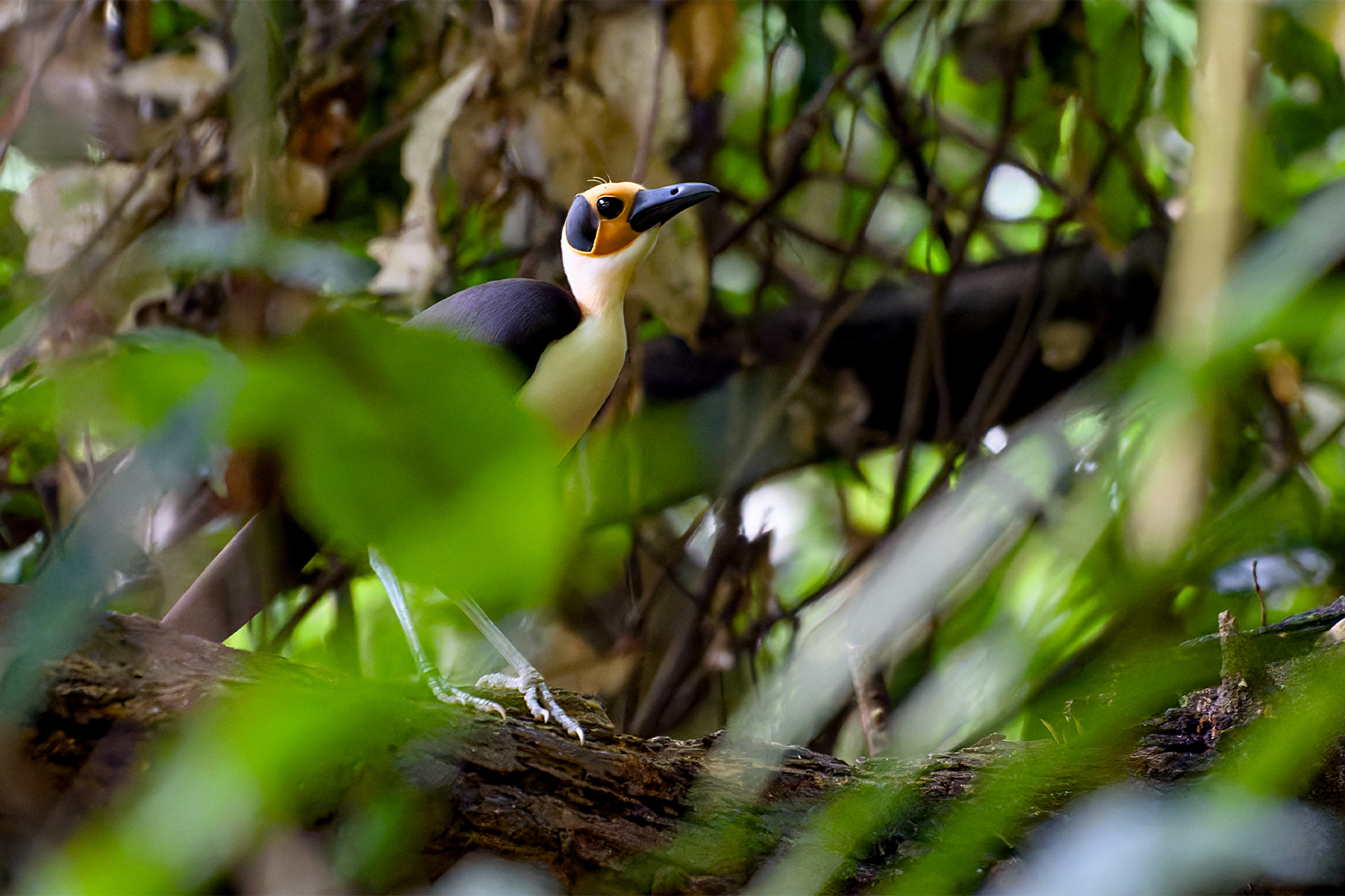
In late May, Mongabay visited the Taï National Park in southwestern Cote d’Ivoire.The park protects the largest remnant of Upper Guinean forests in West Africa, which is itself home to unique animals.One of these is the white-necked picathartes, a bird that builds its mud-cup nests on rock walls deep inside the rainforest.A Mongabay correspondent accompanied a member of the Ivorian Office of Parks and Reserves to visit a rare nesting site in the hope of spotting its elusive occupants.
TAÏ NATIONAL PARK, Côte d’Ivoire — The path that leads through the rainforest towards a nesting site for one of its most curious inhabitants is not made by humans but by animals.
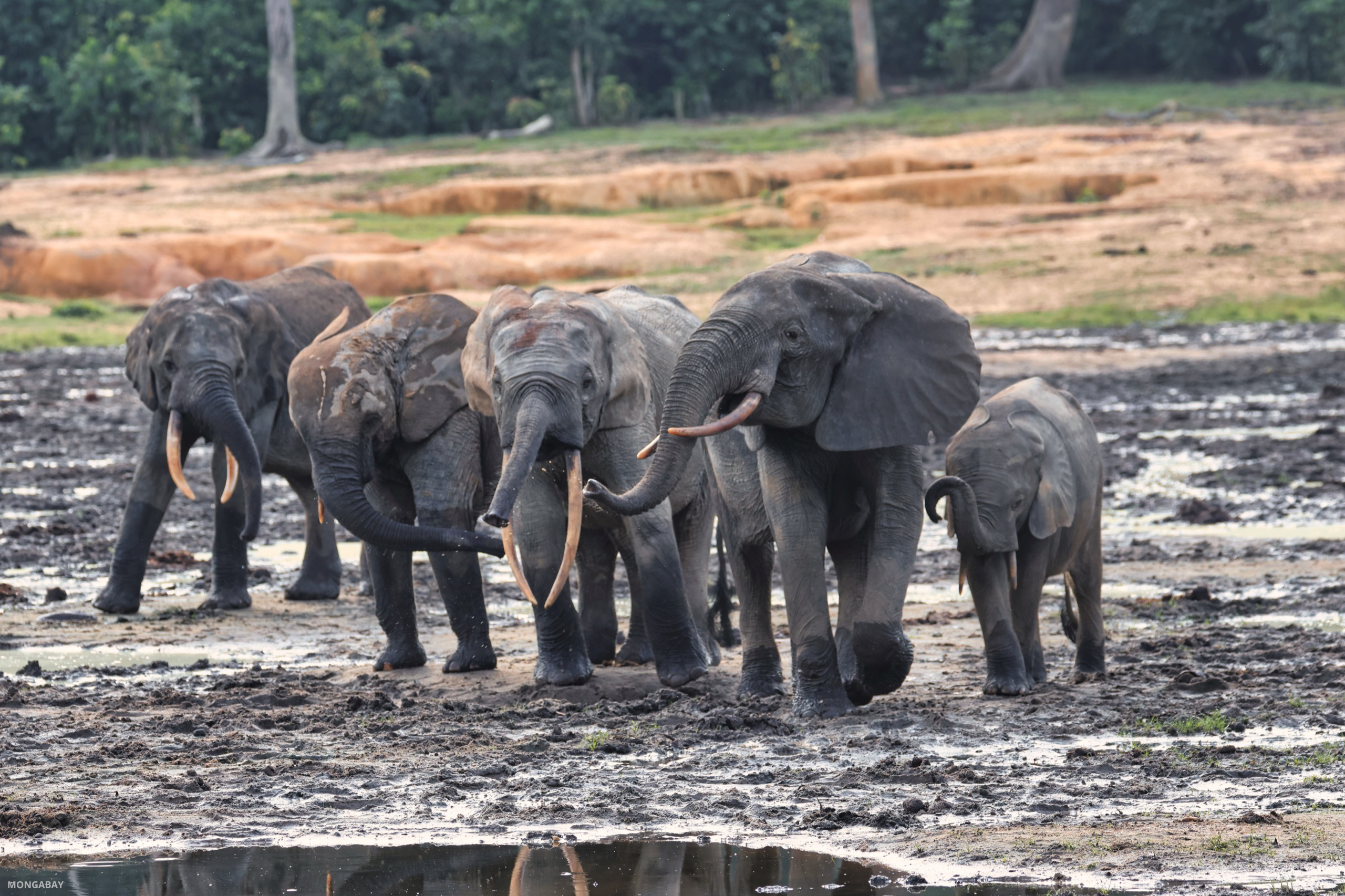
“It might be half a million years old, this animal path,” says Michele Menegon, a herpetologist and regular visitor to Taï National Park, in southwestern Côte d’Ivoire. It could of course be younger, he adds, but such a clear trail through the forest, following the contour of a ridge, is likely to be an ancient one — maintained by the passage of both Taï’s great and small, from forest elephants (Loxodonta cyclotis) to diminutive antelopes like the Maxwell’s duiker (Philantomba maxwellii), whose piles of tiny black droppings are visible beside the path.