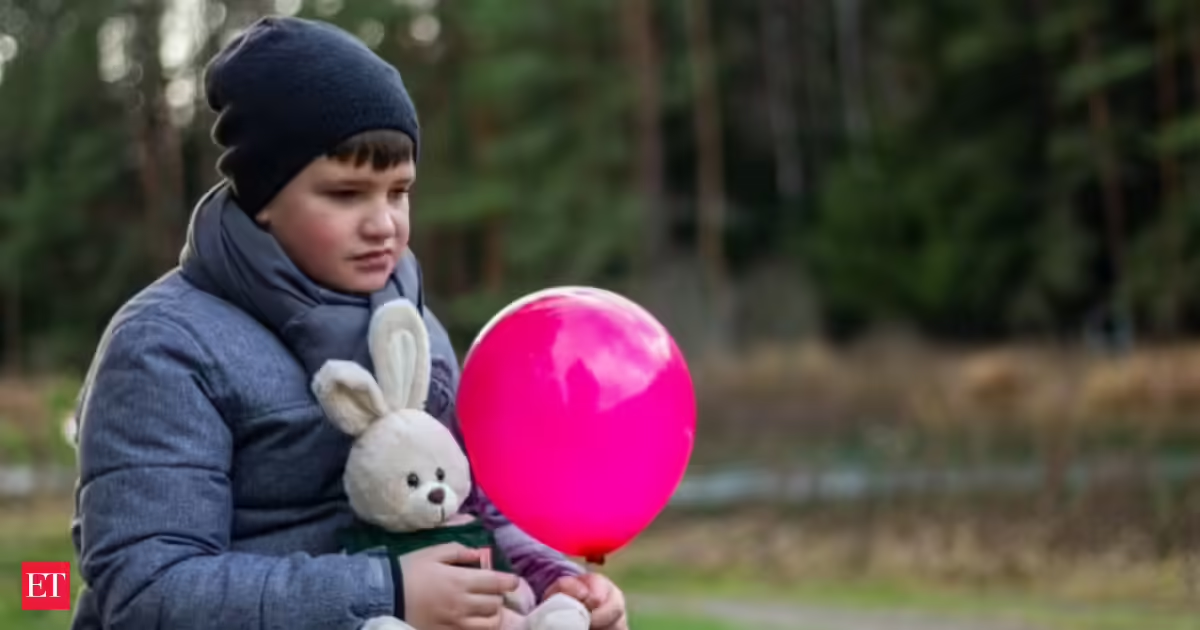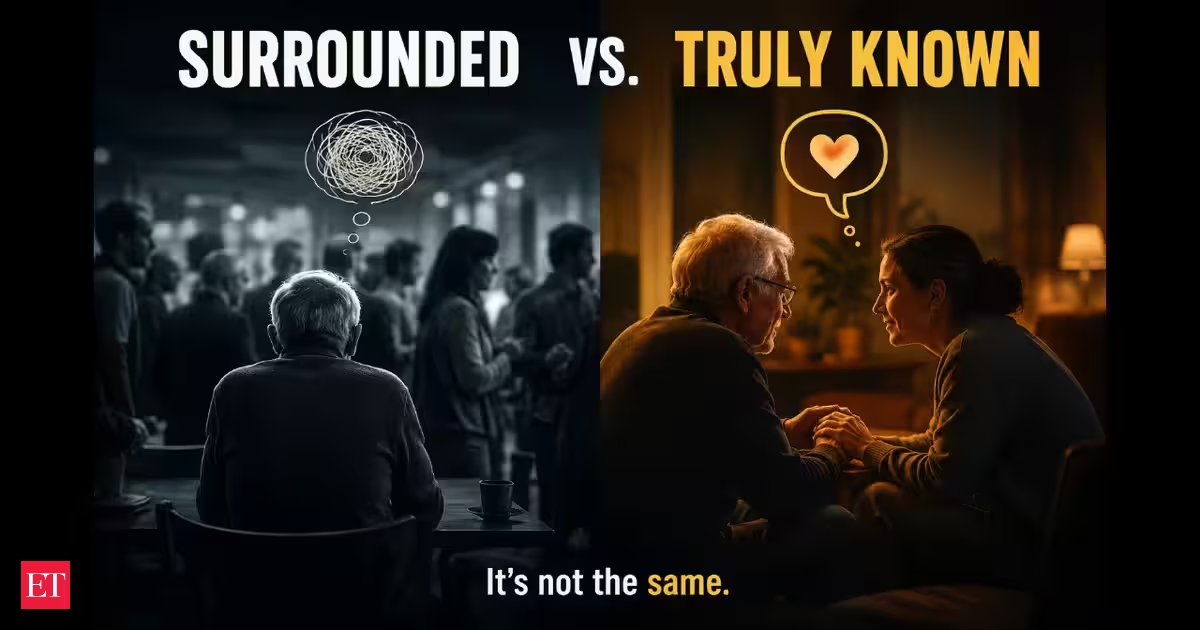
Psychology says many adults who keep everyone at a distance aren’t loners by nature, and what’s hard is that they learned early that openness invited harm so they built a life that stays sealed off. There is usually one person everyone knows. The friend who always listens but rarely talks about themselves.The colleague who can spend years working alongside people without revealing much beyond surface details. The family member who changes the subject whenever conversations become too personal. From the outside, these people can appear fiercely independent, private or simply uninterested in close relationships. Psychologists, however, say the reality is often more complicated. Growing evidence suggests that some adults who keep emotional distance from others are not avoiding connection because they dislike people. Instead, they may have learned much earlier in life that opening up came with consequences. What makes some people afraid of emotional closeness? A recent study published in the International Journal of Environmental Research and Public Health examined how childhood emotional abuse may influence adult relationships. Researchers Ricky Finzi-Dottan and Hila Abadi studied 180 adults aged between 21 and 30 and explored links between childhood experiences, attachment styles, rejection sensitivity and fear of intimacy. Their findings suggested that emotional abuse in childhood was associated with greater fear of intimacy later in life, partly through the development of insecure attachment patterns. The study defined emotional abuse as repeated experiences such as criticism, rejection, humiliation, contempt or emotional neglect by parents. While not every child exposed to these experiences develops the same patterns, psychologists say such environments can teach an important lesson very early: Being vulnerable may not be safe.Why do some people seem independent but struggle to open up? One of the most interesting findings involved avoidant attachment. People with avoidant attachment often appear self-sufficient. They may excel at handling problems alone, avoid asking for help and pride themselves on not depending on others. To friends and colleagues, this can look like confidence. Psychologists note that it can sometimes be something else entirely. For some individuals, emotional distance becomes a protective strategy. The less they rely on others, the less likely they are to experience rejection, disappointment or emotional pain. The researchers found avoidant attachment was an even stronger predictor of fear of intimacy than anxious attachment. In other words, the people who appear the least affected by relationships may sometimes be working the hardest to protect themselves from them.Does enjoying solitude mean something is wrong? Not necessarily. Experts draw an important distinction between loneliness and solitude. Research from the University at Buffalo found that some people actively choose time alone because they enjoy it, a pattern psychologists describe as "unsociability." Unlike social withdrawal driven by fear or anxiety, voluntary solitude was not linked to the same negative outcomes and was even associated with creativity in some cases. As psychologist Julie Bowker explained, motivation matters. Wanting time alone and fearing closeness are not the same thing.Why can simple conversations feel uncomfortable? For people who carry these patterns, emotional intimacy can feel unexpectedly risky. A question as simple as "How are you really doing?" may trigger discomfort that seems disproportionate to the situation. The study found that people with insecure attachment were less likely to expect acceptance from others. That expectation, or lack of it, played an important role in fear of intimacy. Simply put, some people may enter conversations already preparing for rejection, even when none is present.Why does this matter beyond relationships? The impact of social connection extends far beyond friendships and dating. According to the US Centers for Disease Control and Prevention (CDC), roughly one in three adults reports feeling lonely, while about one in four lacks adequate social and emotional support. Research has linked chronic loneliness and social isolation with increased risks of depression, anxiety, cardiovascular disease, dementia and other health problems. That does not mean every private person needs to become more outgoing. It does suggest that when emotional distance is rooted in fear rather than preference, it may have consequences that extend beyond personal relationships.Can people unlearn these patterns? Psychologists say attachment patterns are not fixed for life. The researchers behind the study point to the concept of "earned security" — the idea that people can gradually develop healthier attachment styles through supportive relationships, self-awareness and, in some cases, therapy. That process rarely begins with a dramatic breakthrough. More often, it starts with something smaller: sharing a concern, asking for help or discovering that vulnerability does not always lead to harm. For some adults, the challenge is not learning how to connect. It is learning that the rules they developed to stay safe as children may no longer be necessary.
Psychology says many adults who keep everyone at a distance aren’t loners by nature, and what’s hard is that they learned early that openness invited harm so they built a life that stays sealed off
Some adults seem comfortable keeping everyone at arm's length. But psychologists say distance is not always a personality trait. Emerging research suggests that for many people, it may be a coping strategy learned in childhood after vulnerability felt unsafe, making intimacy feel far more complicated in adulthood.
777 words~4 min read