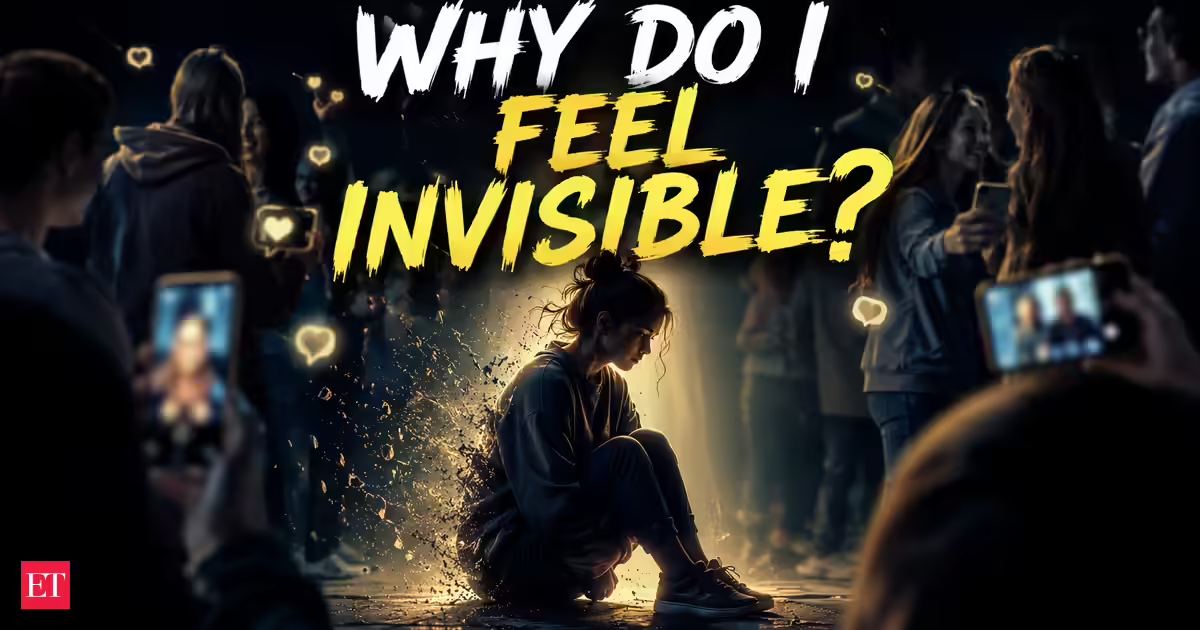
When people think about adults with very few close friends, they often assume loneliness is the central issue. Sometimes it is. Yet psychology suggests that for many people, the deeper struggle is not being alone but deciding whether closeness is worth risking again. Research on rejection, social trust, attachment, and loneliness by Annette W. M. Spithoven, Patricia Bijttebier, and Luc Goossens showed that repeated disappointments can gradually change how people approach relationships.A person who has experienced enough broken promises, one-sided friendships, or emotional abandonment may begin to view distance as more predictable than connection. This does not necessarily mean they have stopped wanting meaningful relationships.In many cases, it means they have learned to associate vulnerability with disappointment, making solitude feel less painful than repeatedly hoping for support that never arrives. The withdrawal that follows is often better understood as protection than preference.A person who has experienced enough broken promises, one-sided friendships, or emotional abandonment may begin to view distance as more predictable than connection | Pexels Rejection can quickly change how people feel about connectionOne of the clearest findings in recent social psychology research is that rejection affects more than mood. An experience-sampling study named “The emotional and motivational aftermath of everyday rejection” found that everyday experiences of rejection were associated with increases in loneliness, negative emotion, and a stronger desire to be alone on the same day.The importance of this finding is that it captures social pain in real time rather than years later. A disappointing interaction does not simply hurt in the moment. It can immediately make social withdrawal feel more appealing. When experiences like this occur repeatedly across months or years, people may begin approaching relationships differently. Rather than expecting comfort or support, they become increasingly prepared for disappointment. Solitude then becomes attractive not because it provides everything people need, but because it appears less likely to create new emotional wounds.Trust matters as much as social contactResearch increasingly shows that loneliness is not determined solely by how many people are present in someone’s life. A systematic review by Drew Eleanor Meehan, Anne Grunseit, Neta HaGani, and Dafna Merom found that trust, belonging, safety, and social cohesion were consistently associated with lower loneliness across numerous studies. This helps explain why some people feel disconnected despite being surrounded by others, while some individuals with smaller social circles feel relatively content. Relationships depend on trust as much as proximity. When someone has repeatedly experienced unreliability, betrayal, or rejection, they may begin questioning whether closeness will provide comfort or create additional stress. Under those circumstances, reducing social expectations can feel emotionally safer than continuing to invest in relationships that seem uncertain or fragile.Past experiences can shape future expectationsResearch examining intimacy and attachment consistently finds that earlier experiences influence how people interpret later relationships. A 2026 study exploring rejection sensitivity, attachment insecurity, and interpersonal trust found that individuals who had experienced significant relational difficulties often approached social situations with greater caution and suspicion.This does not mean people become permanently incapable of forming close relationships. It does suggest, however, that previous disappointments can shape expectations. Someone who has repeatedly been let down may begin scanning for signs that history will repeat itself. They may keep conversations surface-level, avoid relying on others, or end relationships early when uncertainty appears. These behaviors can look detached from the outside, yet they are often attempts to avoid a familiar form of emotional pain rather than signs of indifference toward connection itself.Repeated exclusion can leave lasting effectsA growing body of research suggests that chronic social exclusion can have consequences that extend beyond temporary sadness. A paper published by Eric D. Wesselmann, University of Illinois, argued that long-term ostracism and exclusion may function as a significant psychological stressor with effects that resemble aspects of trauma. This perspective helps explain why some people carry strong memories of relational disappointment even years later. The issue is rarely one friendship or one rejection. More often, it is the accumulation of many experiences pointing in the same direction. Over time, repeated setbacks can create a broader belief that closeness is unreliable. Once that belief becomes established, hope itself can begin to feel risky because it requires trust, and trust has repeatedly proven costly.Solitude can become a form of risk managementResearchers studying social rejection have found that people often respond to interpersonal disappointment by seeking lower-risk forms of connection. A 2025 study published in Group Processes & Intergroup Relations found that rejection could increase interest in symbolic or less demanding social bonds when close relationships felt uncertain or threatening. This does not mean people stop wanting relationships. Instead, they may gravitate toward interactions that require less emotional exposure. Casual friendships, limited social contact, online communities, or highly structured relationships can feel easier to manage because they involve fewer opportunities for deep disappointment. These strategies may reduce emotional risk in the short term, even if they do not fully satisfy the need for closeness.Casual friendships, limited social contact, online communities, or highly structured relationships can feel easier to manage because they involve fewer opportunities for deep disappointment | Pexels Loneliness is often about trust, not numbersOne of the most important findings in loneliness research is that increasing social contact alone is not always enough. A 2026 meta-analysis of loneliness interventions found that psychological approaches addressing beliefs, expectations, and social-emotional skills were among the most effective strategies. This matters because it shifts attention away from the number of friendships a person has and toward how safe those friendships feel. For individuals who have experienced repeated disappointment, rebuilding trust may be more important than simply expanding a social network. Meaningful connection becomes possible when relationships feel reliable enough to risk emotional investment again. Without that sense of safety, solitude often continues to feel like the more predictable option.
Psychology says the biggest fear of people who have few close friends isn’t loneliness; it's the quiet memory of being let down often enough that solitude started feeling safer than hope
For some adults, having only a handful of friends doesn't equate to loneliness; instead, it reflects a cautious approach to relationships. They're often haunted by past letdowns that teach them it's safer to keep others at arm's length. Studies indicate that the sting of rejection can dampen one's spirit, making the option of solitude seem more appealing.
961 words~4 min read