Bridging Python and Rust: Mitigating GIL Contention in a High-Throughput LLM Gateway
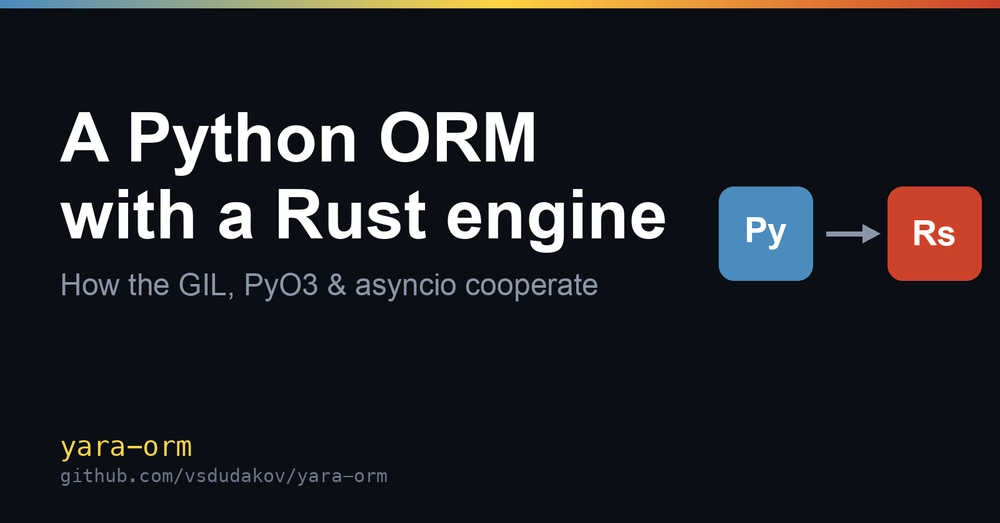
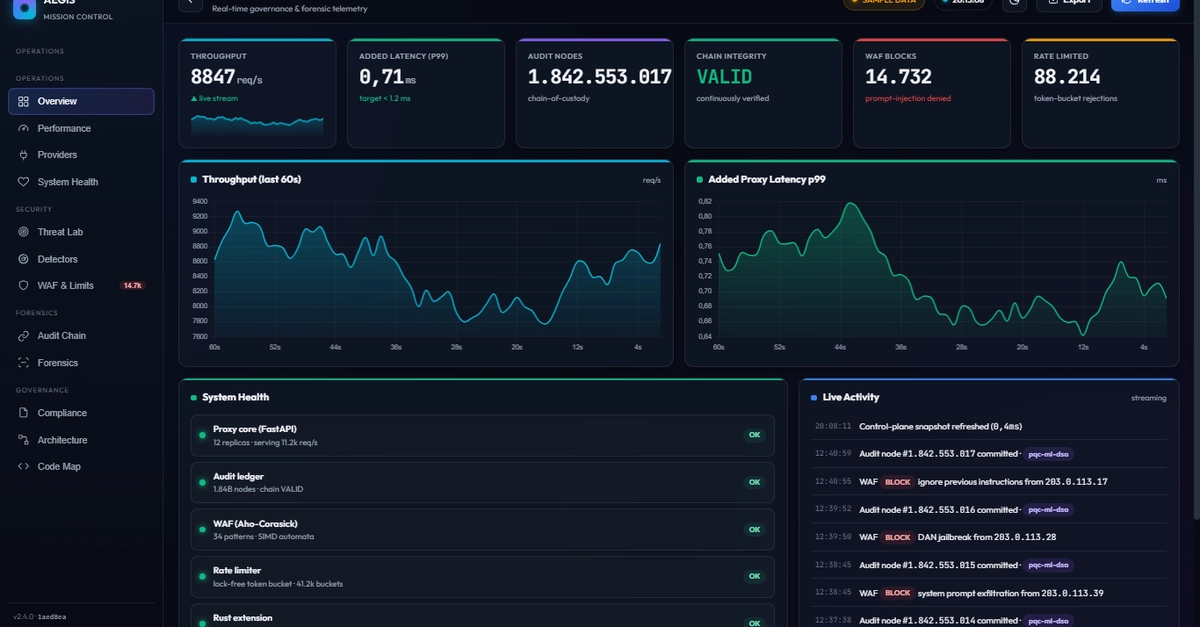
When building Aegis, an open-source OpenAI-compatible governance proxy, we made a core architectural decision: use Python (FastAPI/ASGI) for rapid development and API adaptability, but offload high-performance cryptography, Write-Ahead Logging (WAL), and Merkle Mountain Range (MMR) operations to a compiled Rust extension (aegis_rust_v2) via PyO3 and Maturin.
However, mixing Python’s asynchronous event loop with Rust's multi-threaded Tokio runtime led us directly to a classic systems engineering wall: GIL (Global Interpreter Lock) contention.
Here is a deep dive into the architecture, the performance tradeoffs, and how we engineered a two-path model to keep hot-path latency under 2.5 microseconds.
The Two-Path Execution Model