Skip to content
GQINewsNews Archive 2025News Archive 2024News Archive 2023News Archive 2022News Archive 2021News Archive 2020News Archive 2019News Archive 2018News Archive 2015-2017AnalysisQnalysisPlayersPublic CompaniesPrivate/Startup CompaniesUniversitiesGovernment/Non-ProfitVenture CapitalVenture Capital – Sorted by Quantum CompanyResourcesConferencesToolsOther Websites and Industry AssociationsEducationBooksScorecardsGate Level Software PlatformsIBM Qiskit, Rigetti Forest, Microsoft QDK, Project QReview of the Cirq Quantum Software FrameworkQubit Implementation DashboardQubit CountQubit QualityQubit TechnologySoftware/Startup PartnersCloud Platform Hardware PartnersPodcastsAboutQCR Alerts Sign-Up FormAdvertising InquiriesQCR in the NewsContactPrivacy PolicyMembership
How Many Qubits Does a Quantum Computer Need?
Guest post by Zeynep Koruturk, Dr. Kris Naudts, & Donald Harmitt of Firgun Ventures and Professor Bob Coecke of Relational Intelligence Limited
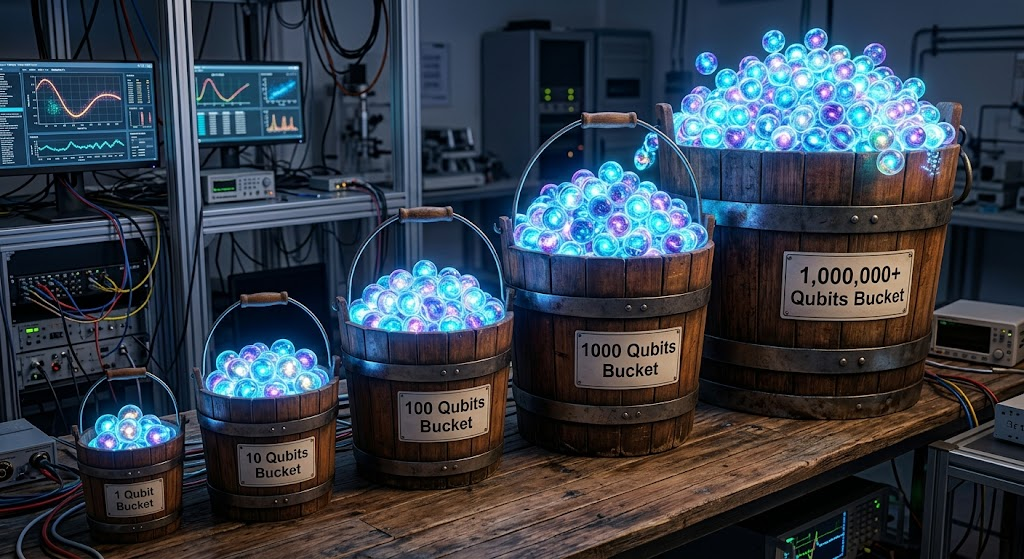
Few questions in the quantum sector are asked more often, or answered more loosely, than how many qubits a useful quantum computer will require. Press releases announce systems with hundreds of qubits, then thousands, and the implicit suggestion is that the field is approaching a finish line. The reality is more nuanced, and arguably more interesting. It is not as black and white as saying there is a single number of qubits that makes a quantum computer “useful”. The right number depends entirely on what you want the machine to do, on which type of machine you are using, and on how cleverly the underlying problem has been formulated.