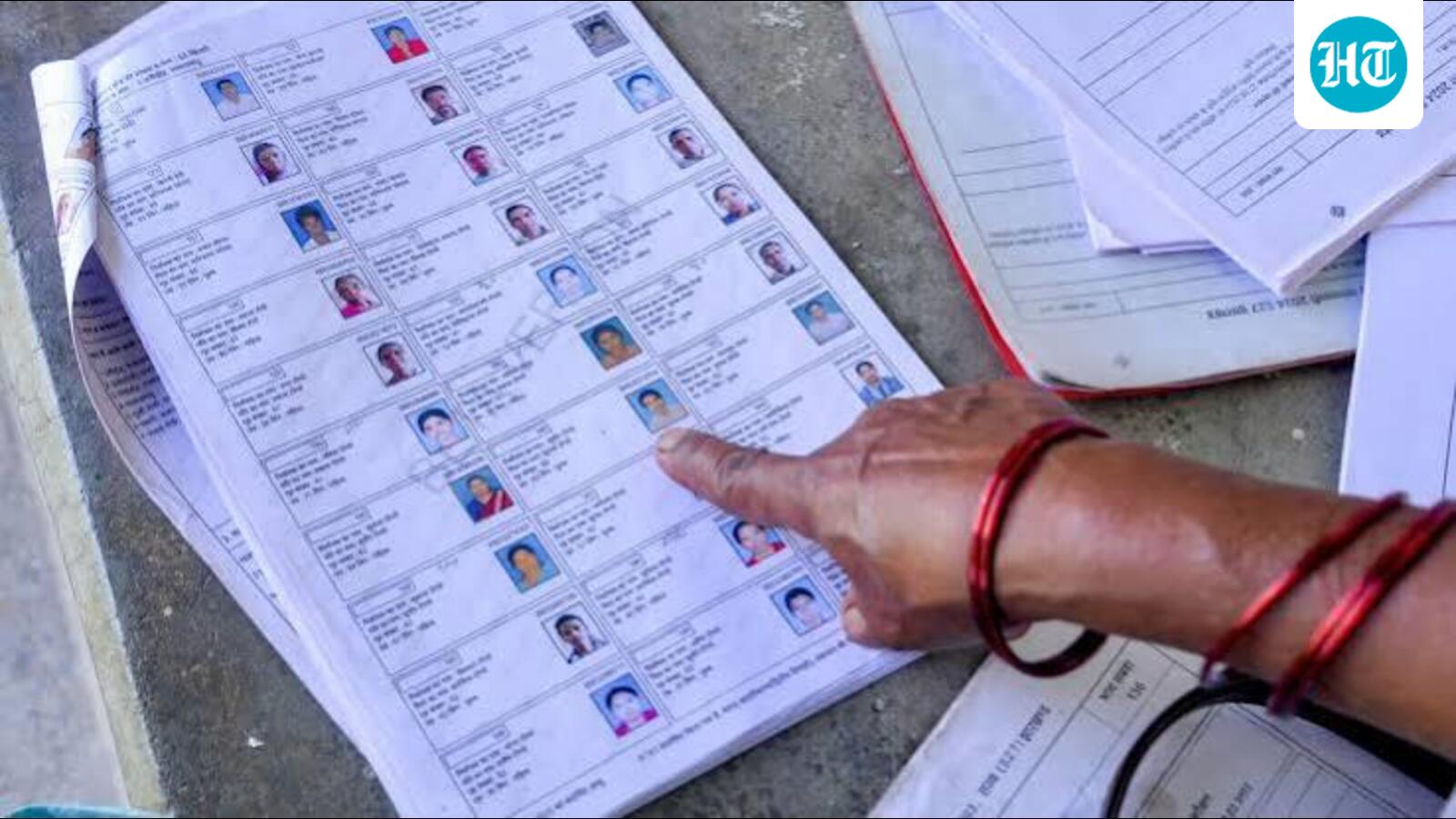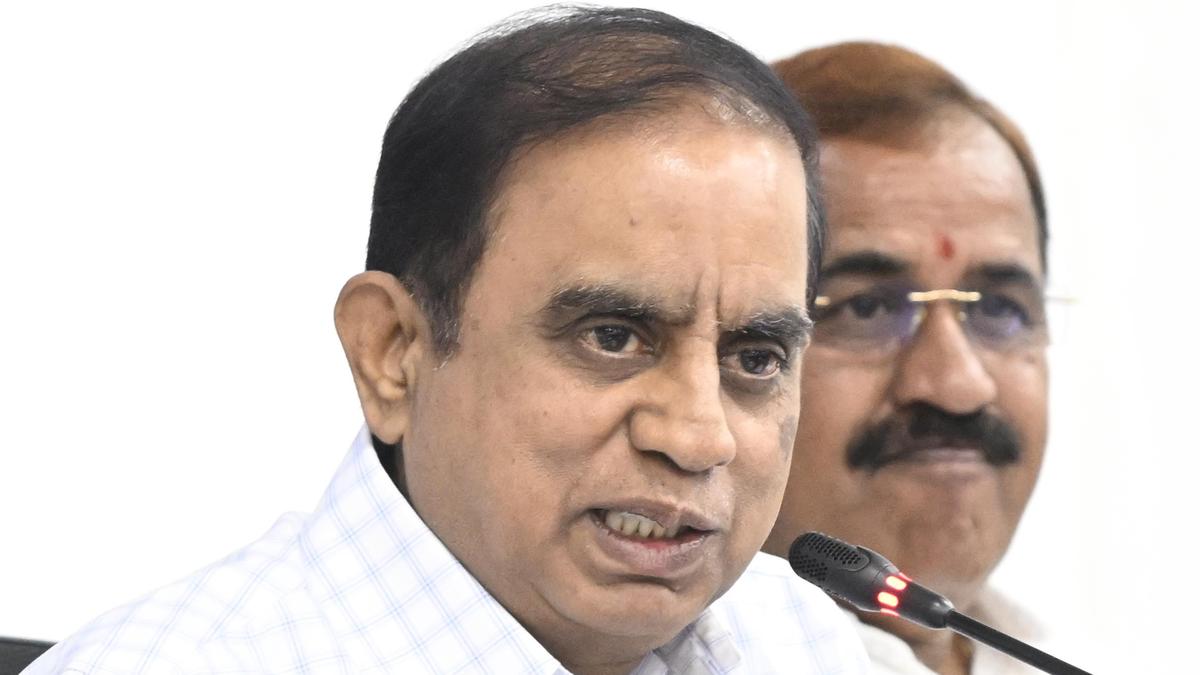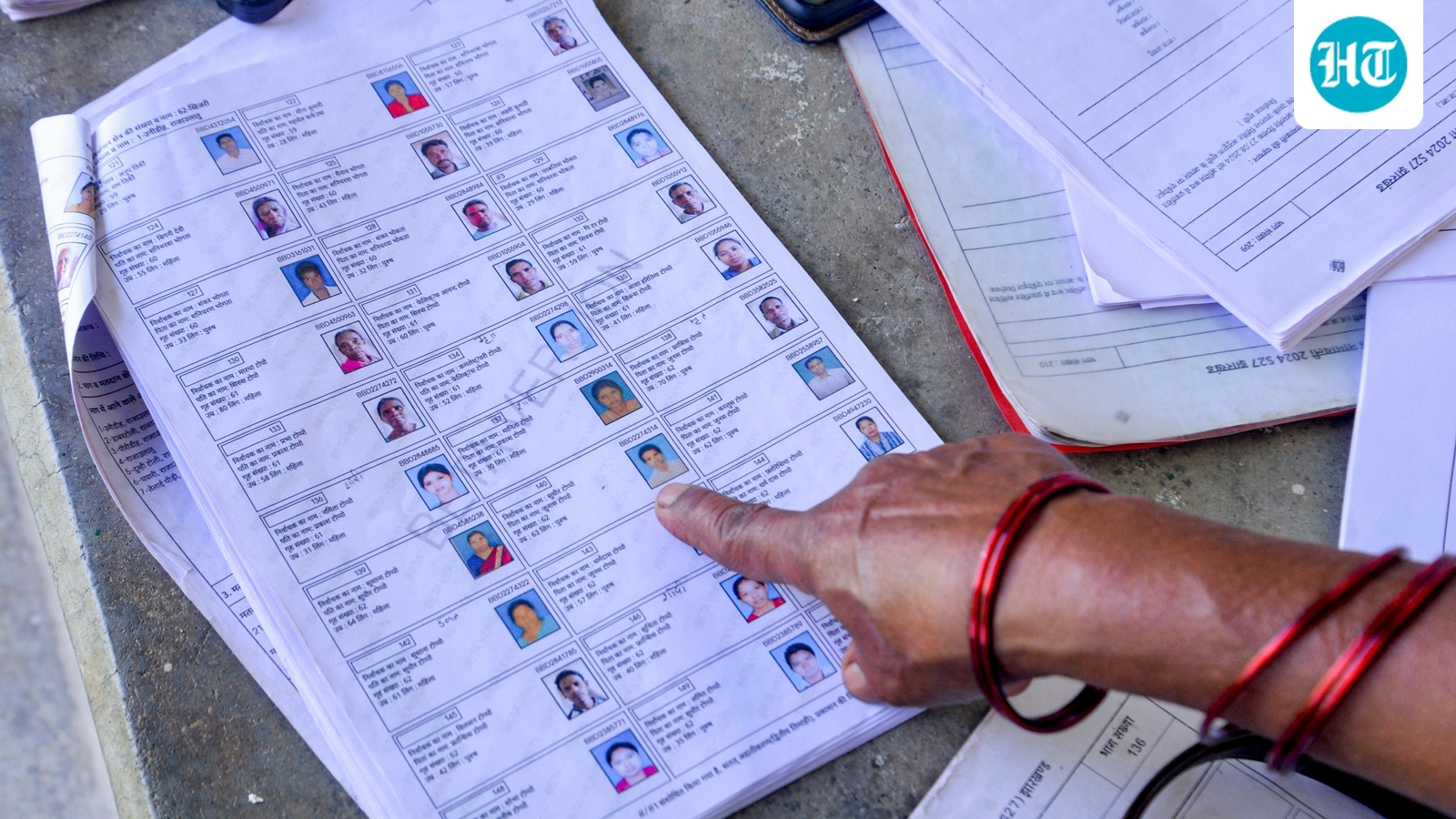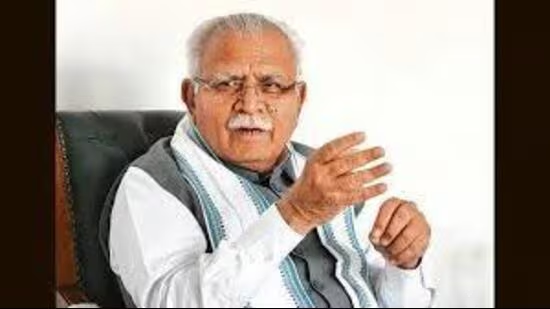
Union power minister Manohar Lal Khattar on Sunday said that Haryana has achieved 76.16% of coverage in distribution of the enumeration forms (EFs) in one week, since the special intensive revision (SIR) exercise began in the state on June 15. He said that out of the total 2,06,55,929 voters, 1,57,32,215 have received the EFs via 20,629 booth-level officers (BLOs) during that period.Faridabad lags in the state with only 42.41% coverage, despite having 1650 BLOs, while another NCR district, Gurgaon, also has a low distribution rate of 54.53% of forms to voters. (HT File)Filing his EF as a voter from Karnal at the public works department (PWD) rest house, the minister shared that Karnal tops the chart with 92.25% forms distributed.There are a total of 12,25,661 voters in Karnal, where a maximum of 11,30,653 voters have received their forms through 1181 BLOs. Karnal (92.25%), followed by Kaithal (91.2%), Yamunanagar (90.29%) and Jind (87.18%).Faridabad lags in the state with only 42.41% coverage, despite having 1650 BLOs, while another NCR district, Gurgaon, also has a low distribution rate of 54.53% of forms to voters.“There are many floating voters in both these districts, where residents tend to shift frequently due to work. When this process is completed, the forms will be distributed to those who have shifted here later. If everyone is to be registered to vote, they must provide some form of identification—such as a document proving local residence—for that purpose,” the former CM said.Responding to a question, he said that the opposition is misleading voters regarding SIR, but no eligible person’s vote will be cancelled.Instead, with July 1, 2026, as the qualifying date, votes are being created for new eligible citizens, and their names will be included in the voter list, the minister added.Dividing NCR districts into ringsRegarding last week’s National Capital Region Planning Board (NCRPB) meeting, where Haryana’s proposal to reduce its area under the National Capital Region (NCR) was shelved, Khattar said that as the state’s chief minister, he also desired to do so.“The scope could be reduced or discussed, but the objections raised at the time have all been resolved; consequently, all the states agreed that once those objections were addressed, it would not matter whether the scope was smaller or larger. There were, in fact, many such objections,” he said.“Previously, environmental restrictions applied uniformly across the entire NCR. Now, the NCR area will be categorised into specific zones or gradations. Certain measures will be implemented first in areas immediately surrounding Delhi, followed by the “second ring,” and finally the “third ring” at a later stage,” Khattar said.He further said that all the districts that wish to opt out now fall within the “third ring.”“Therefore, those in the third ring will not face this issue at present. However, that situation might arise at some point in the future—if the population here grows to match Delhi’s, if the density reaches similar levels, and if there is a corresponding shift in people’s lifestyles,” the minister said.
Statewide SIR drive: In one week Haryana achieves 76% coverage in enumeration form distribution, says Khattar
Haryana's power minister reports 76.16% distribution of voter forms in a week; Karnal leads at 92.25%, while Faridabad lags at 42.41%.
495 words~2 min read