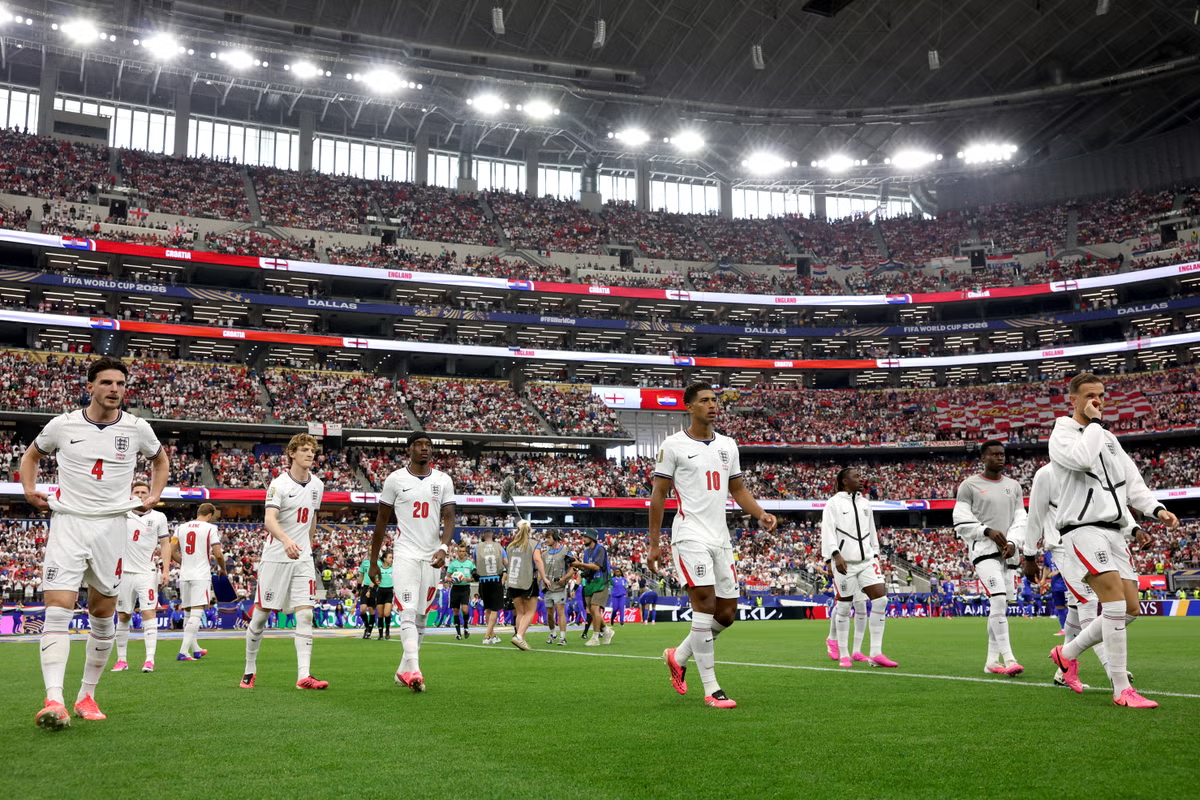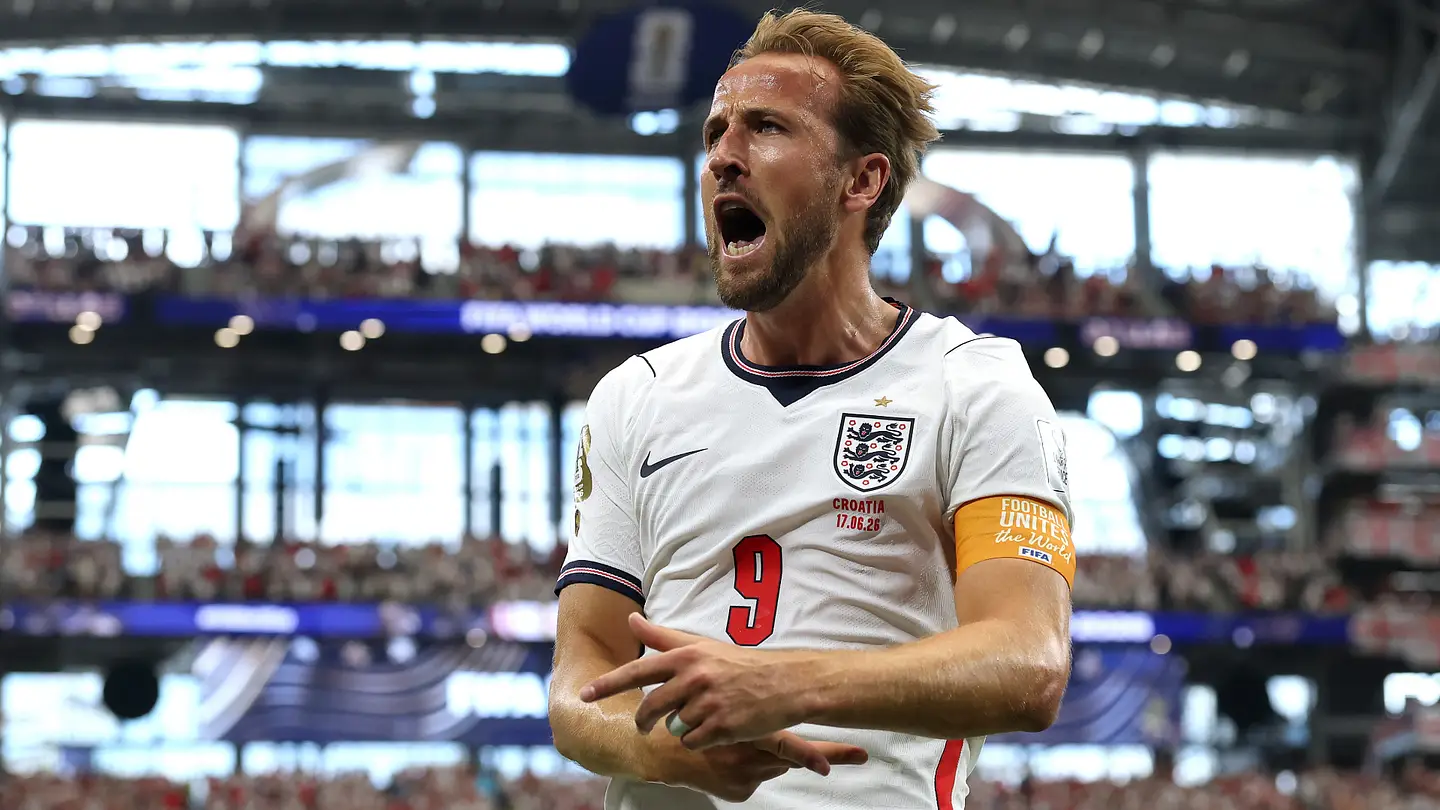
England 4-2 Croatia. A French referee, one German manager, and a collection of 22 players representing their countries, only two of whom have played their football on Spanish soil before. Probably not the game in which you would expect to hear a cry of, ‘Vamos!‘ — best translated as “let’s go!” or “come on!” — from the pitch.But that is exactly what Noni Madueke exclaimed after he twisted away from Josko Gvardiol and scuffed a cross-shot into the outstretched boot of Mario Pasalic at the near post, gesturing to the English supporters behind the goal to crank up the volume after another foray into the box.It felt a strange reaction at the time. Madueke was born to Nigerian parents in Barnet, north London, and has played for four clubs in the English capital either side of a five-year spell at PSV in the Netherlands. But there are a number of reasons, not least the eclectic mix of team-mates and managers with whom Madueke has shared a dressing room over the years, that meant it might have become the first word to spring to mind.One could be Jude Bellingham, the England midfielder who has played for Real Madrid since 2023. In an interview with ITV, three months after he signed, Bellingham was asked why he had shouted, ‘Vamos!’ in a game against Scotland.“It’s tough when I’m trying to remind myself so constantly in Spain to use it, especially on the pitch when my team-mates might need it,” he said. “Then I come away with the (England) boys and I’m still using it and they’re almost looking at me like, ‘What are you on about?’”Either way, the fact that most English spectators were able to quickly understand Madueke’s shout as a Spanish rally cry, and the fact it was lip-read so easily on the replay, helps to illustrate the rising popularity of ‘vamos’. The reasons why, however, need more careful unpicking.Dr Txuss Martin, an affiliated lecturer in Linguistics at the University of Cambridge, has a number of theories. His first, on the cultural significance of Hispanic football, goes a long way to explaining how ‘vamos’ first appeared on our TV screens.“My initial instinct is that its success is in part a consequence of the popularity of La Liga or Spanish-speaking stars such as Lionel Messi,” he says. “One could argue more broadly that modern football has acquired a certain Hispanic accent, owing to the influence of Spanish and Latin American players, coaches, clubs and fans, so within that context, it has become highly recognisable.”The influence of La Liga throughout the late 2000s from a linguistic sense has been tangible. At the height of Messi’s era-defining rivalry with Cristiano Ronaldo, as the great Barcelona team of Pep Guardiola clashed with Jose Mourinho’s Real Madrid, Spanish football was a global spectacle that helped to add new vocabulary, and more of a hispanic flavour, to the football vernacular.La Liga’s popularity when Cristiano Ronaldo and Lionel Messi were at their peak may have helped spread ‘vamos’ (Gerard Julien/AFP via Getty Images)El Clasico saw tiki-taka go head-to-head with the galacticos, while the rolled R’s, crisp vowels and palatal sounds of Spanish names — from Raul to David Villa — spilled into British living rooms. Frantic, theatrical commentary, inspired by early Latin American radio broadcasters, provided iconic phrases: ‘Encara Messi’, ‘Golazo’ and gloriously prolonged shouts of,’ ‘Gooooool’ that found their way into kickabouts on the street.
Vamos! Why do so many footballers shout in Spanish?
English-speaking players have co-opted a Spanish phrase - and with good reason
1,422 words~6 min read