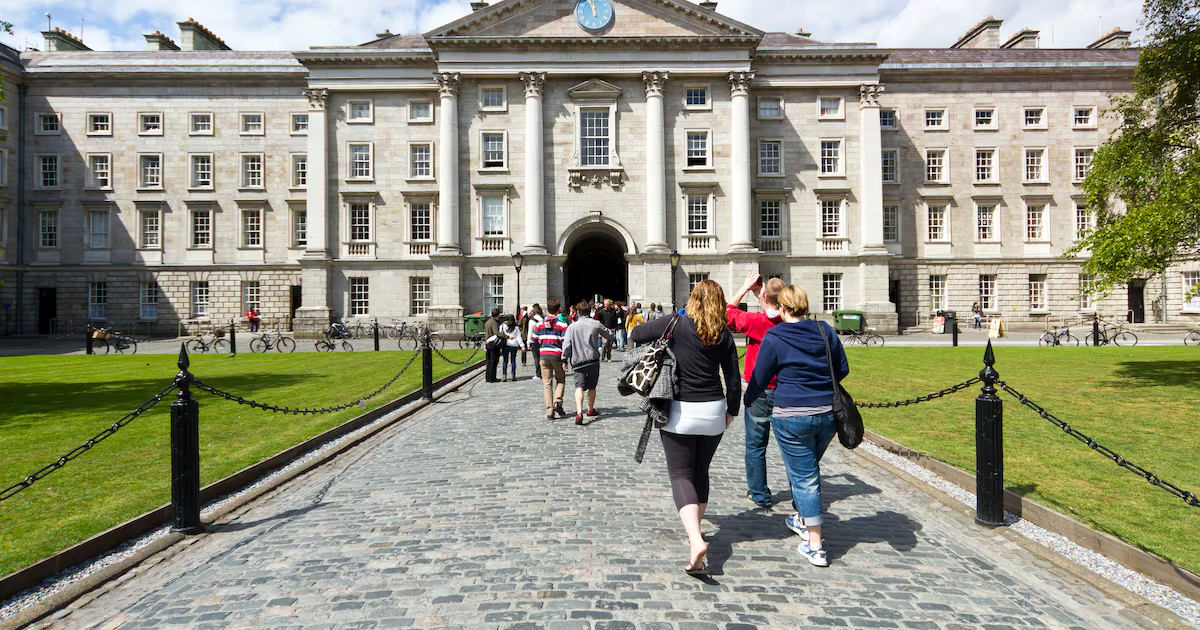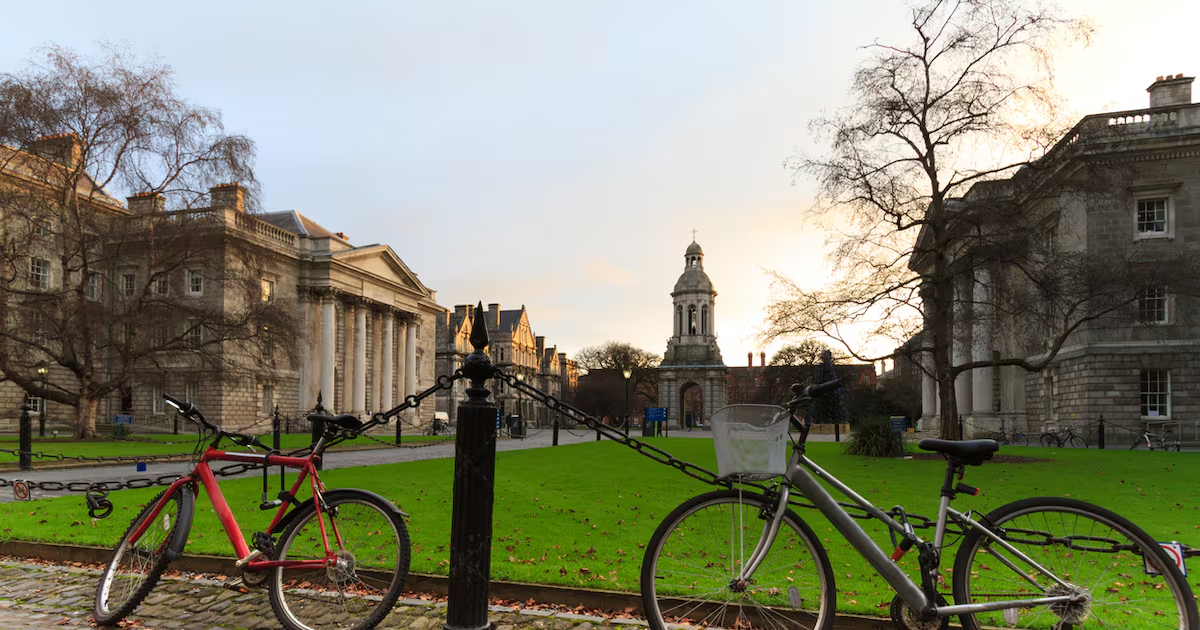
It is no small feat for a small country like Ireland to have two colleges rank in the top 100 of a global survey of 1,500 universities. Trinity College Dublin remains in 75th place in the Quacquarelli Symonds (QS) world rankings, published last week, while University College Dublin rose 18 places to 100. Four of the remaining six universities, University College Cork, University of Galway, University of Limerick and Dublin City University also improved their rankings.The QS rankings are just one of the plethora of university rankings, but along with the Academic Ranking of World Universities (ARWU) and the Times Higher Education (THE) survey it is seen as one of the most influential. Of the three surveys, Irish universities tend to do best in the QS rankings. It is the system that gives the most weight to how attractive a university’s graduates are to prospective employers and their openness to international students. The other surveys give more weight to research activity and broader aspects of a university’s performance.The strong results from Irish universities in the QS world rankings thus clearly reflect the focus in our third level system on producing employable graduates, suited to the needs of the economy, rather than being engines of world leading research. This is not necessarily a bad thing, and it is in line with the policies of the Government that funds them. And significant research is carried out in Ireland at third level.The progress made in the QS rankings this year can also be attributed – in part at least – to the increasing emphasis put by Irish universities on attracting international students to help bolster their finances. It is not the only reason Irish universities market themselves to overseas students. International students generally pay higher fees but can also add greatly to the academic and social life of a university.However, the growing dependence on overseas students reflects the ongoing and widely accepted underfunding of the third level sector. In 2022 the Government acknowledged that there was a shortfall in university core funding of €300 million a year and committed to close the gap. The Irish Universities Association (IUA) claimed in its pre-budget submission last week that the gap now stands at €190 million a year and urged the Government to close it.The Minster for Higher Education , James Lawless, has also told Cabinet that demographic trends will increase enrolments at third level over the next eight years – with numbers peaking in 2034 – requiring a significant rise in funding over that period. Successive governments have ducked the issue of third-level funding over recent years. The financial foundations of this vital economic and social service need to be fixed .
The Irish Times view on university rankings: only part of the story
Irish institutions made progress in the latest survey, but funding questions remain
447 words~2 min read