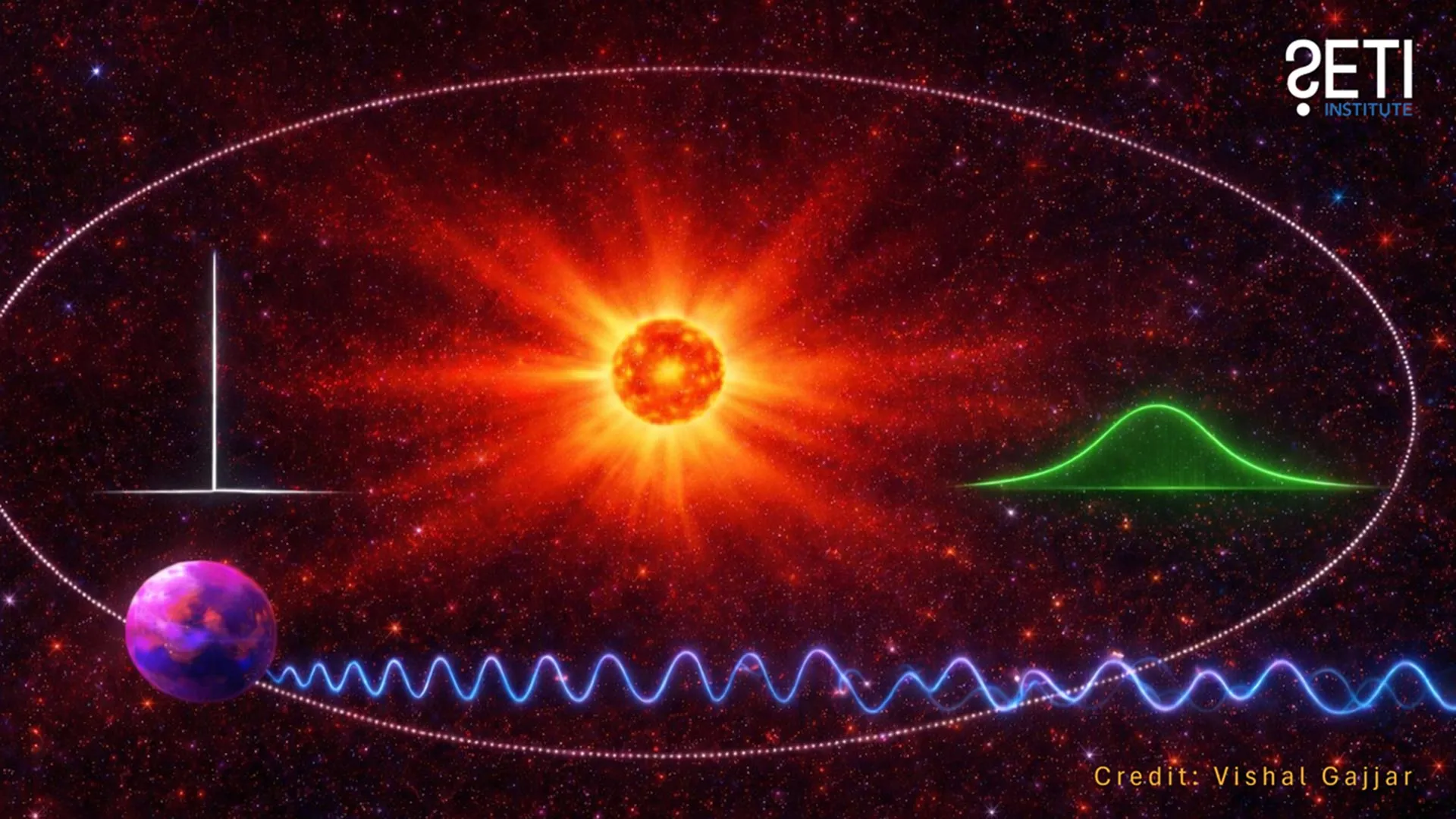
In 2019, a radio telescope in Australia detected an interesting signal coming from the vicinity of Proxima Centauri, the closest star to Earth.
The signal, designated Breakthrough Listen Candidate 1 (BLC1), had all the hallmarks of a 'technosignature', a potential sign of intelligent life.
It caught the imagination of researchers because the signal was a single identifiable wavelength (narrowband), had a Doppler shift (was moving), was localised on the sky and persisted for several hours.
All this suggested that the signal wasn’t due to a naturally occurring phenomenon.
Analysis revealed some problems with the extraterrestrial explanation, however. It turned out that the signal was also present in other observations of Proxima Centauri during the same period, but also (crucially) when the telescope wasn’t pointed at the star.