Over the past few years, astronomers have been puzzled by a series of strange radio signals originating in the Milky Way. Around a dozen of these long-period radio transients (LPTs) have been detected emanating from different parts of our Galaxy.
Now – scientists at the University of Sydney in Australia report in Nature Astronomy, led by Kovi Rose – they may finally have tracked down the source of one of these signals to an unusual star system. They have dubbed it a ‘stellar Rosetta Stone’, believing it can help them make sense of these weird signals.
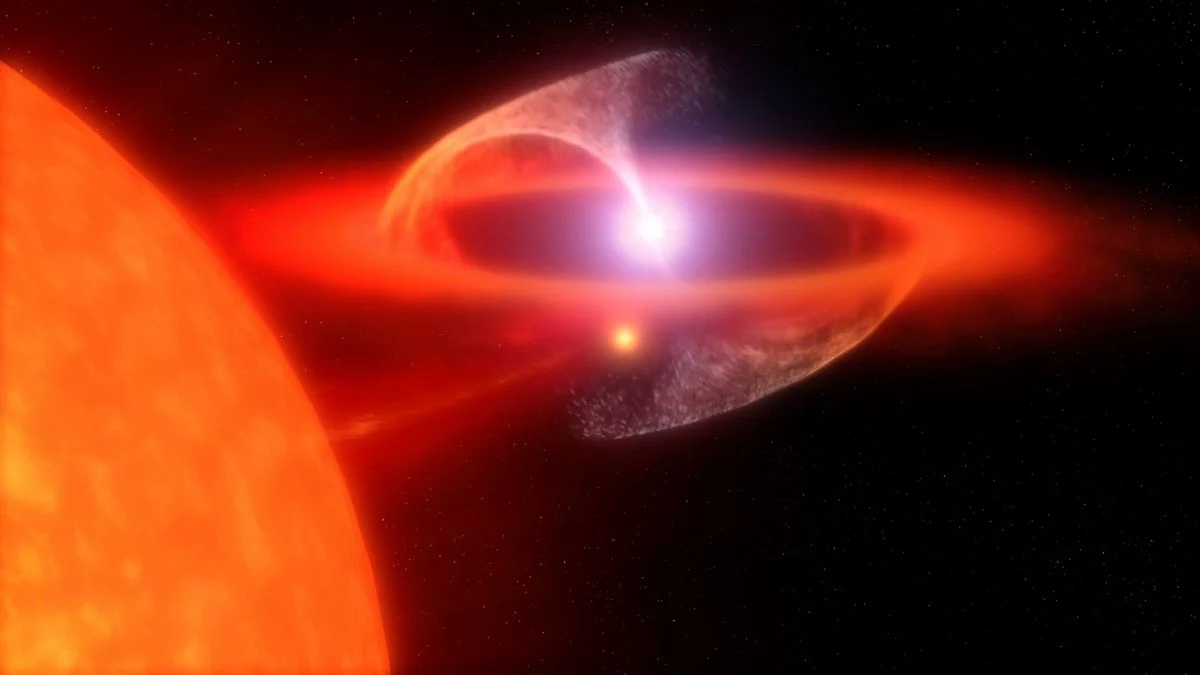
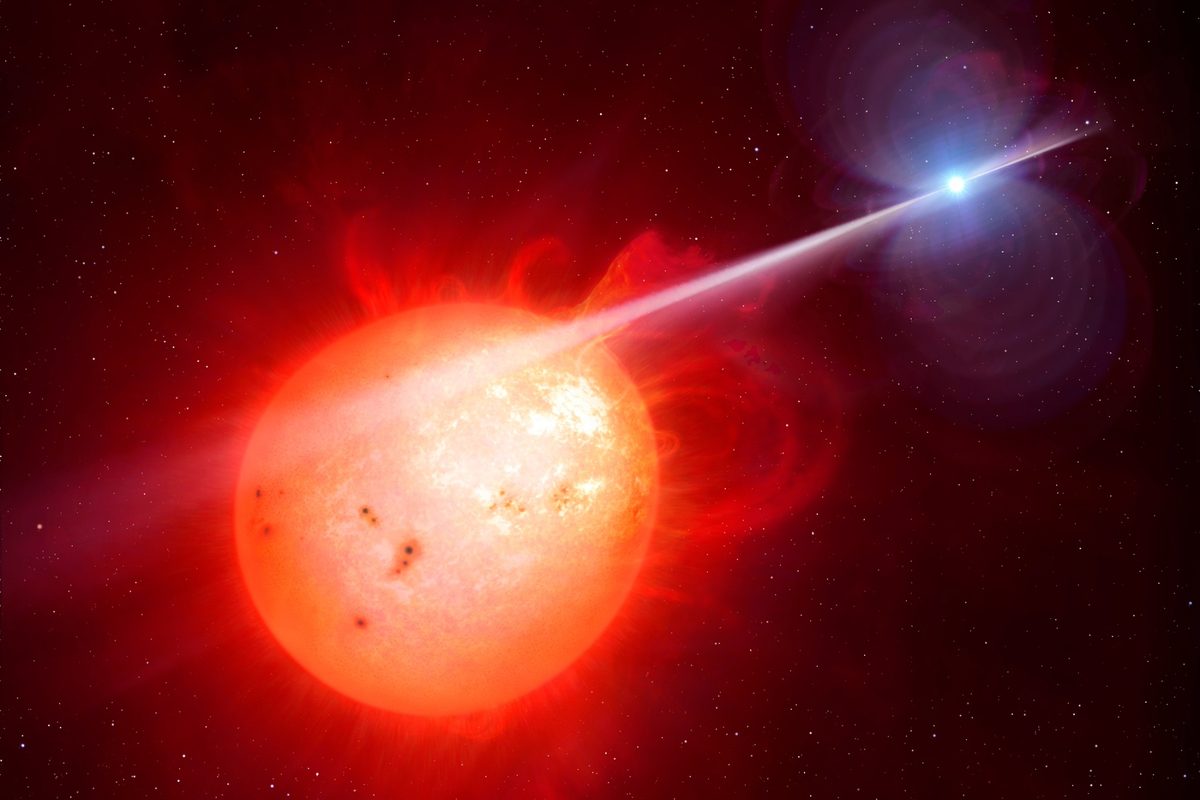
The newly identified system, named ASKAP J1745−5051, consists of a white dwarf – a dense stellar remnant roughly the size of Earth but with a mass close to that of the Sun – paired with a larger but lower-mass red dwarf star of about one-tenth the Sun’s mass. The two stars orbit each other extremely closely, completing a full orbit in just over an hour.
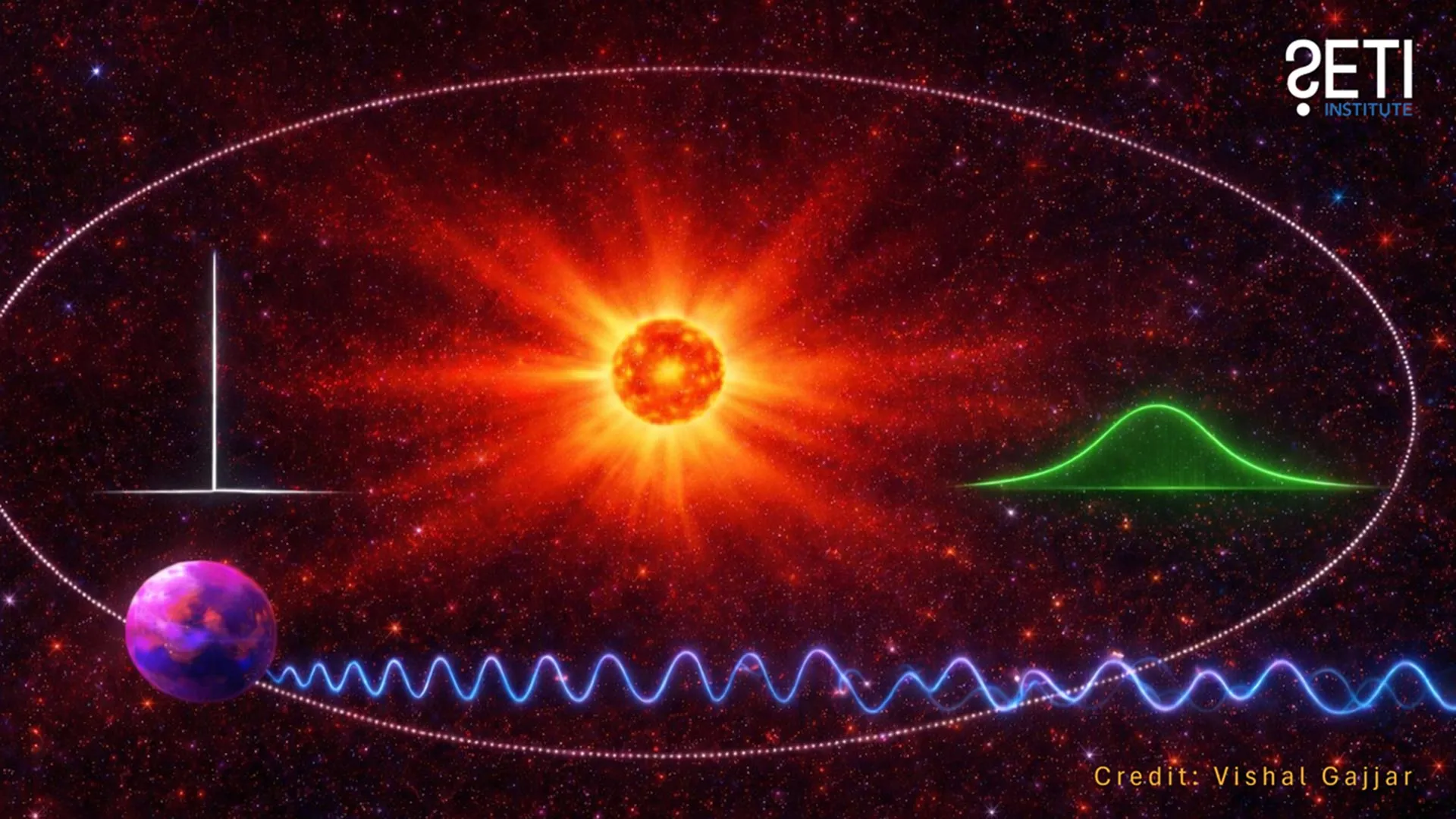
Interactions between the stars’ magnetic fields generate radio bursts at specific points during their orbit, meaning the signal occurs at regular intervals.
“This system gives us a way to decode these signals. It could help us determine whether other long-period transients are more like pulsars or white dwarf systems, acting as a stellar Rosetta Stone,” said Rose, referring to the archaeological object discovered in Egypt that helped translate ancient hieroglyphics.