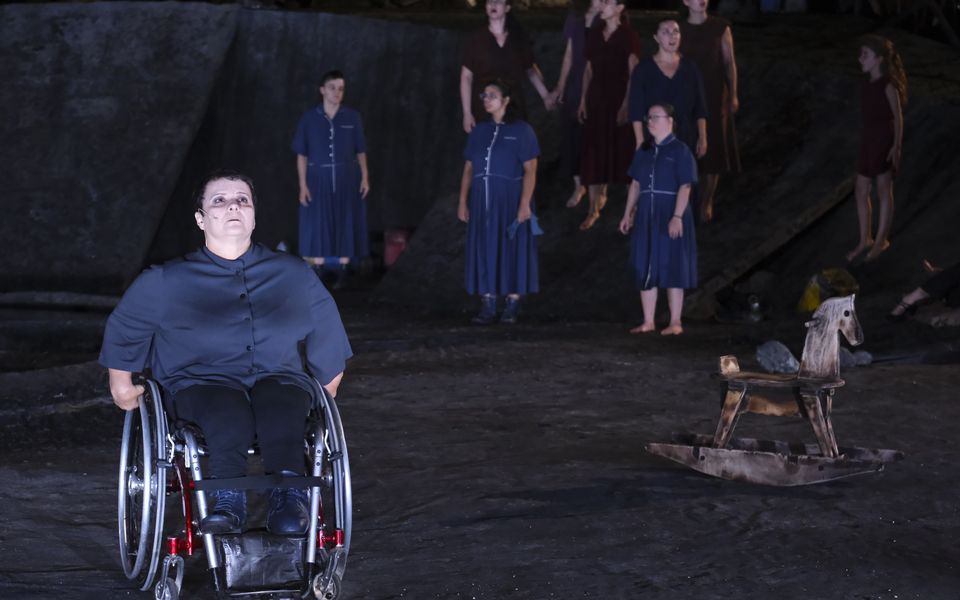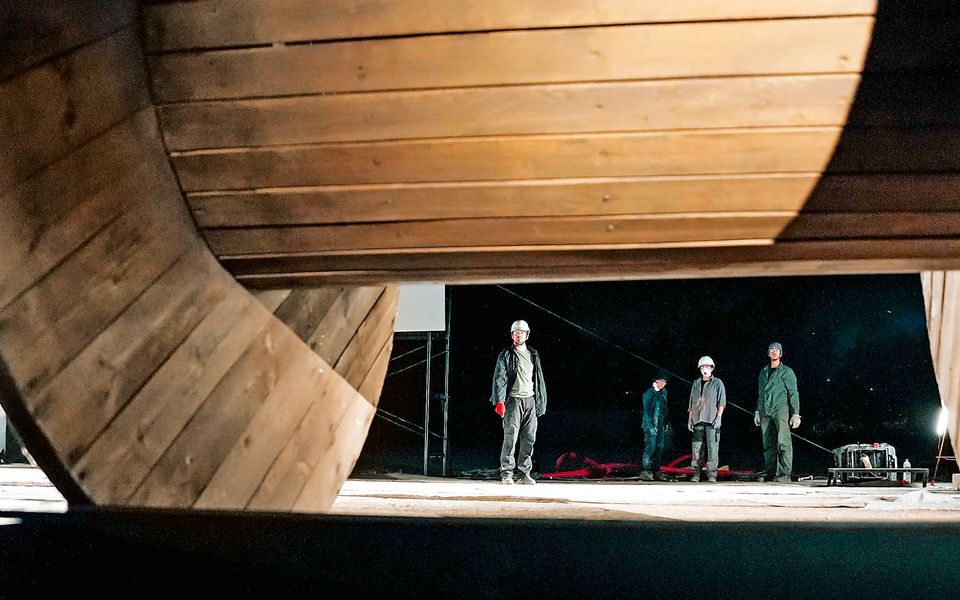
The stage that has been temporarily set up for the rehearsals at the Greek National Theater’s Irene Papas Drama School is curved, creating a constant sense of instability – as if everything is about to collapse.
“Together with stage designer Konstantinos Skourletis, we imagined a space where life is fluid, slippery, precarious. Death is ever-present on stage – this play, after all, represents the first time it is featured as a character – and appears to be carrying life, which is on the brink of falling,” says director Dimitris Karantzas.
It is not life that “falls,” of course, but Alcestis – also taking down the society that sanctioned her sacrifice, says the director, who is getting ready to stage the play of the same name by Euripides at the Ancient Theater of Epidaurus next month. And even if scholars are still divided over whether it is a tragedy or a tragicomedy, Karantzas embraces the ambiguity, because “it is the most anarchic and bold piece of writing I have ever read in ancient literature,” he says.
What genre it falls into is a question for the philologists to settle. What the director and the actors are trying to answer on the stage appears even more complicated: How do you address, in modern times, the death of a woman whose purpose was to save the life of a man?