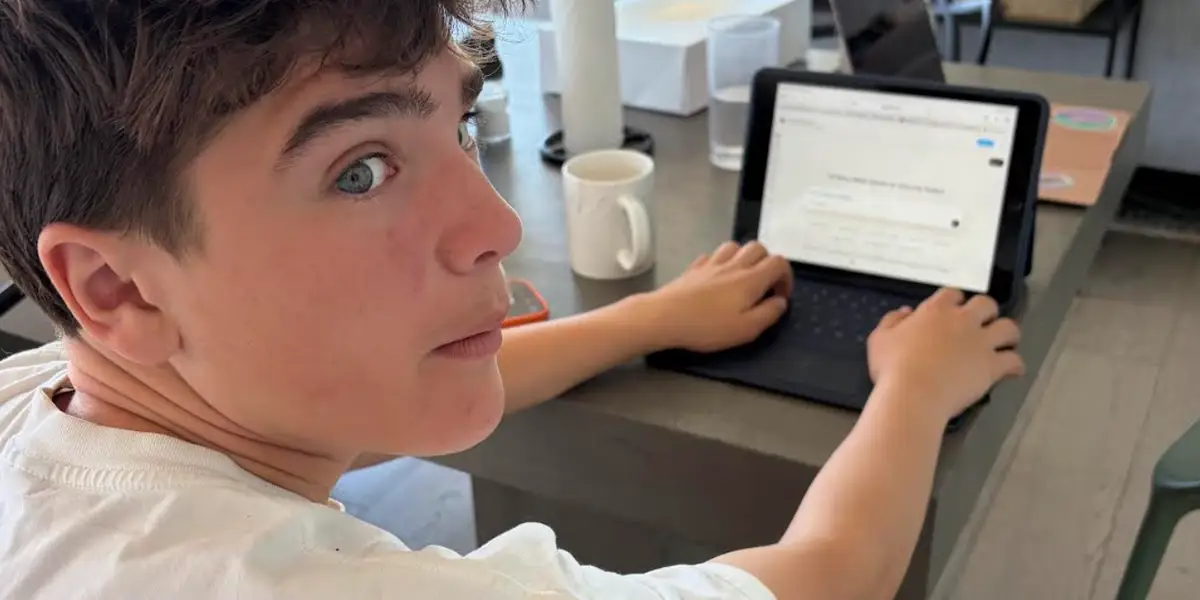
The author's son uses AI to complete his homework.
Courtesy of Amanda Hyslop
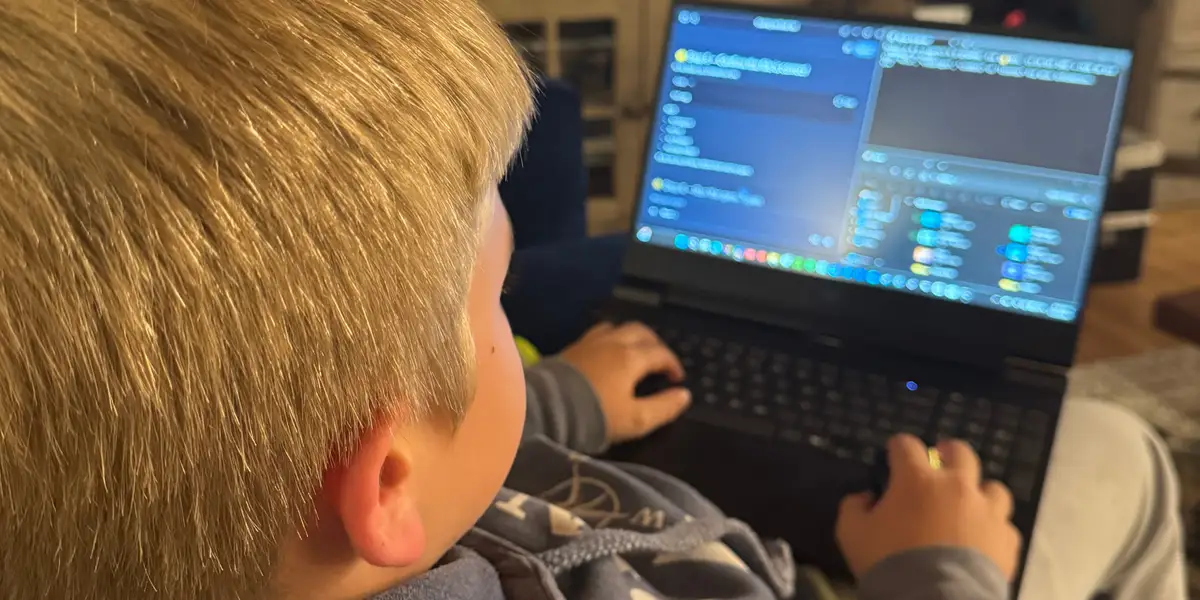
Last fall, my children's school district — in a suburb north of San Francisco, in a community connected to leading tech companies like OpenAI, Anthropic, and Google — issued a call to parents.The district wanted us to join its Artificial Intelligence (AI) task force. The goal was to draft an AI vision statement and develop a framework for AI in the classroom. I signed up without hesitation.Why? Because my kid was coming home, taking pictures of his math homework, feeding them into an AI engine, and writing a single prompt: Solve.He's known for taking shortcuts, but this one concerned me. As a rule follower, I thought, yikes, he may get into trouble using AI for his homework.And then a bigger question gave me pause. Do I even want him to be using AI in this way?I've realized many parents are also struggling with AIMy parenting generation has had to navigate rules on screen time, cellphones, and social media without a clear road map.Having to contend with another emerging technology, one that feels even more powerful, has been daunting. I began to worry about what AI might do to a developing mind.
As I spoke with other parents about my concerns, I discovered I wasn't alone. Many saw AI literacy as an important skill, but they also worried about its effects on creativity, attachment, critical thinking, and children's ability to problem-solve on their own.I joined my son's AI task forceWhen I joined the Reed Union School District (RUSD) AI task force in November of last year with a group of teachers, administrators, and parent volunteers, I was struck right away by the district's posture.This wasn't a discussion about whether AI was to be used in the classroom. It was a conversation on how to do it thoughtfully. The general attitude was that this new technology, when used responsibly, could improve learning outcomes and prepare students for a future in which tech skills are increasingly valued.Over three meetings, we helped form a vision statement for AI integration, a safety and ethics review, and a policy on AI literacy and student use.The more I listened, the more my own thinking shifted. AI held promise, and there were real risks to consider. Both things are true.