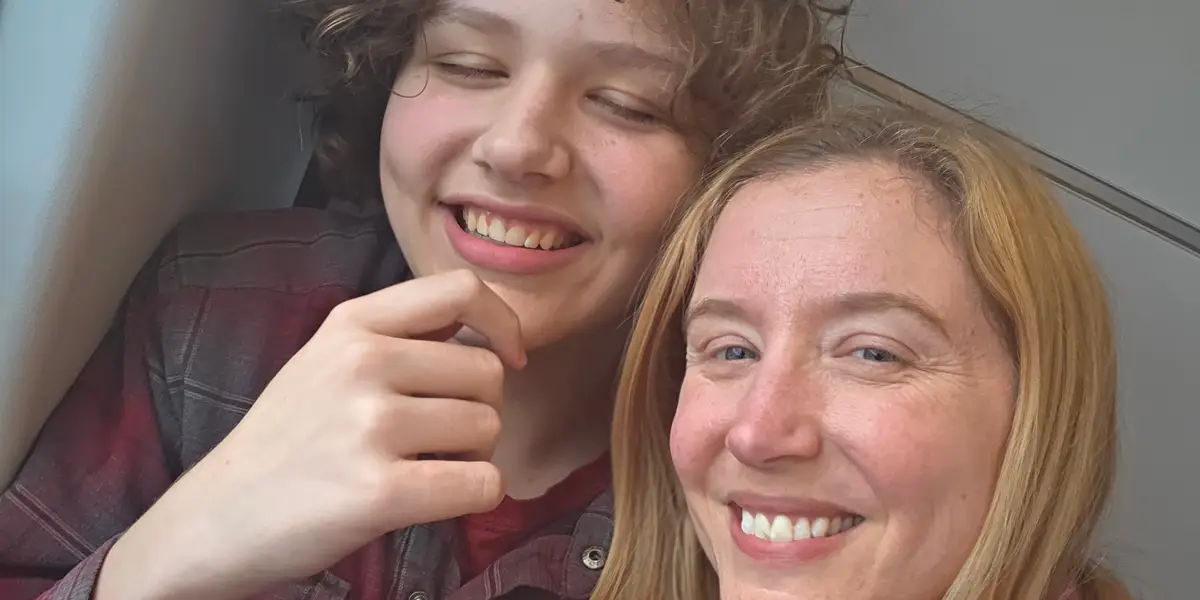
The author (right) and her son (left) disagree on AI.
Courtesy of Crystal Hoshaw
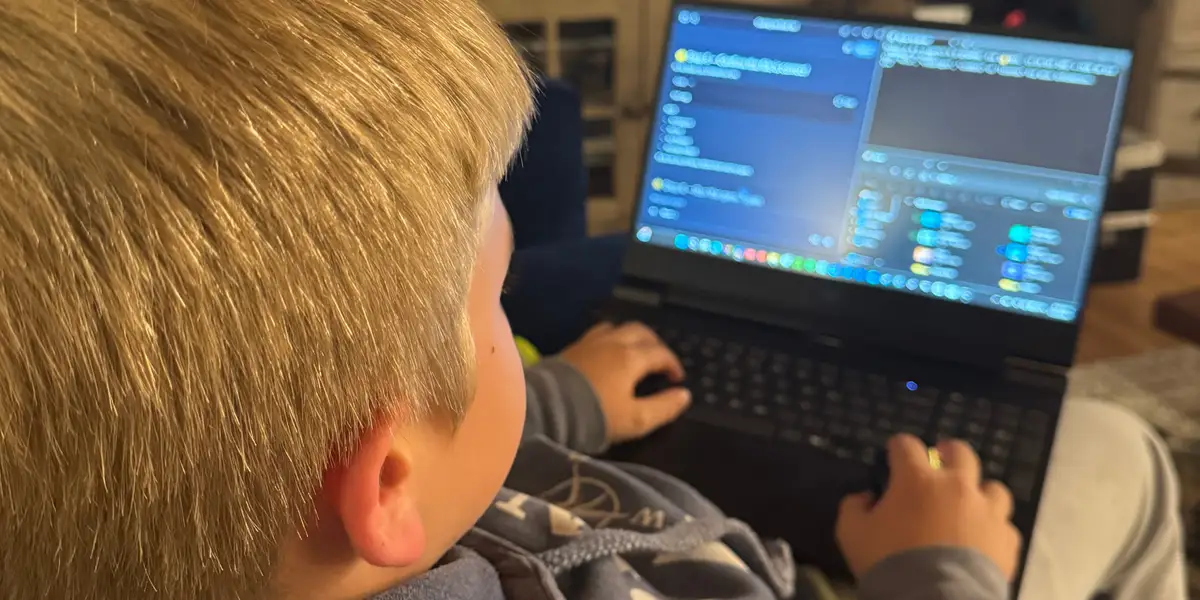
Nearly every parent knows you can be literally anywhere with the kids — out to dinner, at the park, sitting around the living room, or packed in the car — and they'll come up with questions you can't answer.Until recently, my parental refrain was, "Let's Google it."Growing up with Google as a fact of life, my son never had any objections. Now that AI has hit the scene in full force, he's not as comfortable with my new response: "Let's ask AI."My son, Noah, has gleaned very clear anti-AI sentiments from YouTube, his peers, and likely ambient cultural unease. In many ways, I get it. He sees AI as an existential threat to humanity, the environment, and to creativity — very real and very mature concerns for a teen just entering high school.But while Noah is forming his worldview, learning to think critically, and determining his inner compass, I'm living in a world where AI is already embedded in how I work.I use AI as part of my daily workflow in corporate leadershipAt work, I'm often the one leading the charge of incorporating AI into the workflow. It's been a game-changer for team productivity, and I could argue that it's reduced work stress and the ennui of repetitive tasks.This isn't the life I imagined I'd be living. As a former philosophy major, questions of ethics, consciousness, and what it means to be human were part of my career path. In fact, my graduate continental philosophy program was replaced only a few years ago by ethics and artificial intelligence (if only I'd had the foresight to change my major).