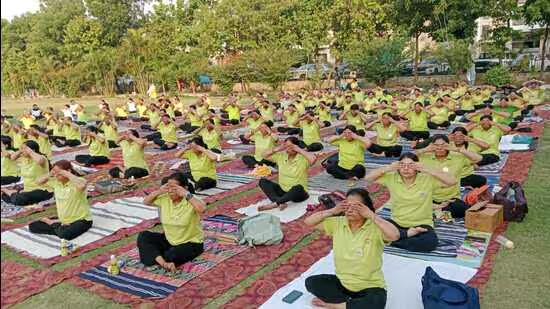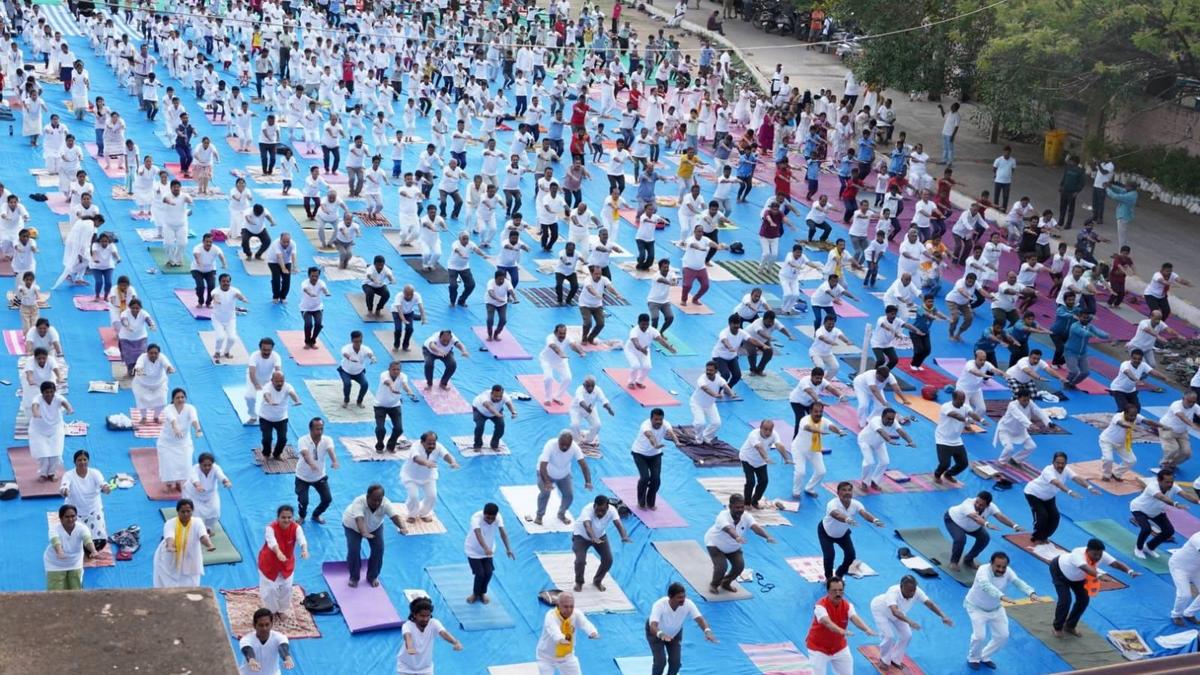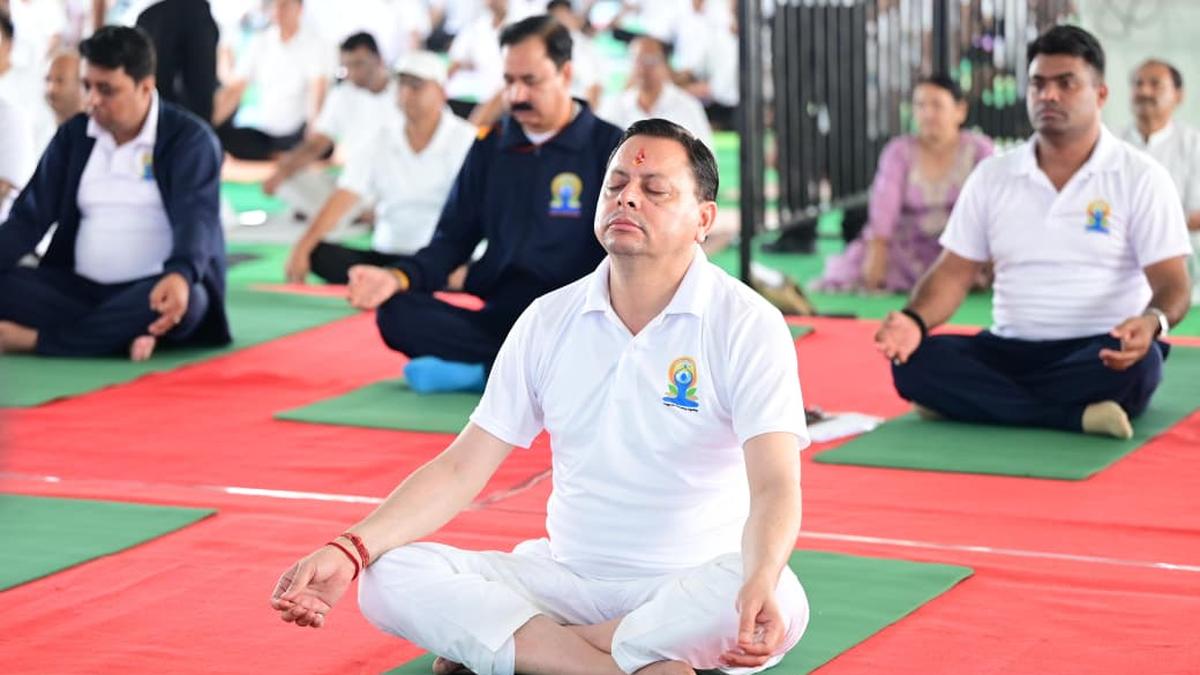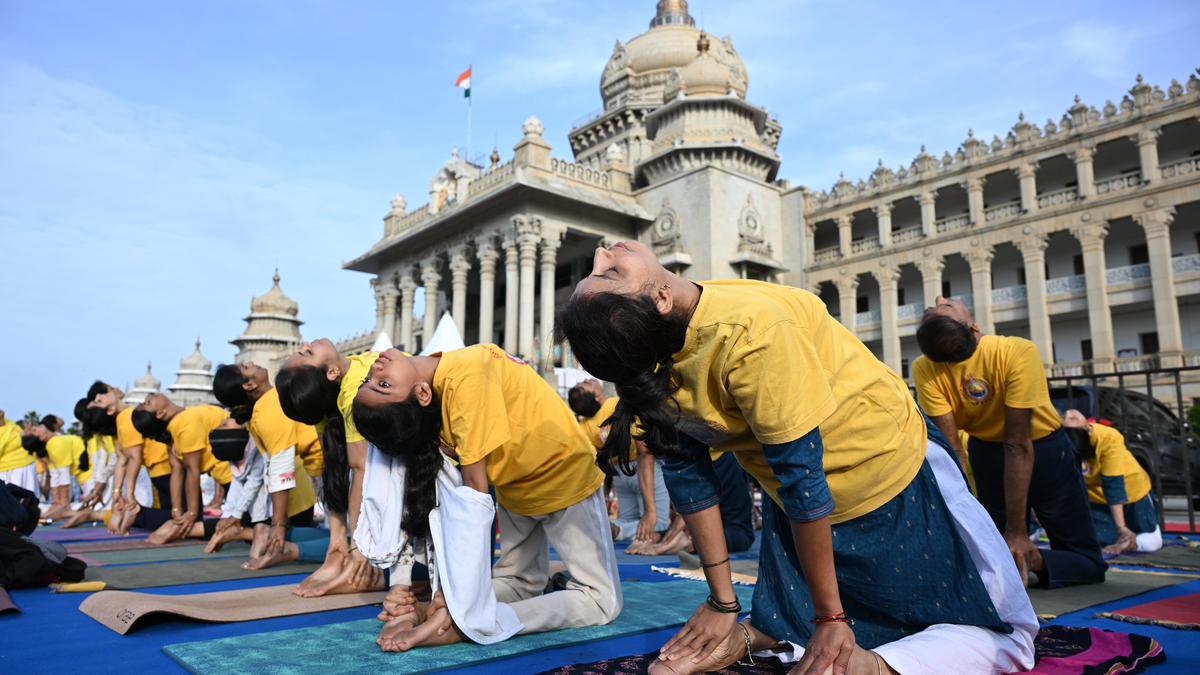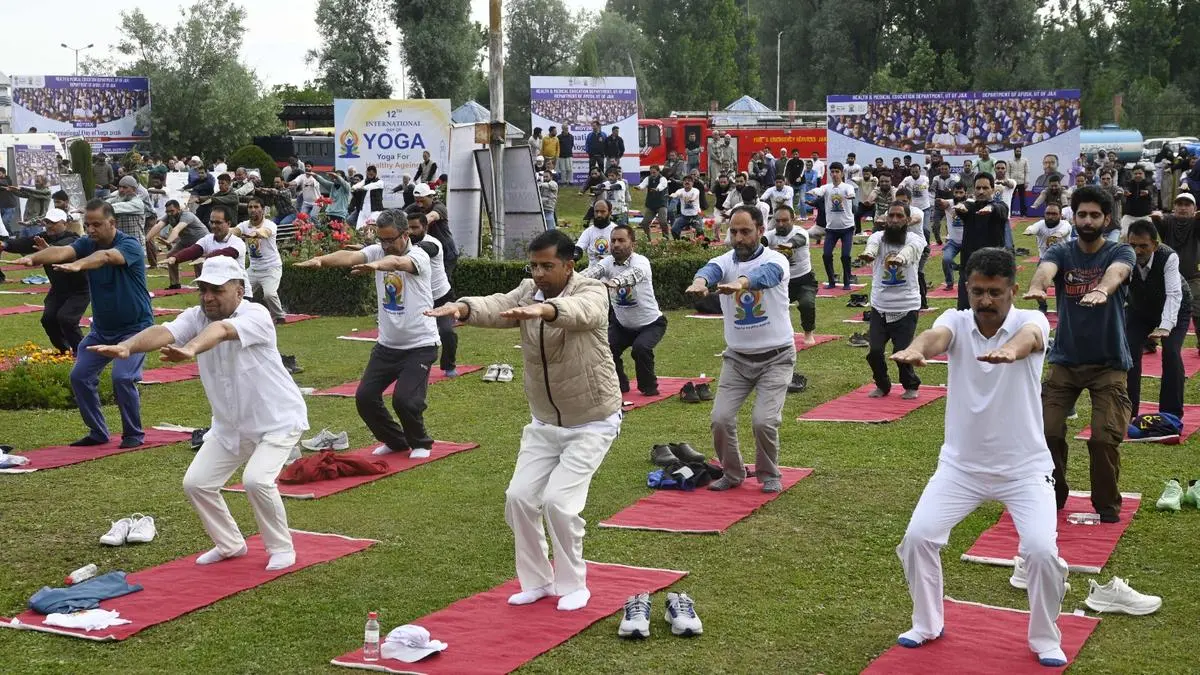
The event, organised by the district administration drew students, teachers, government employees, security personnel, women and elderly residents, who performed yoga asanas together in a rare display of community participation
With yoga mats in their hand, hundreds of residents gathered at the District Magistrate’s office in Jammu and Kashmir’s Shopian district, about 50 km south of Srinagar, as the morning sun broke on Saturday to mark International Yoga Day.The event, organised by the district administration drew students, teachers, government employees, security personnel, women and elderly residents, who performed yoga asanas together in a rare display of community participation.While International Yoga Day is celebrated annually, its growing popularity and acceptance in small towns like Shopian, which has witnessed a long-drawn-out conflict, marks a shift towards mental well-being and healthier lifestyles. . “I did not come here for mere symbolism. Yoga has numerous benefits, particularly when it comes to mental health”, said Javed Ahamd, a participant. Small towns like Shopian, Pulwama, Tral and Kulgam in south Kashmir have frequently witnessed stone-pelting incidents and encounters between security forces and militants, with many residents seeing their homes go up in smoke during the fighting and other forms of violence, leaving them to cope with psychological scars of prolonged conflict. “Although the situation has changed post-2019, people are still grappling with post-traumatic stress disorder (PTSD) and other mental health challenges”, said a local psychologist, who did not wish to be named. He said yoga could play a significant role in improving mental well-being in a region that has endured years of conflict. Mental health research over the past decade has highlighted the extent of psychological distress in Kashmir. A 2015 survey by Médecins Sans Frontières (MSF) and the Srinagar-based Institute of Mental Health and Neurosciences (IMHANS) found that nearly one in five adults exhibited symptoms of post-traumatic stress disorder (PTSD).Nearly a decade later, a 2024 community-based study published in the Journal of Family Medicine and Primary Care found that 11.3% of adults in Kashmir were living with a mental illness, with depression the most common disorder. The researchers also reported that only 12.6% of those affected had sought treatment, highlighting a substantial gap in mental healthcare access. Experts say such findings underline the long-term impact of prolonged conflict on community mental health, even as public events like Yoga Day signal attempts at normalcy and collective healing.Published on June 21, 2026