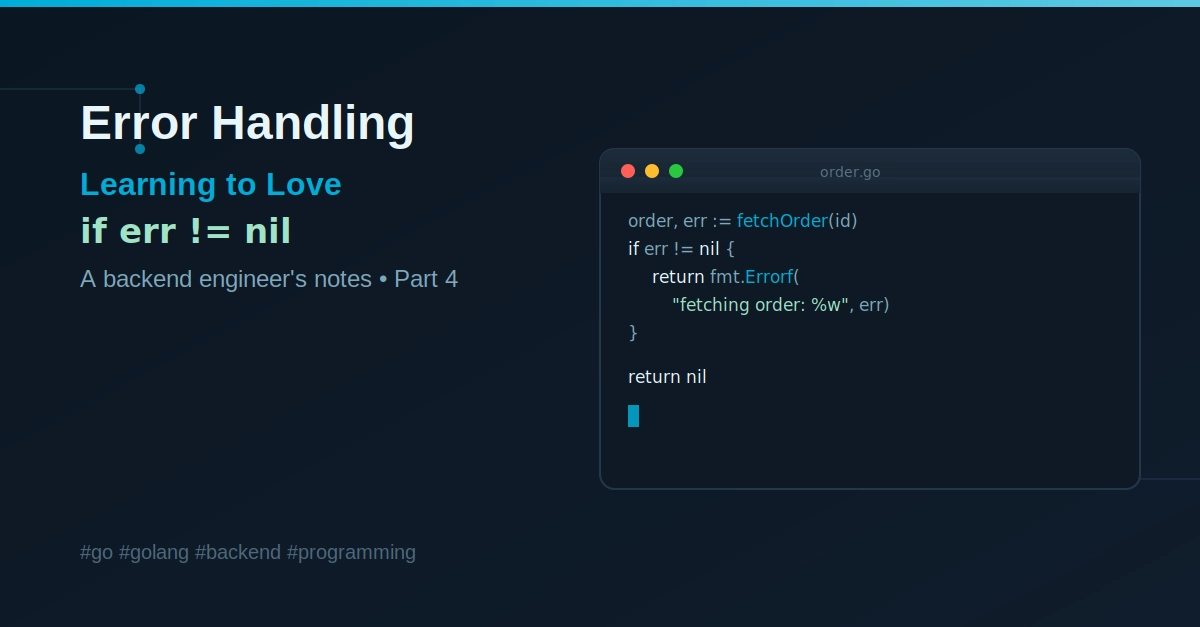
Error Handling — Learning to Love if err != nil
In part 3 I covered goroutines and channels, and how Go's concurrency model sidesteps a lot of the ceremony I was used to from the JVM. This time I'm tackling the thing I complained about in part 1 of this series before I'd even really tried it: error handling. I called if err != nil repetitive back then. A few weeks and a lot of real code later, I owe Go a partial apology.
No Exceptions, On Purpose
Coming from Java, the absence of try/catch is the first thing that feels like a missing feature. It isn't — it's a deliberate design choice. In Go, errors are just values. A function that can fail returns an error as its last return value, and the caller decides what to do with it, right there, inline:
func divide(a, b float64) (float64, error) {