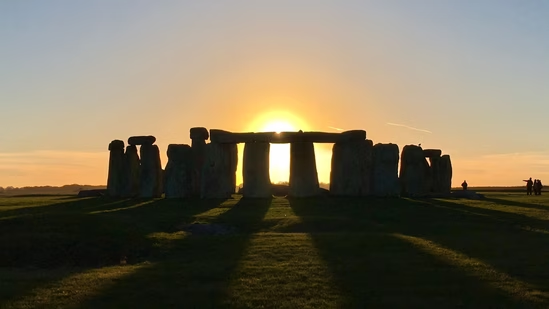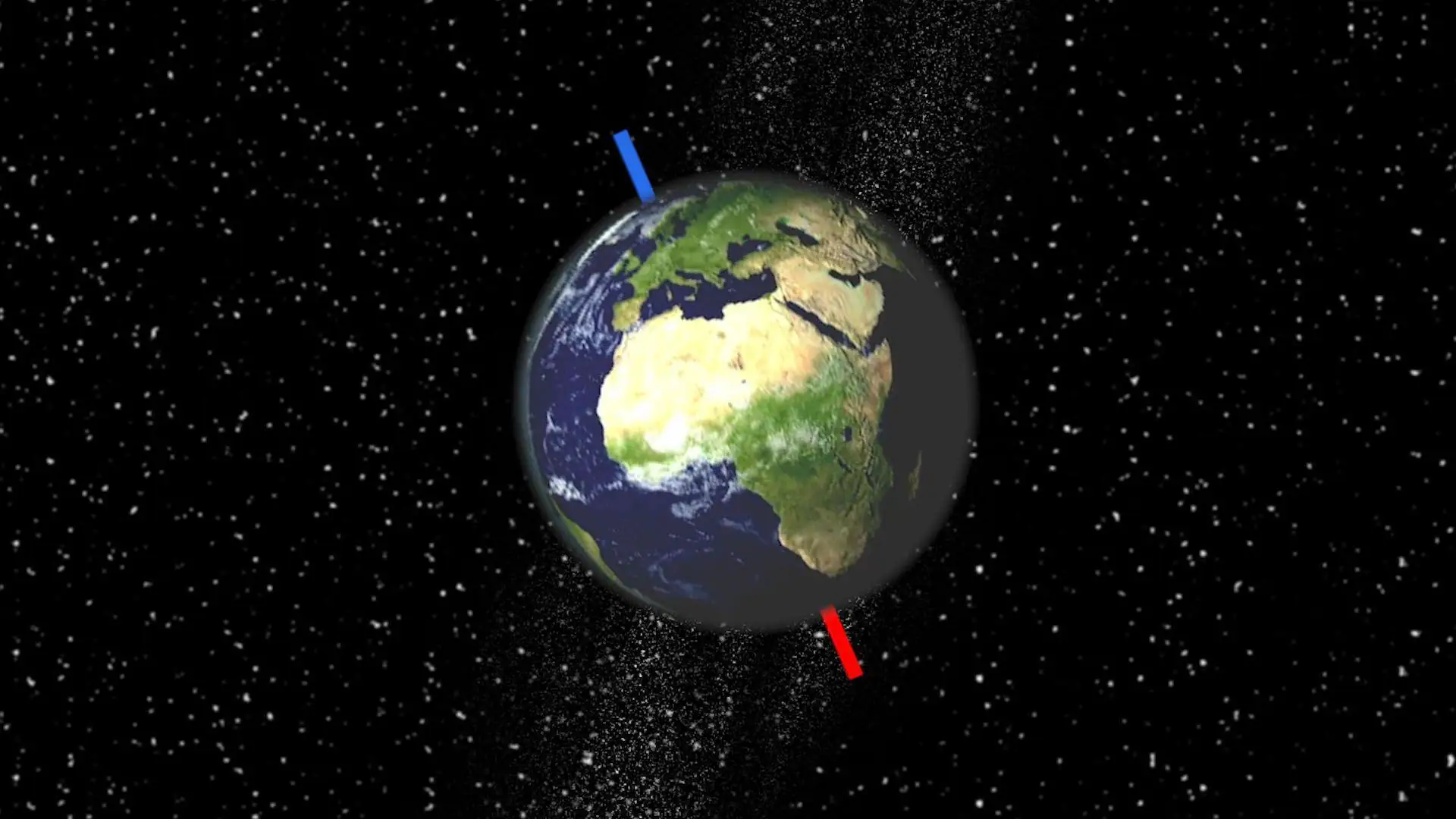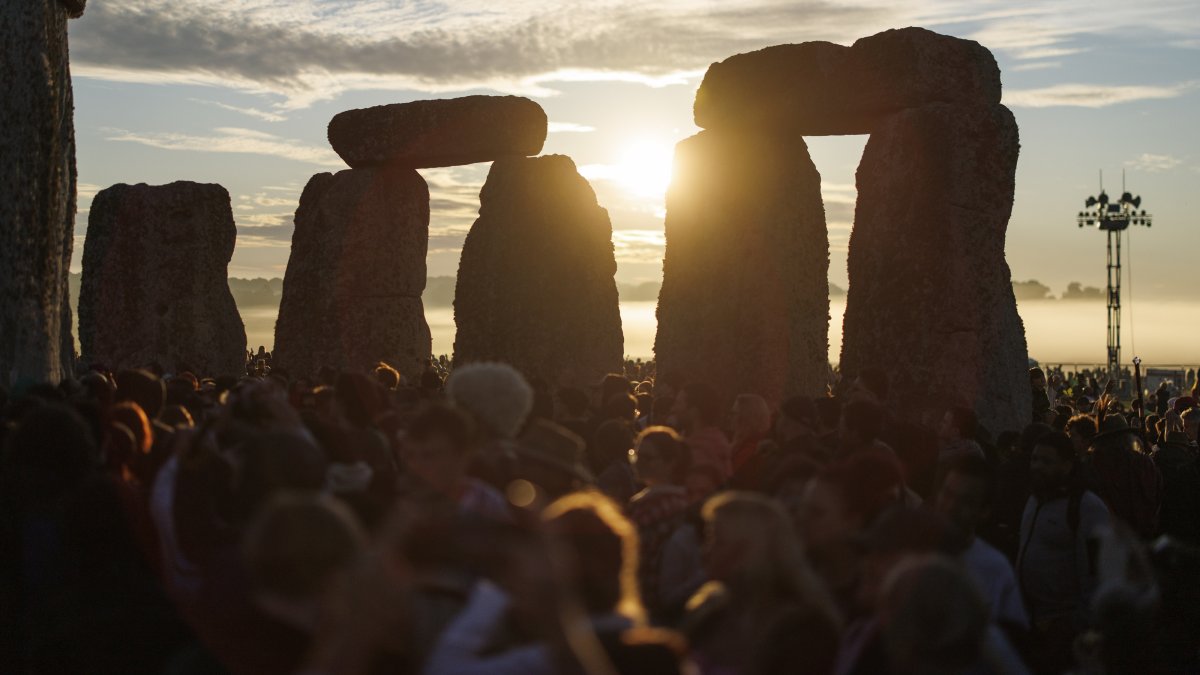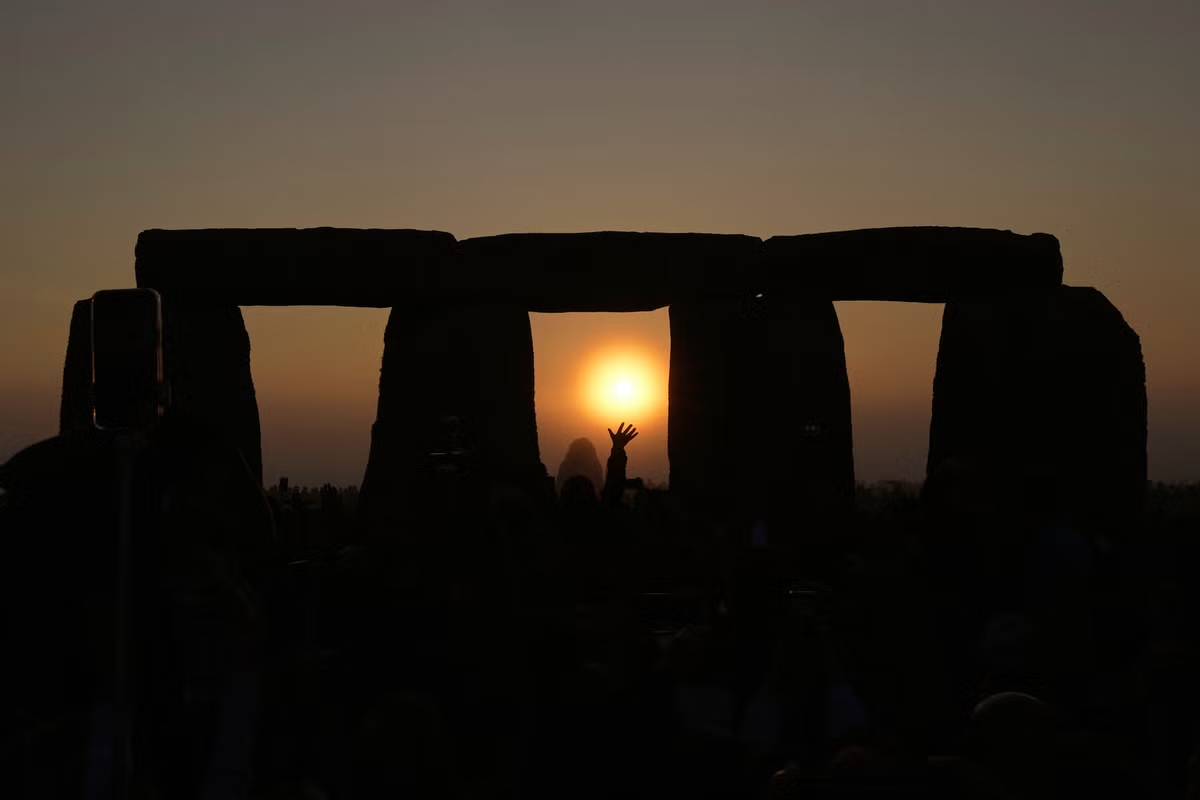
The Summer Solstice is the longest day of the year in the Northern Hemisphere and has long been regarded as a powerful time for inner growth and self-awareness. In yogic traditions, this period is seen as an opportunity to bring balance to the body's energies and reconnect with the deeper aspects of your being.Summer Solstice 2026: How to balance the Ida-Pingala nadis during the longest day of the year (Pinterest)Yoga is not just limited to physical postures or breathing techniques. According to Ashwini Guruji of Dhyan Ashram, yoga encompasses every aspect of existence, including the Sun, Moon, Earth, water, fire, sky, and the human body. More importantly, yoga explores the force that powers and connects all these elements.ALSO READ: Summer Solstice 2026: How the June 21 Cancer Solstice impacts your Vedic Rashi and birth chartYogic practices work primarily at the etheric level, influencing the subtle layers of the body before affecting the physical form. These subtle layers are known as koshas. The physical body, formed from food and matter, is called the Annamaya Kosha. Beyond it lies the Pranamaya Kosha, often referred to as the energy body or aura.Just as the physical body contains veins, arteries, and lymphatic channels, the Pranamaya Kosha contains energetic pathways known as nadis. These nadis carry prana, the vital life force that keeps the body functioning. Since the physical body reflects the state of the energy body, achieving balance within the nadis is considered essential for maintaining overall well-being.During the Summer Solstice, the intense solar energy is associated with Pingala Nadi, while the cooling lunar energy is associated with Ida Nadi. Pingala, located on the right side of the body, represents heat, action, and vitality. Ida, located on the left side, represents calmness, cooling energy, and receptivity. The goal is not to strengthen one over the other but to create balance between the two.Nadi Shodhanam PranayamaOne of the most effective practices for balancing Ida and Pingala is Nadi Shodhanam Pranayama. The word "Shodhan" in Sanskrit means purification, making this a cleansing breathing technique that helps purify the two primary nadis.ALSO READ: Summer Solstice 2026: Activating the Solar Plexus (Manipura Chakra) during the 2026 Solar PeakSit with your spine straight, preferably in Vajrasana. Place your middle finger gently between your eyebrows. Rest your ring finger on the left nostril and your thumb on the right nostril.Start with inhaling through the left nostril and exhaling through the right. Then inhale through the right nostril and exhale through the left. This completes one cycle.Follow a calm and comfortable breathing pattern by breathing in for a count of four and breathing out for a count of twelve. Do not pause or hold your breath between breaths. Begin with fourteen rounds and slowly add more as you become familiar with the practice. Sit in a space with good airflow, but avoid positioning yourself directly in front of a fan or air cooler.According to yogic teachings, this practice supports a state in which the Ida, Pingala, and Sushumna, the central energy channel, come into balance. When this harmony is achieved, the flow of energy becomes smoother, allowing deeper states of awareness and spiritual experiences to arise.Regular practice of Nadi Shodhanam is also believed to improve the body's overall efficiency, promote mental clarity, and support healthy ageing. On a day as energetically significant as the Summer Solstice, it can be a simple yet powerful way to restore inner balance and align yourself with the natural rhythms of life.ALSO READ: Summer Solstice 2026: Powerful mantras to chant during the Solstice sunrise for spiritual awakeningDisclaimer: The spiritual and energetic benefits mentioned in this article are based on traditional yogic teachings and beliefs. Individual experiences may vary.
Summer Solstice 2026: How to balance the Ida-Pingala nadis during the longest day of the year
During the Summer Solstice, the intense solar energy is associated with Pingala Nadi, while the cooling lunar energy is associated with Ida Nadi. Read on.
612 words~3 min read