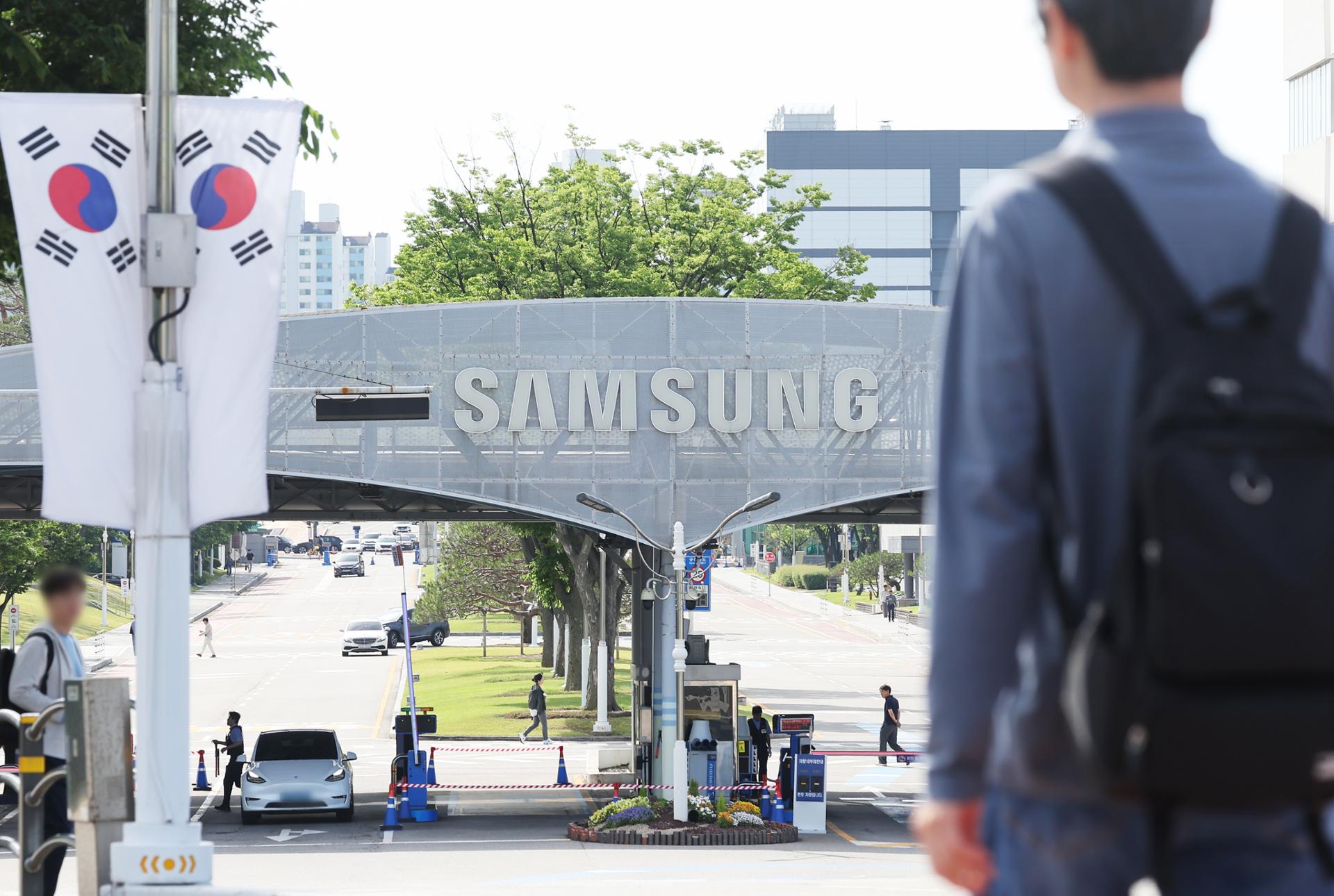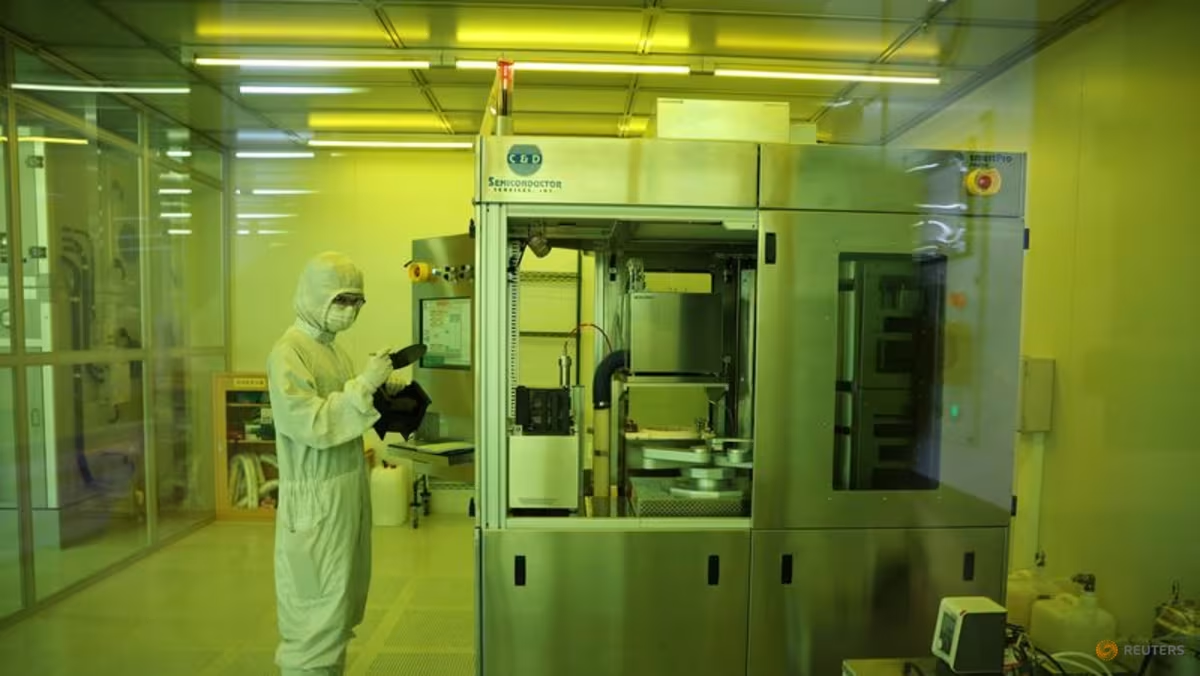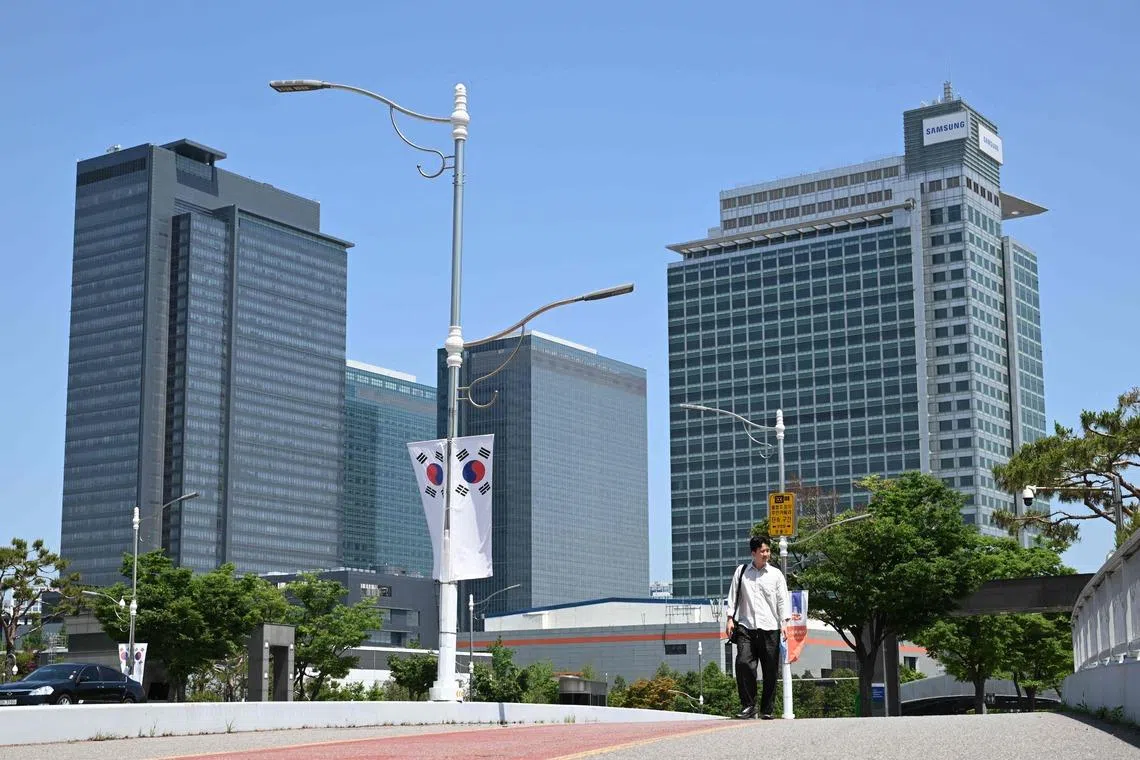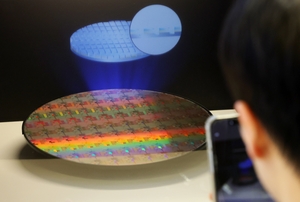
A semiconductor wafer on display at Semicon Korea 2026, the chip industry's biggest annual showcase in Seoul, on Feb. 11 (Newsis) Semiconductor majors run jointly with Samsung Electronics and SK hynix have overtaken Seoul National University's natural sciences programs in 2026's entrance scores.The shift puts a guaranteed chip-industry job, for the first time at this scale, in the same tier as the two destinations Korea's top science students have long prized above all others: medical school and Seoul National itself.The five contract departments posted an average entrance cutoff of 96.2 in the 2026 regular admissions cycle, edging past the 95.8 average for Seoul National's natural sciences programs, according to an analysis released Sunday by Jongno Academy, a major admissions consultancy. The figures measure the 70th-percentile cutoff among enrolled students, a gauge of where applicants chose to enroll rather than where the single highest scorer landed.These departments bundle full tuition support with a guaranteed job at the sponsoring chipmaker — an offer that has grown more appealing as Samsung and SK hynix post record earnings on surging demand for the high-bandwidth memory that powers AI servers.One program crossed a line few would have predicted. Hanyang University's department, tied to SK hynix, scored 98, just above the average cutoff for provincial medical schools, long among the surest draws for Korea's top scorers. SK hynix's three programs averaged 96.7, ahead of Samsung's two at 95.5.Medicine still sits at the top. Cutoffs at medical schools in Seoul and the surrounding region averaged close to 99, above every chip department, though the gap has narrowed. The Seoul National figure is also an average across its science departments, and its most sought-after engineering majors likely still rank above the chip programs.Both chipmakers run programs to secure engineers years before graduation, a payoff now visible in who is applying. The appeal rests on record memory earnings, which means the same demand that lifted the scores could ease them if the AI-driven boom slows. Lim Sung-ho of Jongno Academy expects more movement in 2027, when an expanded medical school quota reshuffles where top students land.
Samsung, SK hynix chip majors top SNU in admissions
Semiconductor majors run jointly with Samsung Electronics and SK hynix have overtaken Seoul National University's natural sciences programs in 2026's entrance s
348 words~2 min read