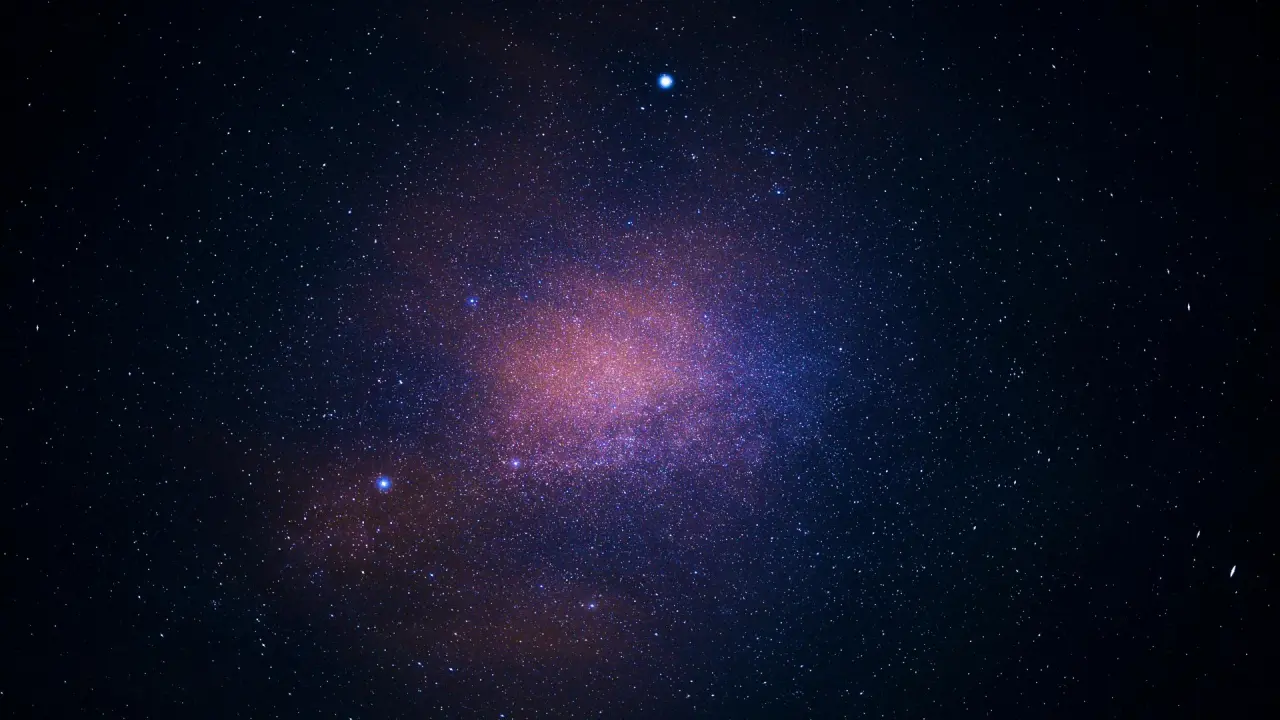
Image by Pascal Küffer via Pexels
Researchers at the Max-Planck-Institut für Kernphysik (MPIK) in Heidelberg had recreated a key chemical reaction from the early universe, producing results that could change scientists' understanding of how the first stars formed.
The study focused on the helium hydride ion (HeH⁺), which is widely regarded as the first molecule to form in the universe. Scientists believe HeH⁺ appeared around 380,000 years after the Big Bang, when the universe had cooled enough for electrons and atomic nuclei to combine into neutral atoms in a period known as recombination. This marked the beginning of chemistry in the cosmos.
Immediately after the Big Bang about 13.8 billion years ago, the universe was extremely hot and dense. As it expanded and cooled, hydrogen and helium became the dominant elements. Once neutral helium atoms formed, they could react with ionised hydrogen nuclei, or protons, to create helium hydride ions.
Although simple in structure, HeH⁺ played an important role in the young universe. It was the first step in a chain of reactions that eventually produced molecular hydrogen (H₂), a molecule made up of two hydrogen atoms and now the most abundant molecule in the universe. Molecular hydrogen later became a key ingredient in the formation of the first stars.