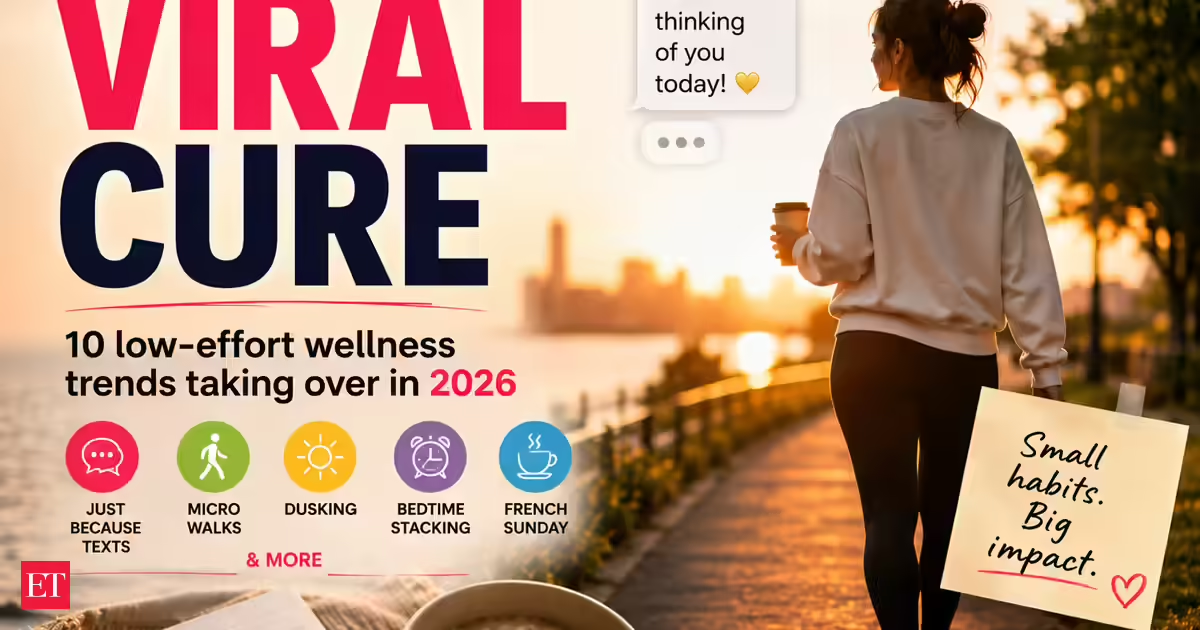
From the simplistic ‘just because’ texts to the thoughtful ‘broaden & build’ theory to the practical ‘micro walks’, wellness trends bring to light low-cost, low-effort and highly relatable practices. Nupur Amarnath rounds up the 10 best hacks for 2026.THE BROADEN & BUILD THEORYWhat: Coined by positive psychologist Dr Barbara Fredrickson, this theory explains how positive emotions widen your thinking and help build long-term resilience, relationships and problem-solving ability. One positive action opens you up to more, creating an upward spiral of good feelings and outcomes.Expert speak: According to psychologist Dr Bhavna Barmi, there's a clinically vital line between cultivating positive emotions and slipping into toxic positivity. Toxic positivity is emotional avoidance — the classic 'good vibes only' mindset."The theory is about expansion, not elimination. It doesn't ask you to pretend your pain doesn't exist. Instead, it proves that even in difficult phases, allowing yourself to experience micro-moments of joy or gratitude expands your mental capacity to cope. It builds a psychological buffer."Do it right: Focus on co-existence. You can have a difficult day and still appreciate a good laugh with a friend. Build resilience through micro-connections, savouring the moment (sit with a positive feeling for 15-30 seconds) and gratitude.MICRO WALKSWhat: Short bursts of walking, from 30 seconds to 5-15 minutes, spread throughout the day instead of one long session.Expert speak: Dr Manjusha Agarwal, consultant-internal medicine, Gleneagles Hospital, Mumbai, says micro walks are important for everyone. Even a short 5-10 minute walk can enhance blood circulation, focus and mood, reduce stiffness and boost energy levels.Do it right: Schedule walks before meetings, after meals or during phone calls. The best times are mid-morning, lunchtime and late afternoon, when energy tends to dip. They also help when you feel overwhelmed or before and after a difficult task.APRIL THEORYWhat: The idea that people feel most positive and motivated to set new goals in April.Expert speak: Mumbai-based psychologist Nirali Bhatia says there is enough evidence that seasons influence mood, energy levels and motivation. She points to the 'October Theory', where people begin preparing for the New Year in October so there's no pressure on January 1."April does bring increased daylight exposure and better weather," she notes. "What this trend taps into is what in psychology is called the fresh start effect — the tendency to pursue goals after a landmark period, such as a birthday, New Year or new semester."Do it right: Motivation alone is not going to bring change. If April gives you psychological momentum, go for it, but results come from consistent effort and routines.THE SHOPPING CART THEORYWhat: The theory suggests true ethical behaviour comes from personal responsibility, not external enforcement. Returning a cart becomes a litmus test for whether someone can govern themselves morally.Expert speak: Barmi says, the Shopping Cart Theory is a classic example of the Fundamental Attribution Error."This is our tendency to attribute someone's behaviour to their character while ignoring their situation." People may not be returning the cart because of a crying infant or pain. "It doesn't mean a lack of a moral compass. Character is built on patterns over time, not isolated convenience."Do it right: "We are obsessed with these mundane tests because the human brain loves cognitive shortcuts. The world is complex and categorisation makes us feel safe," Barmi adds. "These viral theories risk turning psychology into a tool for judging others rather than practicing empathy."TIME AFFLUENCEWhat: Time affluence refers to the subjective feeling of having enough time to pursue relationships, rest and reflect, rather than feeling rushed or time-poor.Expert speak: Psychotherapist and life coach Dr Chandni Tugnait says the concept feels instinctively true because many of us have experienced earning well but live rushed lives, with no energy left to enjoy it."This simply puts language to something people already sense."Do it right: Treat personal time with the same non-negotiability as professional commitments."First, schedule rest and leisure as appointments. Second, batch similar tasks together to drop cognitive load. Third, audit your week for low-value obligations that persist out of habit or guilt."JUST BECAUSE TEXTSWhat: 'Just because' texts are messages sent with no agenda, simply to check in or show someone you're thinking of them.Expert speak: Bhatia says, "In today's time, when the world has become so transactional, a simple message with no action required and no request feels light and positive."These texts create a sense of belonging, validation and social connection. "Even for the sender, it's a way to be socially connected. It's care without any obligation."Do it right: "However, emotional intimacy requires deeper forms of interaction like long conversations, shared experiences, face-to-face time, body language and touch," she says. "We can't rely too much on technology to strengthen connection. It's just a medium."BEDTIME STACKINGWhat: Bedtime stacking is a TikTok trend where you climb into bed early and pile on everything you need — books, snacks, skincare and a journal — turning your bed into an all-in-one hub.Expert speak: Psychologist Dhara Ghuntla says bedtime stacking is a signal to the brain to slow down and feel safe before sleeping.Do it right: Include calming activities such as reading, skincare and journaling."If one does office work, excessive screen time or stimulating tasks, there will be increased anxiety, stress, worry and overthinking," says Ghuntla.DUSKINGWhat: The practice of watching daylight turn to darkness as a form of relaxation.Expert speak: Tugnait notes that dusking is not as whimsical as it sounds."There is genuine psychophysiological grounding to the practice because the transition from daylight to darkness triggers a natural drop in cortisol while simultaneously signalling the brain to begin melatonin production," she says. "The novelty may draw people in, but the biology is what keeps it working."Do it right: The sweet spot is 15-20 minutes during the half hour around sunset, and consistency matters more than duration."Outdoors is ideal because natural light spectrum changes are far more pronounced than anything a window can offer," she adds. Watch without an agenda or distractions.FRENCH SUNDAYWhat: A relaxed Sunday, inspired by the French way of life, involving time with friends and family, good food and walks rather than chores.Expert speak: Tugnait says it points to something modern schedules have dismantled: The idea that genuine rest requires more than simply stopping work."Distinguish between passive recovery and restorative experience. Doing errands fills leisure time, but it keeps the brain in task-completion mode, which means the nervous system never fully downshifts. Unstructured time creates what we call psychological detachment."Do it right: Weekend errands piling up is an accumulation problem rather than a time problem. Redistribute errands across weekday."Building a French Sunday requires a prior decision that one day will belong entirely to pleasure and presence. Start with once a month and protect it the way you would a flight booking."ANALOGUE BAGWhat: A bag filled with activities such as knitting or books to help someone use their smartphone less in their free time.Expert speak: Bhatia says the trend's popularity shows growing awareness that people need time away from their phones."Analogue bag is a cultural shift where we're not constantly talking about the ills of technology, but rather create healthy boundaries by introducing meaningful tasks."Tactile activities engage attention longer and offer a stronger sense of accomplishment.Do it right: The success of the analogue bag does not depend on the bag but on choosing activities meaningfully."If you're doing it only to be performative for an online presence, then it's not going to bring any change."
The Viral Cure: The wellness hacks people are swearing by in 2026 — and they barely cost a thing
Discover 10 accessible wellness trends for 2026, from the 'Broaden & Build' theory promoting positive emotions to 'Micro Walks' for quick energy boosts. Explore the 'April Theory' for goal setting, and understand 'Time Affluence' for a less rushed life. These practical hacks, including 'Just Because Texts' and 'Bedtime Stacking', offer simple ways to enhance well-being and connection.
1,223 words~6 min read