France's cities produce millions of litres of urine every day. Most disappears into the sewer system. But some scientists are now saying what we flush away could help fertilise the country's fields – an eco-friendly way to reduce dependence on increasingly expensive and polluting imported fertilisers.
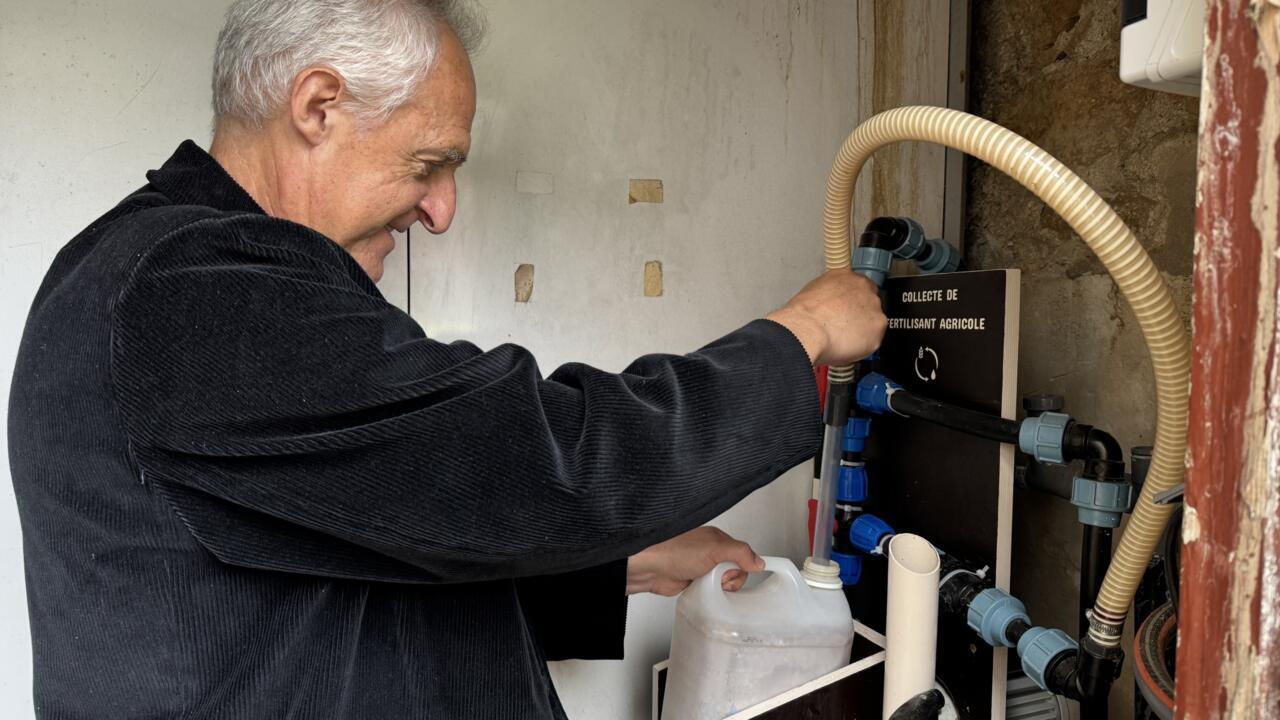
At a collection point in Châtillon, just south of Paris, Bruno Rakedjian unscrews the cap of a five-litre jerry can and inserts a plastic tube which then pumps the yellow liquid contents into a 150-litre container. "Twenty of us in Châtillon are collecting urine at home," he says, pointing to a blue plastic funnel that makes peeing into the plastic container a straightforward affair. Like the other members, he drops off his urine once a week when picking up organic vegetables supplied by the local farmer who collects the urine. This small citizen-led initiative was started four years ago as part of a publicly funded project on using human waste in agriculture, run by research programme OCAPI. "One person’s urine over the course of a year could fertilise 500 square metres of fields, and 25 million baguettes could be produced every day using the urine of everyone living in the Paris region," said Fabien Escudier, head of the OCAPI programme. Escudier has been researching the use of human waste as fertiliser for more than a decade. Since instability in the Middle East pushed up the price of imported chemical fertilisers, there's growing interest in exploiting such homegrown alternatives. Can pee help feed the world? Double dependency France is Europe's largest agricultural producer and relies heavily on fertilisers. Conventional French farmers spread an average of 170kg of nitrogen fertiliser per hectare of wheat, maize or sugar beet – 80 percent of which is imported. Nitrogen fertiliser is produced using natural gas, largely from the Gulf States, while much of the phosphate used comes from Morocco and contains high levels of the toxic heavy metal cadmium, which has been linked to cancer. "We have a double dependency," says microbiologist Marc-André Selosse. With the Iran-US war and partial blockade of the Strait of Hormuz pushing up energy prices, Selosse argues that this dependence has become increasingly visible and "problematic". But that's not the only cost. When excess fertiliser washes off fields into rivers and coastal waters, it can trigger algal blooms and water pollution. "You lose money in tourism, in fish production and you have health issues for people [in the area]," Selosse says. "It's terribly costly, this story of mineral fertilisers." Urine could provide a far cheaper, greener and healthier alternative. "Every one of us produces around 11 grams of nitrogen and 0.7 grams of phosphorus in their urine every day," he says. "That's a resource." Listen to this story on the Spotlight on France podcast: