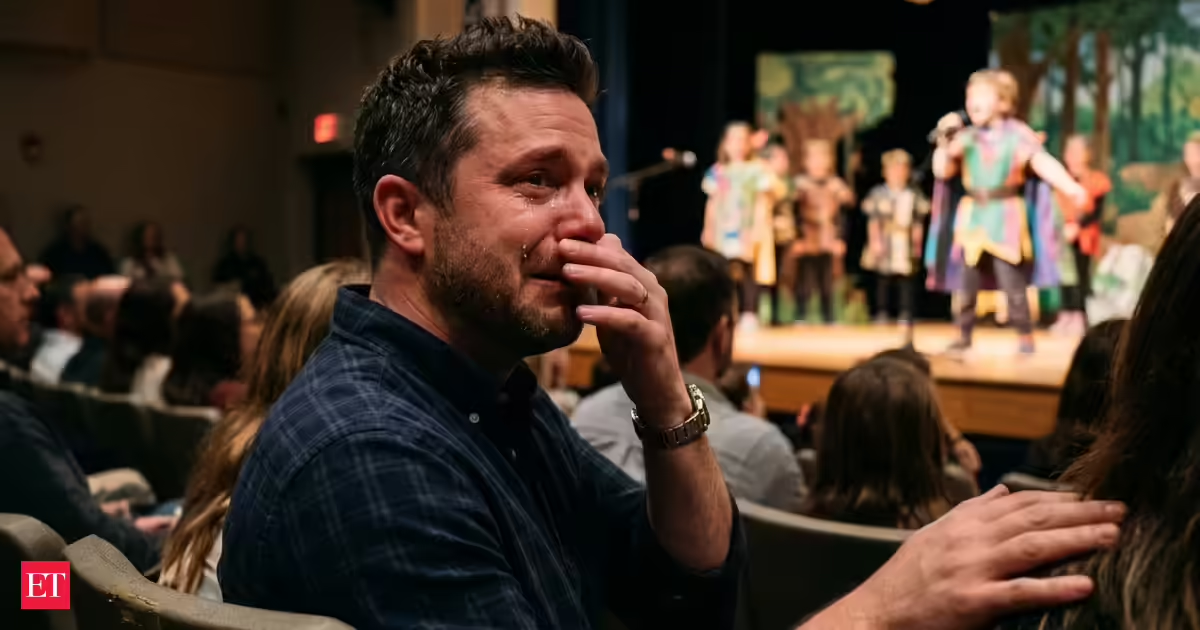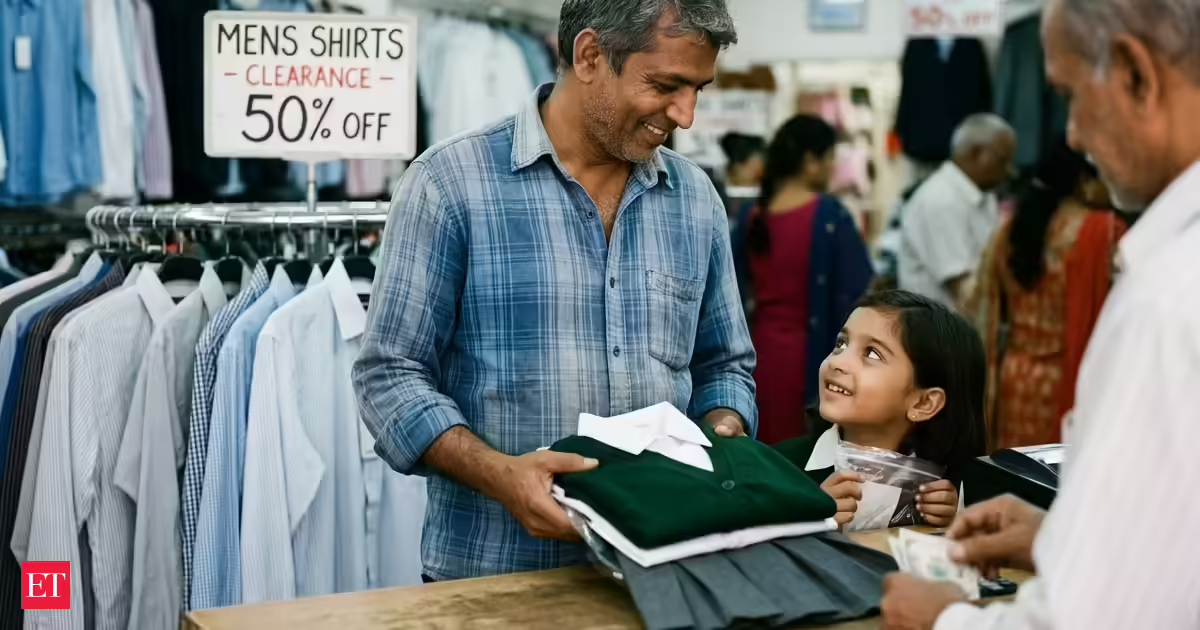
Many adults have experienced this contradiction. Their father may forget an anniversary. He may need reminders for birthdays. He may even confuse dates that everyone else considers important. Yet somehow, he remembers exactly what his daughter loves to eat when she comes home after months away. He remembers her favorite tea. He remembers she hates onions. He remembers the dessert she liked as a child. At first, this behavior can feel confusing. How can someone forget significant dates but remember such specific details? Psychology suggests this is often not a sign of indifference. In many cases, it reflects how some fathers store emotional information differently. Their love is frequently built around actions, routines, and caregiving behaviors rather than symbolic milestones.Why Fathers Often Remember Practical Details More EasilyOne explanation comes from Encoding Specificity Theory, developed by psychologists Endel Tulving and Donald Thomson. The brain remembers information more effectively when it is connected to repeated experiences. Birthdays happen once a year. Favorite foods may be repeated hundreds of times throughout life. For example, a father may have spent years buying the same snacks after school or ordering the same meal during family outings. Those repeated experiences become deeply embedded in memory. The information becomes attached to everyday life rather than isolated calendar events.Why Fathers Often Express Love Through Actions Instead Of WordsPsychologists also discuss Instrumental Love, a concept often observed in parenting research. Instrumental love refers to expressing care through actions instead of emotional language. Some fathers grew up in environments where affection was rarely verbalized. Instead, love was demonstrated through providing, fixing, helping, and anticipating needs. Their brain learns a different emotional language.Instead of saying: "I miss you."They may ask: "Do you want your favorite food tonight?"You Might Also Like:The gesture becomes the message.Why Men Are Often Socialized To Remember Different ThingsAnother explanation comes from Gender Role Socialization Theory. Many fathers were raised to prioritize responsibility over emotional expression. They learned to focus on tasks that solve problems. As a result, their memories often attach themselves to practical information.For example:What time their daughter arrives home.Which food she prefers.Which blanket she likes.Which restaurant she always chooses.The emotional bond exists, but it is translated into action-oriented memories.You Might Also Like:Why Emotional Memories Are Often Hidden Inside RoutinesPsychologists also point to Procedural Memory. This is the brain's system for storing repeated behaviors and habits. Family rituals become powerful emotional anchors. Imagine a daughter returning home from university every few months. Without being asked, her father buys her favorite snacks before she arrives. That behavior may have become automatic over years of repetition.The father may not consciously think about it anymore. His brain simply associates her presence with care routines. The routine itself becomes an expression of affection.Why Modern Families Sometimes Misinterpret This BehaviorToday's younger adults often prioritize verbal affirmation. Digital culture has normalized openly expressing feelings. Social media encourages people to celebrate birthdays, anniversaries, and milestones publicly. Older generations sometimes operate differently.For example, a daughter may feel disappointed when her father forgets her birthday. Yet the same father may wake up early to prepare her favorite breakfast when she visits. The mismatch is not always about love. It is often about communication styles. One generation celebrates emotions verbally. Another generation demonstrates them behaviorally.Why Food Is Such A Powerful Emotional MemoryPsychologists have long studied the connection between food and emotion. Research on Associative Memory suggests that repeated positive experiences strengthen emotional recall. Food often becomes one of the strongest relationship anchors.This is why many parents remember:Favorite snacks.Childhood meals.Special treats.Preferred drinks.The memory is attached to years of caregiving. For some fathers, food becomes a love language.Why Fathers Sometimes Struggle With Symbolic DatesPsychologists also discuss Selective Attention Theory. Humans remember information they repeatedly prioritize. Many fathers spend decades focusing on responsibilities: Work schedules, household tasks, financial planning, problem-solving.Over time, their brains become optimized for functional information rather than symbolic information. Birthdays and anniversaries may unintentionally become secondary. This does not automatically mean they are emotionally disconnected. It often means their attention has been allocated differently for years.The Bigger Psychological TruthPsychology suggests fathers who forget birthdays but remember their daughter's favorite food are rarely uncaring. More often, they are expressing love through familiarity, routine, and service. The most important insight is that people do not always communicate affection the same way.Some people celebrate with words. Others celebrate with actions. Perhaps that is why so many children misunderstand their fathers when they are younger. The love was never absent. It was simply hidden inside ordinary moments. A stocked refrigerator.A favorite meal waiting at the table. An extra packet of biscuits kept aside. Sometimes, those small acts are a father's way of saying something he may never comfortably put into words. "I remember you because I care about you."FAQsWhy do some fathers forget birthdays but remember favorite foods?Psychology suggests repeated caregiving experiences create stronger memory associations than annual dates.Does forgetting birthdays mean fathers do not care?Not necessarily. Many fathers express affection through actions rather than symbolic milestones.
Psychology says fathers who forget birthdays but remember their daughter's favorite food aren’t emotionally unavailable, they express love through action
Psychology suggests that fathers who forget birthdays but never forget their daughters favorite food are rarely uncaring. More often, they express love through familiarity, everyday routines, and acts of service. The key insight is that affection does not always look the same from one person to another.
827 words~4 min read