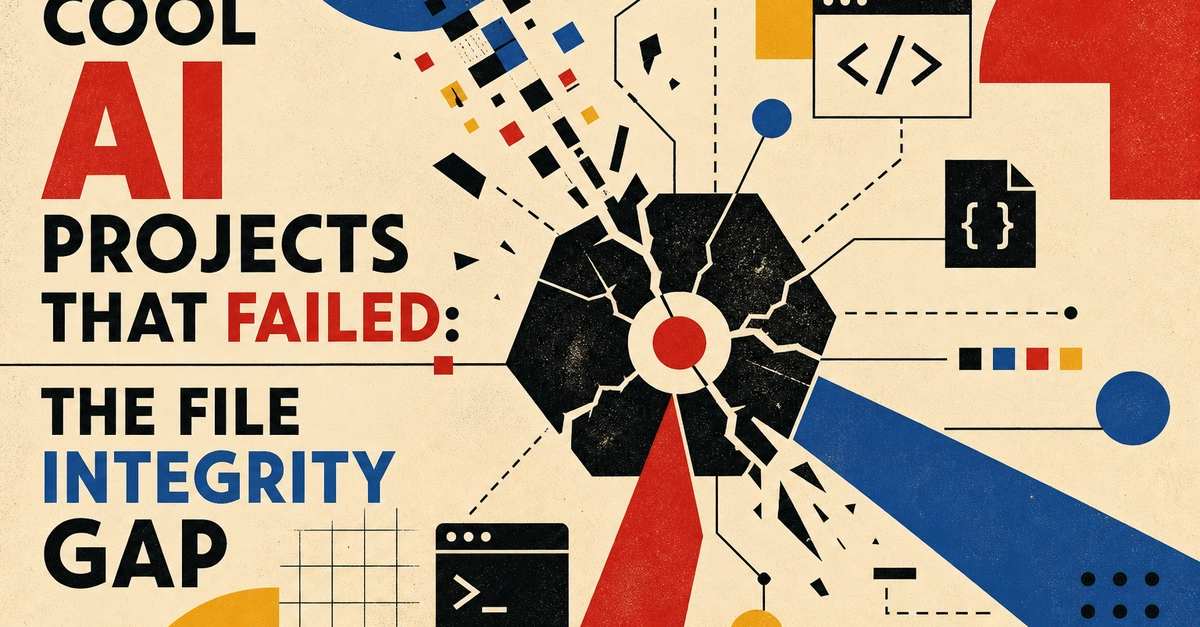
We ship tools that verify software artifacts. We deal with hashes, checksums, and provenance every day. But looking at the local AI landscape, there is a specific failure mode we see repeatedly: hype cycles that ignore the messy reality of file integrity in unstructured model dumps. Teams announce "cool" projects—agents, local reasoning loops, specialized inference stacks—but those initiatives collapse when they hit the first non-standard artifact. The gap isn't in the algorithm; it's in the assumption that a .gguf or .safetensors file is self-documenting and safe to consume without inspection.
The Gap Between Hype and Utility in AI Tooling
High-profile announcements often fail to address the messy reality of local deployment and data integrity. Many "cool" projects collapse under the weight of unstructured model artifacts and lack of standardized metadata. Success requires shifting focus from flashy demos to solving foundational problems like file verification and SBOM generation.
When we look at the failure modes of recent AI tooling, it rarely starts with a hallucinated response or a misaligned agent behavior. It starts with a corrupted weight file or a quantization scheme that doesn't match the user's hardware constraints. Teams build pipelines assuming the input is perfect. They assume the model weights they downloaded are exactly what they think they are.