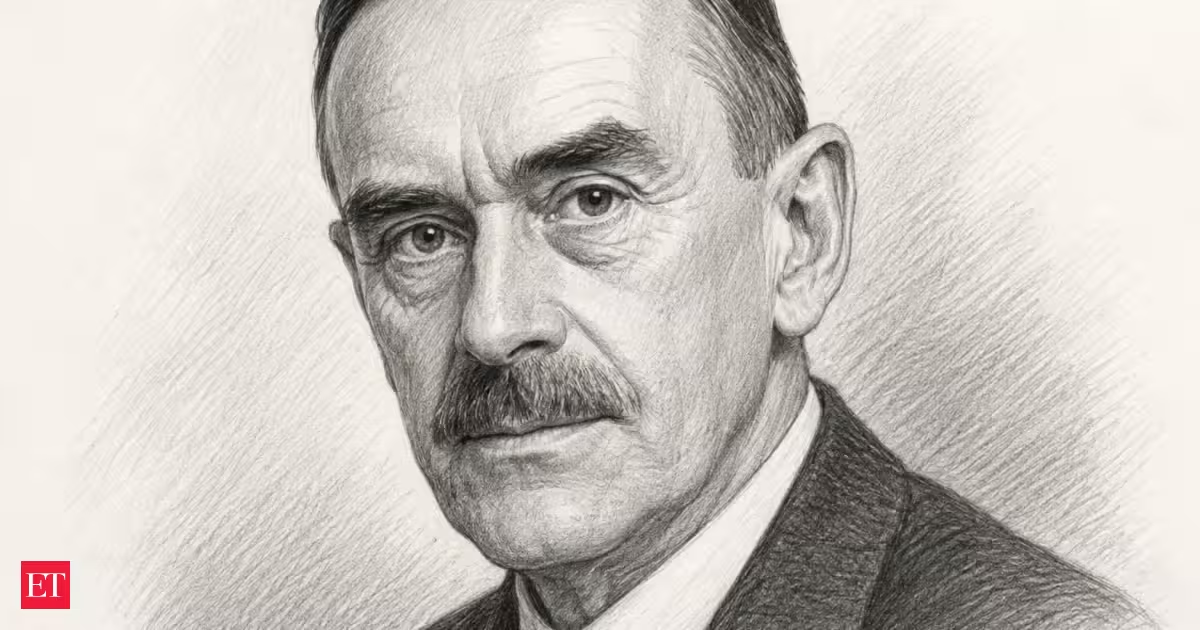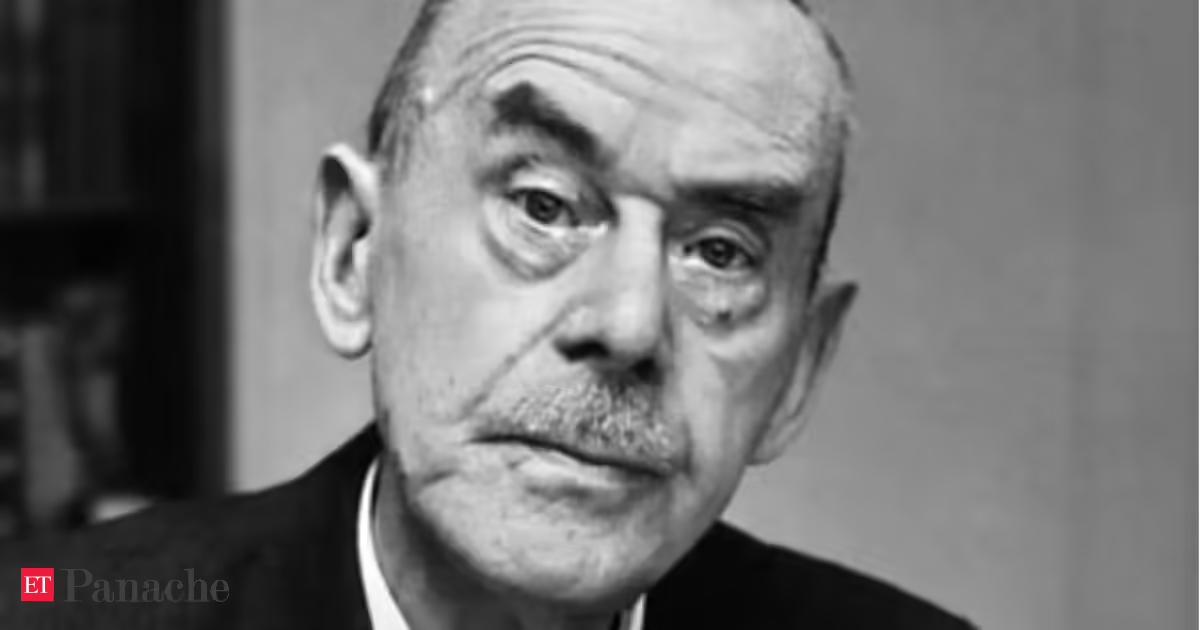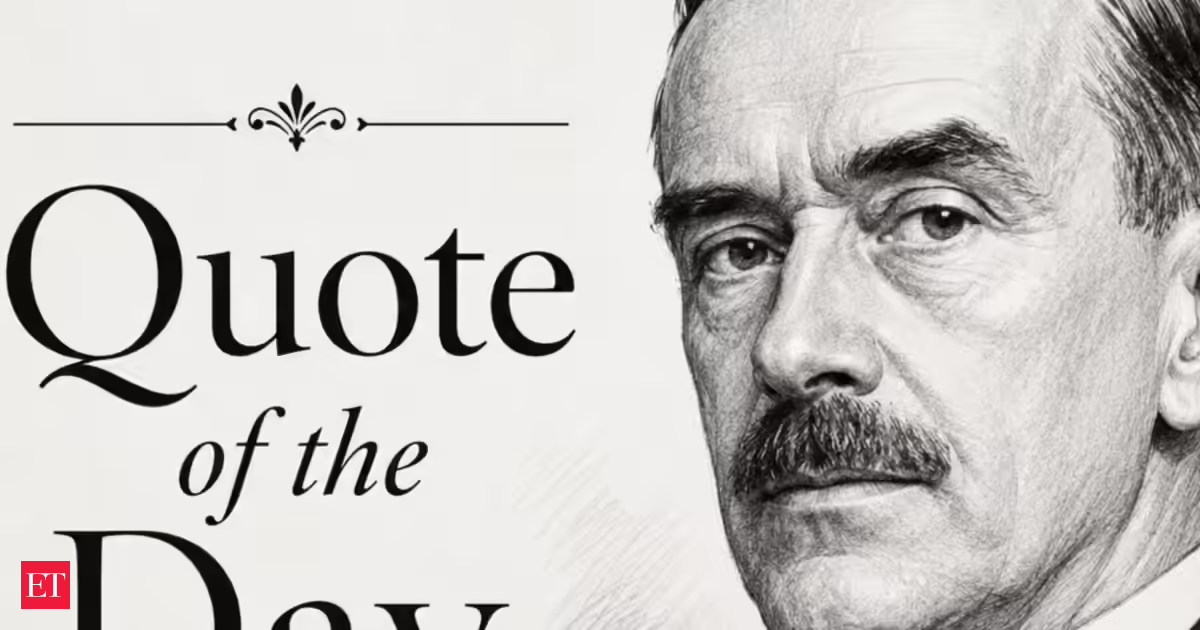
Quote of the Day: Thomas Mann was a celebrated German novelist and essayist whose profound literary works established him as one of the most influential writers of the 20th century. His early masterpieces, including Buddenbrooks, Death in Venice, and The Magic Mountain, showcased his exceptional ability to explore human psychology, society, and moral conflict, ultimately earning him the prestigious Nobel Prize in Literature in 1929.Born on June 6, 1875, in Lübeck, Germany, Mann remained a towering figure in world literature until his death on August 12, 1955, near Zürich, Switzerland, leaving behind a lasting legacy of intellectual depth and literary brilliance.Mann was a writer whose life and work were shaped by profound social and cultural changes of his time. He was not merely a novelist of extraordinary literary depth but also an influential intellectual whose writings reflected thoughtful engagement with society, values, and the evolving human experience.Born in 1875 in Lübeck, Germany, Thomas Mann rose to global prominence through works that examined society, morality, and the human condition with remarkable psychological insight. His literary masterpiece, Buddenbrooks, established him as one of Germany’s greatest writers and eventually helped him earn the Nobel Prize in Literature in 1929. His later works, including The Magic Mountain and Doctor Faustus, further cemented his legacy as a literary giant.Quote of the Day Thomas Mann: “Opinions cannot survive if one has no chance to fight for them” Thomas Mann Quotes: Context and meaning explainedThe quote is one of the most compelling reflections on freedom of thought. His words capture the essence of his worldview; ideas are not self-sustaining in silence. They require expression, challenge, and the courage to be defended. In many ways, the quote mirrors Mann’s own life, where words became both a weapon and a shield against oppression.Mann’s words themselves introduce a powerful truth about the nature of opinion and belief. An opinion is often thought of as a private conviction, something internal and personal. Mann challenged that notion by suggesting that opinions survive only when individuals are free and willing to defend them.Without open discourse, disagreement, or debate, beliefs can weaken, disappear, or be forcibly erased. Silence, whether imposed by fear or authority, slowly suffocates intellectual freedom. The deeper meaning of the quote extends far beyond its surface interpretation. It speaks to everyday human interactions as well. In workplaces, classrooms, relationships, and communities, meaningful progress often comes from healthy disagreement. The freedom to question, challenge, and express differing perspectives strengthens understanding.When we dismiss opposing views without discussion, we stall growth. Mann’s insight reminds us that truth often becomes clearer through dialogue and resistance. The life lesson from this quote is both timeless and urgent. Convictions require courage. Believing in something meaningful often demands speaking up, even when doing so is uncomfortable or risky.ALSO READ: Spanish Proverb of the Day: 'No hay mal que por bien no venga' - Every cloud has a silver lining; check meaning and relevance in everyday life
Quote of the Day by German novelist Thomas Mann: ‘Opinions cannot survive if one has no chance to…’
Thomas Mann, the Nobel laureate German novelist, believed opinions need active defense to survive. His quote, "Opinions cannot survive if one has no chance to fight for them," underscores the necessity of open discourse and courage in expressing beliefs. Mann's life and works championed intellectual freedom, highlighting how dialogue and healthy disagreement foster understanding and progress in all aspects of life.
488 words~2 min read