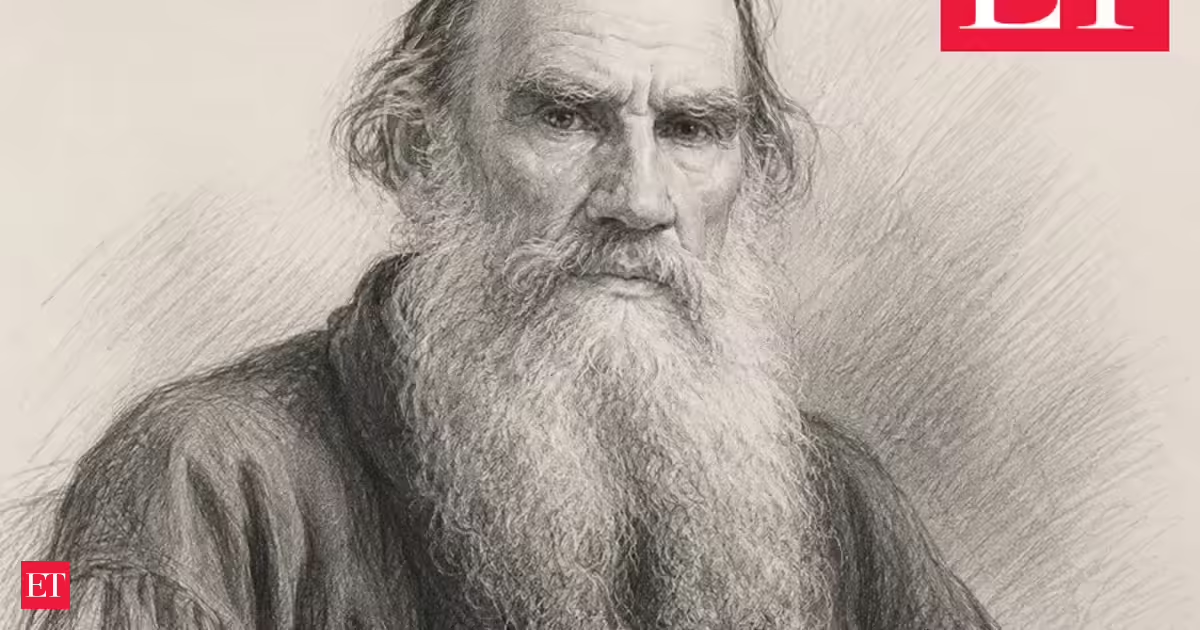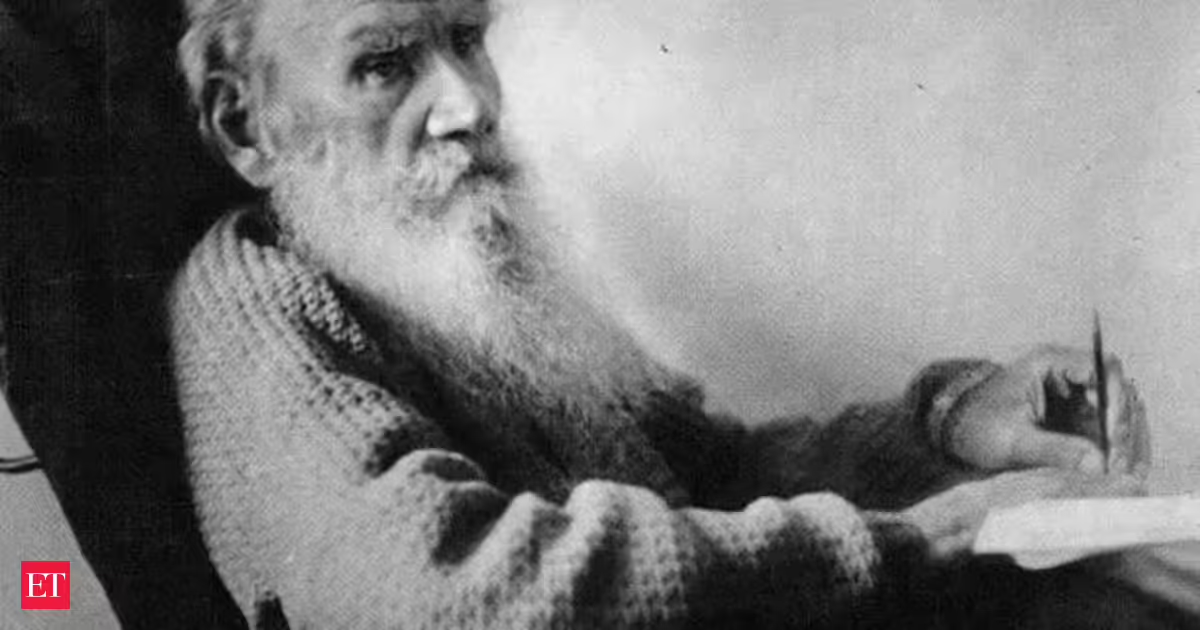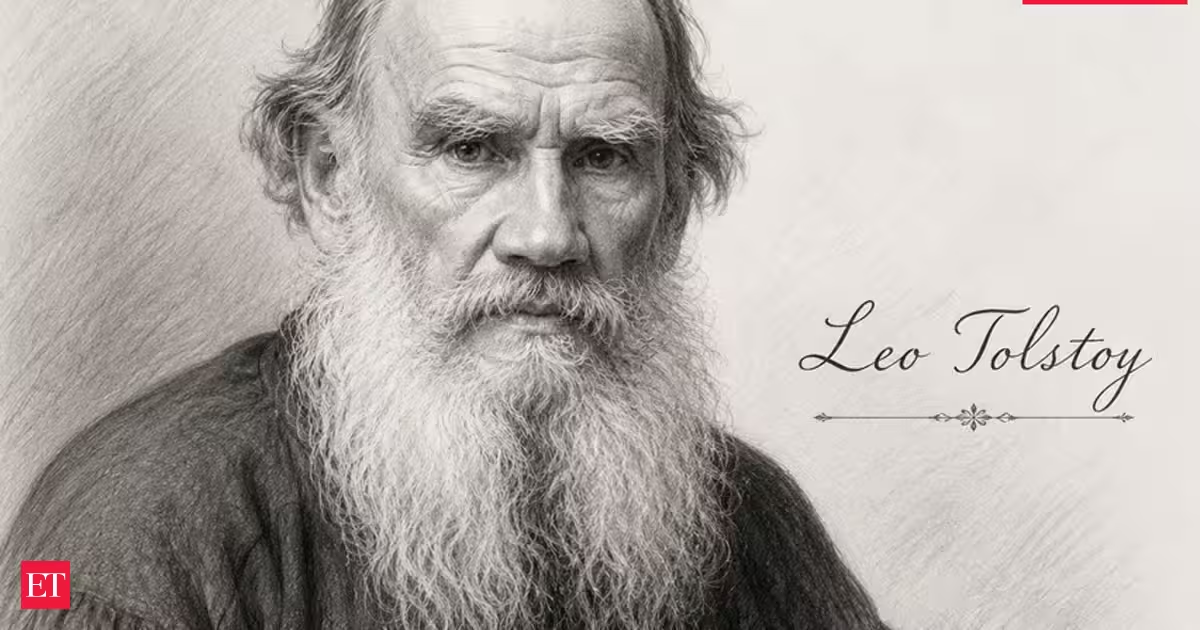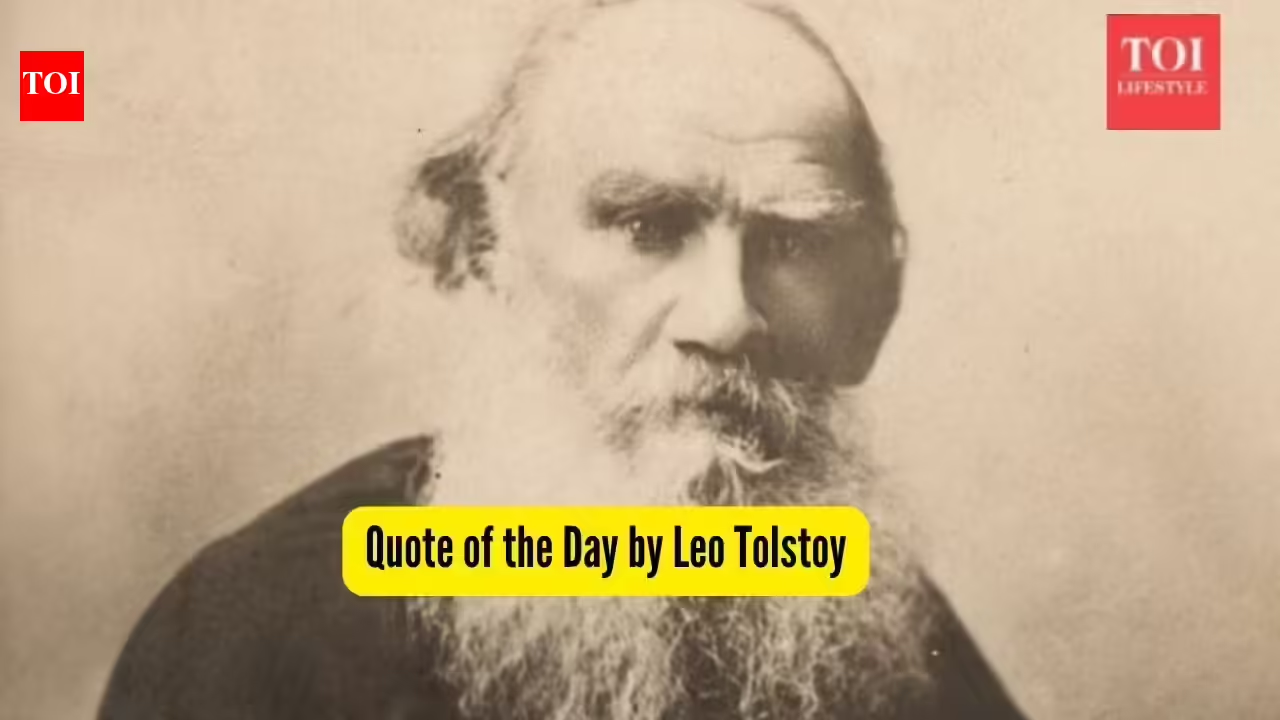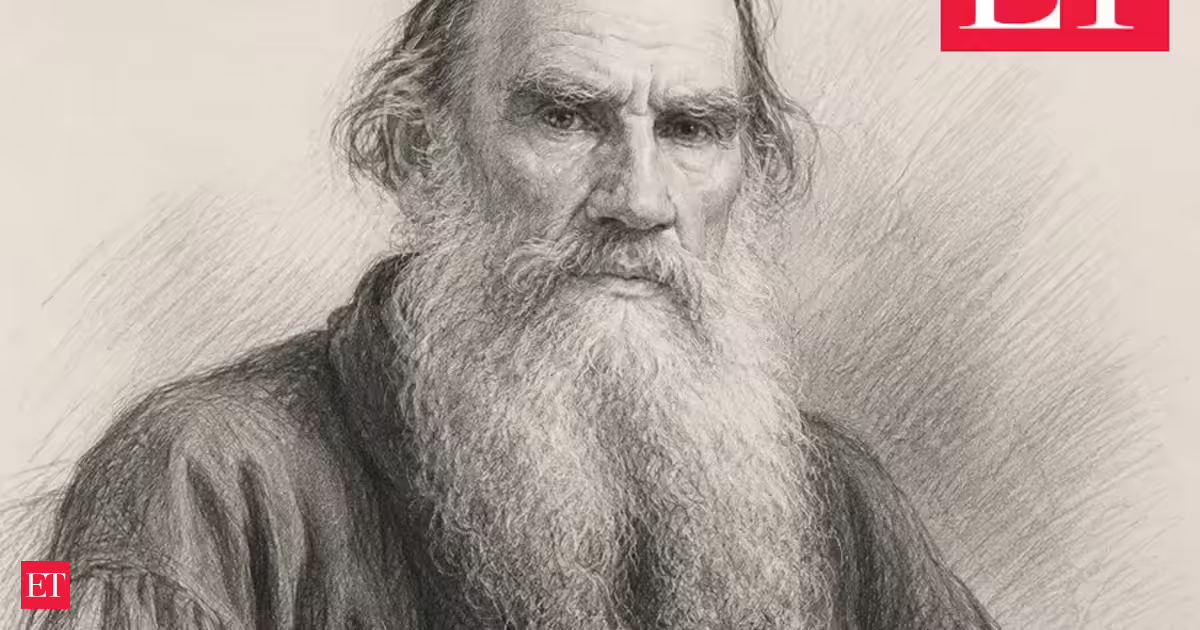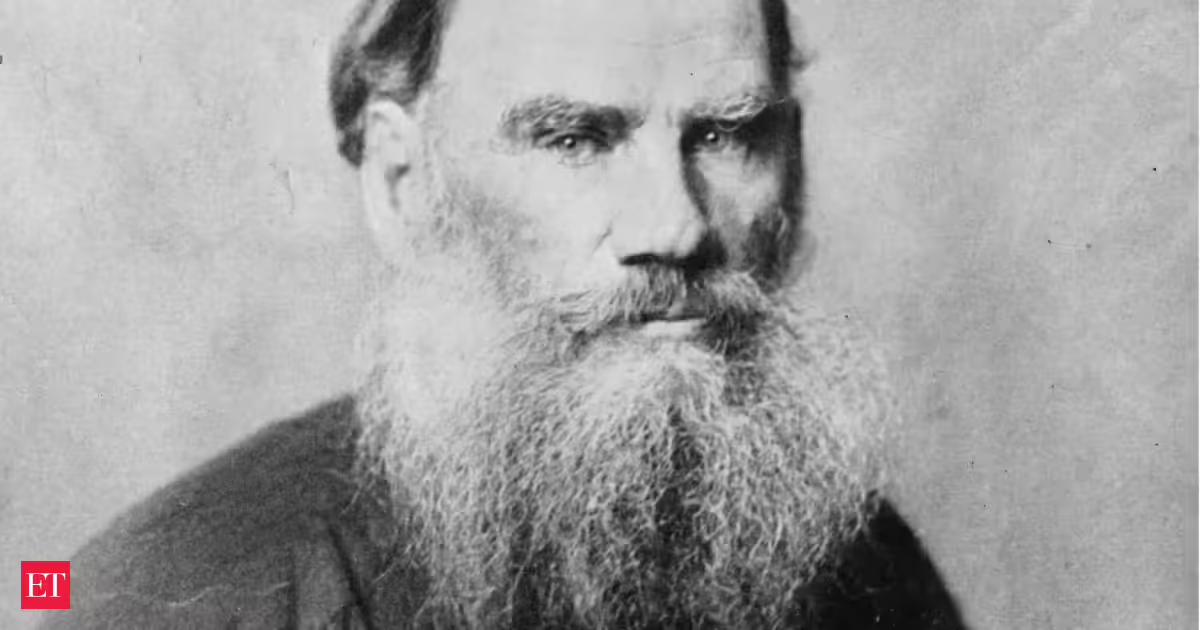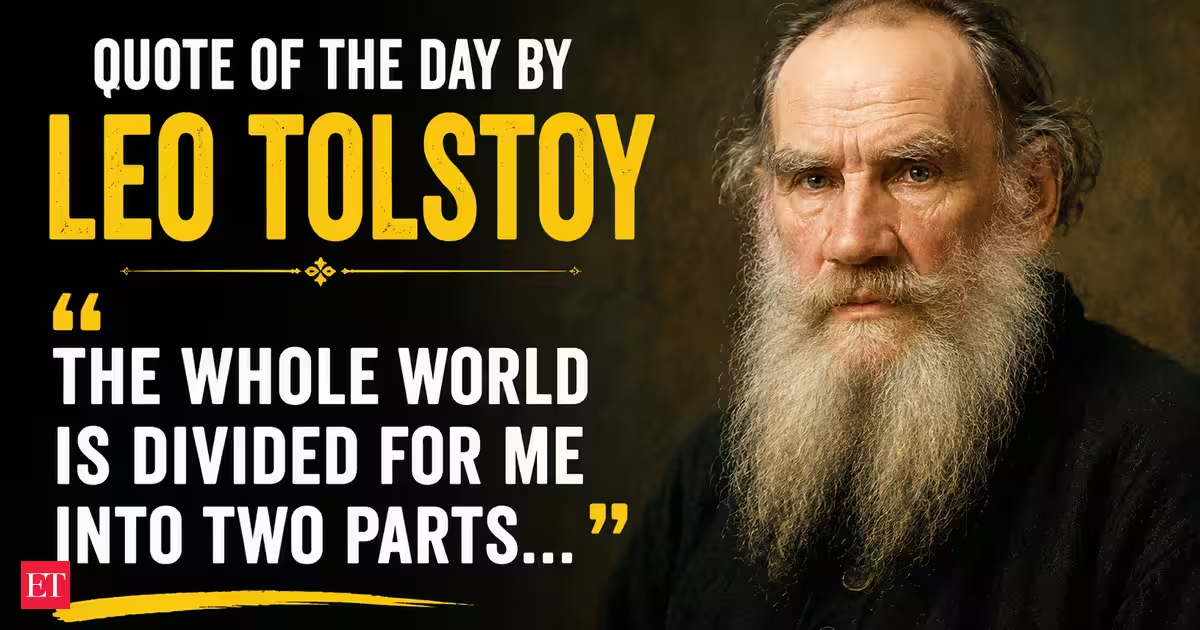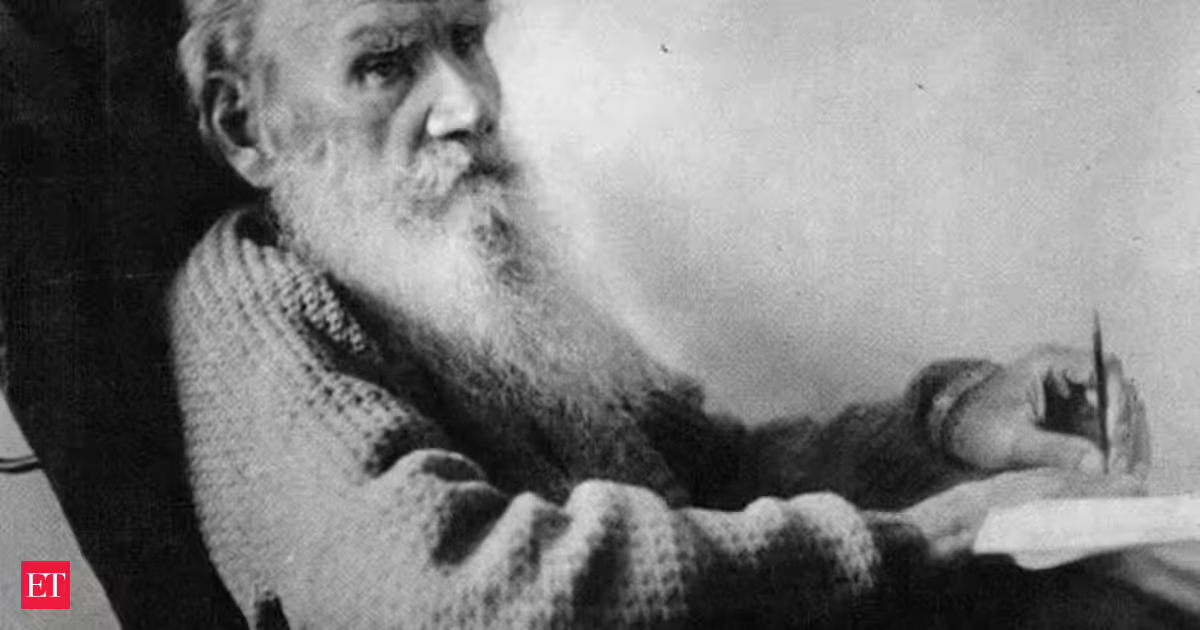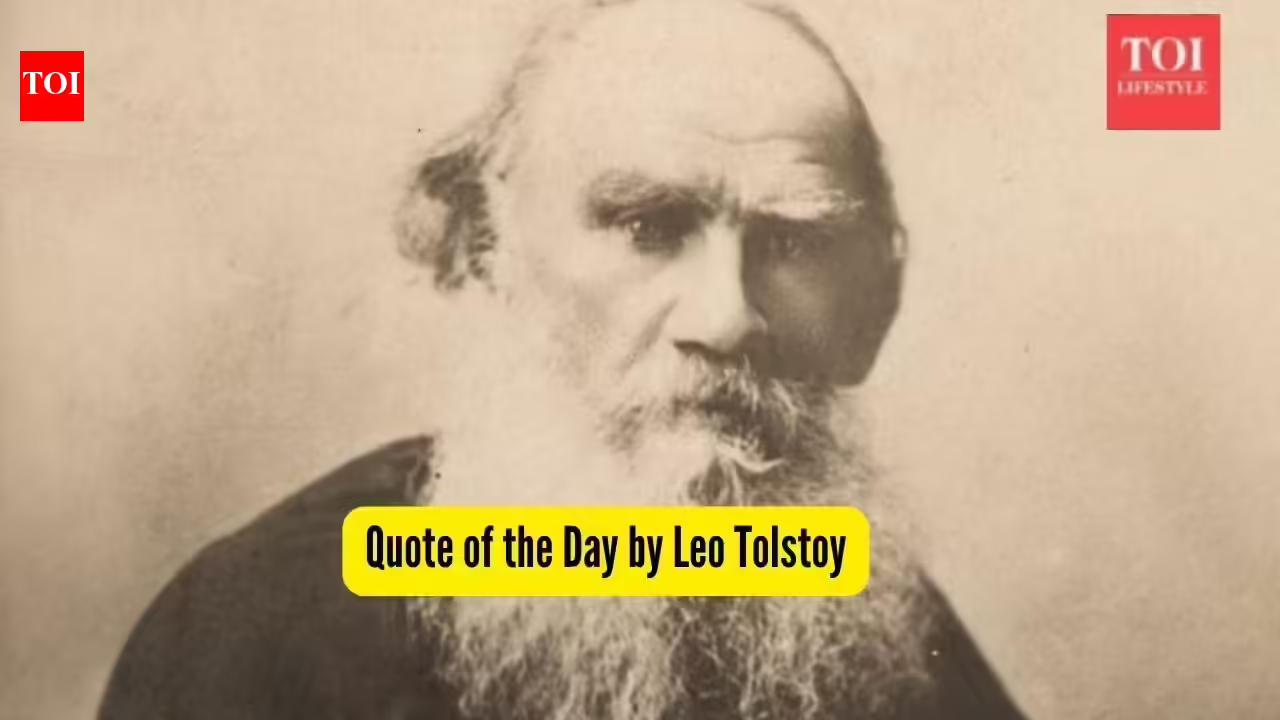
Quote of the Day by Leo TolstoyLeo Tolstoy was not just a novelist but a philosopher, social critic, moral thinker and seeker of truth. His novels are still readable not only because of their gripping plots but also because they ask timeless questions: What is a meaningful life? Why do people get hurt? Can love conquer pride? What is happiness, really? More than a hundred years after his death, Tolstoy’s ideas are still surprisingly relevant today.Tolstoy was born Sept. 9, 1828, at his family’s Russian estate, Yasnaya Polyana. He was born as an aristocrat. He was orphaned at an early age and brought up by his relatives. Privileged by birth, he was never quite at home with wealth or position. This inner conflict would later prove one of the defining themes of his life and his writing. As a young man, Tolstoy attended university, but he dropped out before finishing his degree. He lived for a time recklessly, gambling heavily, running up debts, searching for purpose. He entered the Russian army, hoping to find discipline, and served in the Caucasus campaigns and in the Crimean War. These experiences gave him a foretaste of the brutalities of war and deeply imprinted his conception of human nature.In his early writing, notably in the autobiographical trilogy Childhood, Boyhood and Youth, he showed an extraordinary power of psychological observation. But it was his two monumental novels, War and Peace and Anna Karenina, that made him one of the greatest novelists in history.War and Peace is so much more than just a historical novel about Napoleon’s invasion of Russia. It explores love, family, politics, history, war and the search for meaning. Anna Karenina is often considered one of the greatest novels ever written. It explores love, marriage, desire, morality and social expectations. One of literature’s most quoted observations opens the novel: “Happy families are all alike; every unhappy family is unhappy in its own way”.Tolstoy was world famous, but in middle age he had a deep spiritual crisis. He doubted the value of wealth, of fame, of the very literature itself. He sought answers in religion, in philosophy, in the simple life of the peasants. He gradually shed his materialism and preached simplicity, non-violence, manual labour and compassion. His later writings, like The Kingdom of God Is Within You, profoundly influenced thinkers worldwide, especially Mahatma Gandhi, who adopted Tolstoy's philosophy of nonviolent resistance. Decades later, these ideas also motivated Martin Luther King Jr. during the American civil rights movement.Tolstoy's style is praised for its realism, psychological depth, philosophical reflection, and extraordinary observation.One of his greatest powers was his practicality. Unlike the romantic writers who glorified heroes, Tolstoy depicted everyday people with all their contradictions. His characters mess up, they second-guess themselves, they change their minds, they face moral dilemmas. They look so very real because they are like real humans.Psychological insight is another hallmark of his writing. Well before modern psychology was born, Tolstoy was investigating the secret workings of the human mind. He doesn't just report what characters do, he painstakingly describes what they think and fear and hope and regret. His characters often experience conflicting feelings simultaneously, making them incredibly believable. Tolstoy was good at describing everyday life too. He could take ordinary things – family suppers, farming, talk, dancing, hunting trips – and make them emotionally important. He felt that the deepest truths of life are often to be found in the ordinary, not the dramatic.His writing is remarkable for its wonderful attention to detail. Whether the subject be a battlefield, a ballroom, or a quiet countryside, he conjures up vivid scenes without unnecessary decoration. Every detail advances the story or develops character. Another feature of Tolstoy's style is philosophical reflection. His novels frequently stop to reflect on bigger issues of history, morality, religion, freedom, love and destiny. These reflections never seem like the musings of an outsider, because they are born naturally from the experiences of the characters. Tolstoy was an amazingly talented painter of not just individual lives but also big historical events. He could move easily from the inner thoughts of one person to the movements of armies and show how personal choices and historical forces entwine.The lasting legacy of TolstoyTolstoy changed literature, proving that novels can be emotionally moving and intellectually challenging. His work influenced generations of writers like Virginia Woolf, Ernest Hemingway, James Joyce and many others. His influence is not confined to literature. Movements for peace, social justice, and civil disobedience drew inspiration from his moral philosophy. Ghandi was open about the influence of Tolstoy, and their correspondence remains a significant part of intellectual history. Tolstoy's belief in the greater power of love and moral courage over violence continues to resonate in debates about ethics and politics.Quote of the Day One of the most iconic quotes of Leo Tolstoy is, "The two most happy warriors in a man's life that help him win every battle are patience and time" The statement appears simple at first glance, but its wisdom is revealed only little by little. According to Tolstoy, the greatest patience and time are two eternal friends of man. They can help man win any battle. Time can help heal any wound and patience can help solve any problem in life.Patience: The power of wise waitingPatience is frequently mistaken for passivity. In fact, Patience needs a great deal of inner strength. In other words, holding steady as events develop. This means you have to resist the urge to act impulsively, seek instant gratification, or give up on worthy goals because results are slow in coming. Every meaningful accomplishment takes time. A farmer cannot make crops grow overnight. A student cannot learn knowledge in one week. Trust doesn’t happen in one conversation. Time is needed to heal. Even emotional maturity is learned bit by bit from experience. Tolstoy showed time and again how impatience is often the cause of destructive decisions. Those who want instant gratification often find themselves suffering in the long run, and those who practice restraint often find more profound happiness. And patience gets us through emotions. The anger subsides. Fear dulls. The things that today look like an insurmountable conflict, with some reflection, seem manageable. The patient person realises that not every problem should be solved right away.Time the great teacherTime is a very powerful thing because it changes everything. It heals grief, it shows truth, it exposes deception, it rewards perseverance, it eases pain. It turns experience into wisdom. There are many problems that can not be solved immediately, because they need time itself to work. A broken friendship may take months before it can be reconciled. The only way to learn skills is through practice. Growth is so slow that we only see it looking back. Time also exposes character. Success through shortcuts is often short-lived, but success through integrity is usually lasting. Similarly, looks can be deceiving in the short term. With time, real talent, honesty and commitment will tend to shine through. Time teaches humility as well. It is a reminder that both triumphs and tribulations are fleeting. What you didn’t succeed at today could be your biggest lesson tomorrow and what you succeeded at today still needs work.Why patience and time work together Patience alone is not enough, nor is time alone. Time goes by for all but not everyone grows. Without patience people often give up before time has a chance to work its wonders. Similarly, patience is pointless if you do not give it time. One day is not years of disciplined effort. Patience and time are great allies together. Patience holds us steady while time does its work in silence. This principle applies to practically every sphere of life. Careers are built in decades, not weeks. Relationships are built over years of shared experience. Physical fitness is formed by regular training. Great art is the result of endless revision. Character is the sum total of thousands of little choices made over the years.Whether or not Tolstoy actually wrote those words, they capture a philosophy he consistently expressed throughout his life and writings: real strength is not in domination or impatience, but in quiet perseverance. Patience gives us the courage to keep going, while time gives us the chance to grow, heal and transform. Together they remind us that the greatest victories are not always for the swiftest of foot, but the ones who will not stop walking.
Quote of the Day by Leo Tolstoy, "The two most happy warriors in a man's life that help him win every battle are..."
Leo Tolstoy was not just a novelist but a philosopher, social critic, moral thinker and seeker of truth. His novels are still readable not only because of their gripping plots but also because they ask timeless questions: What is a meaningful life?
1,402 words~6 min read