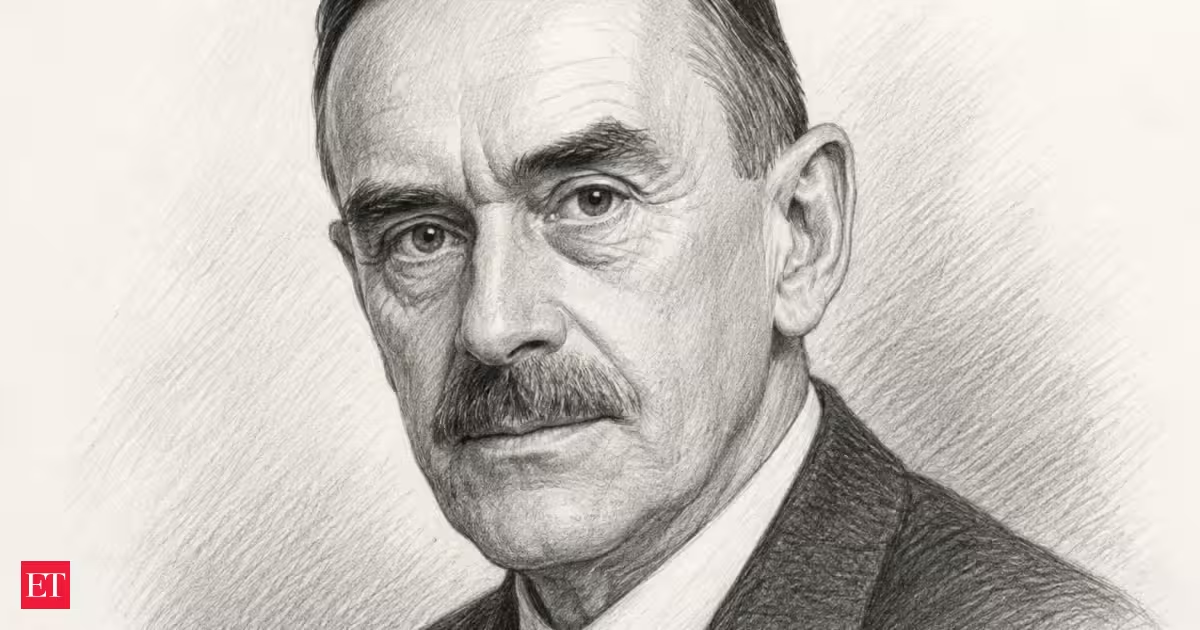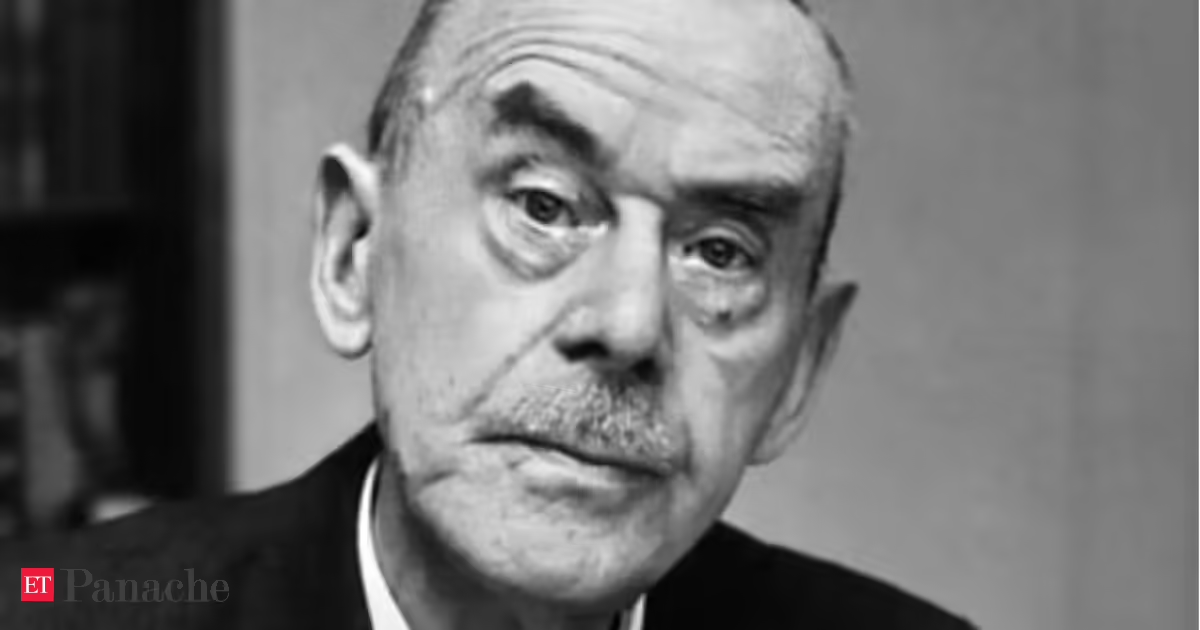
Solitude is something we all cherish and crave sometimes. Some time away, far from the madding crowd to recharge ourselves or engage in some contemplation. While solitude can be peaceful and also great for coming up with creative ideas and let your innovative endeavours bloom, it can also lead to self-destructive tendencies or lead us to decisions we would later regret. After all there’s some truth to the popular adage: “An idle brain is the devil’s workshop..”Centuries ago, writer Thomas Mann explained the pitfalls of solitude. Thomas Mann On Dangers Of SolitudeIn his 1912 novel Death In Venice, the author explores the psychological condition of the protagonist, Gustav von Aschenbach, an author who isolates himself to achieve artistic perfection, and reflects: “Solitude gives birth to the original in us, to beauty unfamiliar and perilous - to poetry. But also, it gives birth to the opposite: to the perverse, the illicit, the absurd.”Deeper Meaning Of The QuoteThrough this quote, Mann exposes the dual-edged nature of human isolation. Removal from society give man a chance to bypass conventions and think out-of-the-box. However, excessive isolation can make the mind a perverse place and give in to self-destructive thoughts and harmful delusions. Relevance Of This QuoteMann’s observations are particularly relevant in today’s digital world, where many people have become isolated and submerged themselves in digital echo chambers. While that may encourage people to defy the status-quo and think for themselves, they may also fall victim to radicalisation, conspiracy theories and preposterous thoughts. Who Was Thomas Mann?A Nobel prize winner, Mann was a celebrated author-essayist. Mann was celebrated for creating deeply symbolic and intellectually layered novels that explored the emotional, spiritual, and psychological struggles of modern humanity. His works were not simply stories about individuals; they were profound examinations of the inner conflicts faced by artists, thinkers, and intellectuals living in a rapidly changing European society.Some of Mann’s most popular works were The Magic Mountain, Buddenbrooks, Doctor Faustus etc.
Quote of the day by Thomas Mann: 'Solitude gives birth to the original in us, to beauty unfamiliar and perilous - to poetry. But...' ; life lessons from German writer
Solitude can spark creativity and innovation. However, it also carries risks of self-destructive thoughts and poor decisions. Author Thomas Mann highlighted this duality in his works. His observations remain relevant today, especially in our digital age. Excessive isolation can lead to harmful delusions and radicalisation. Mann's insights offer a timeless perspective on the human mind.
324 words~1 min read