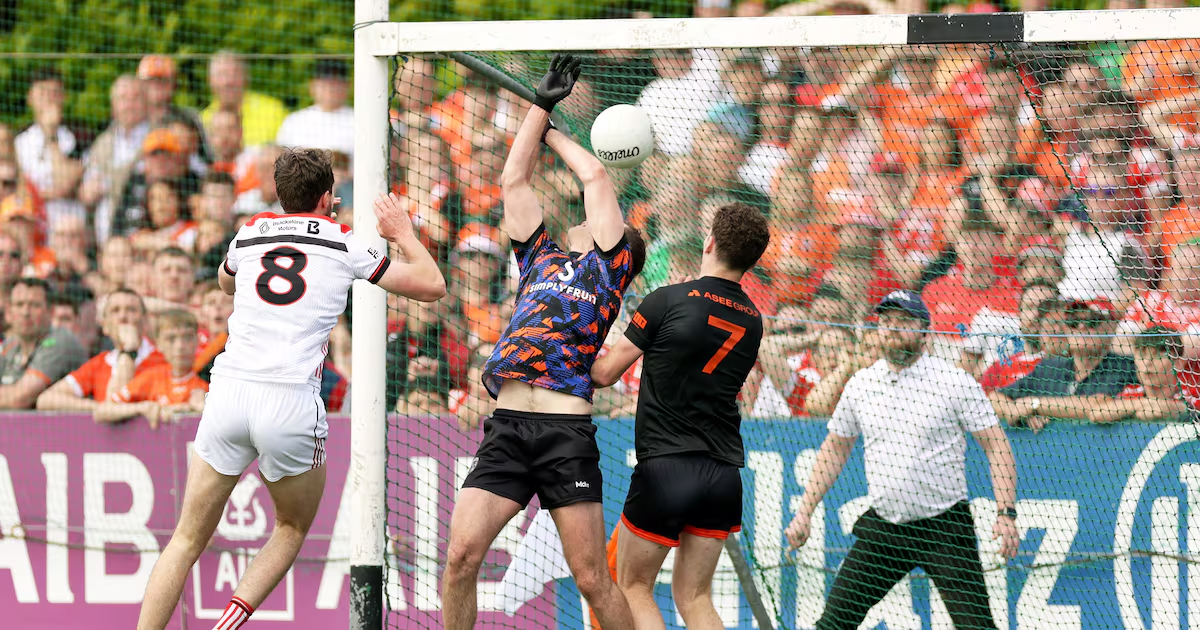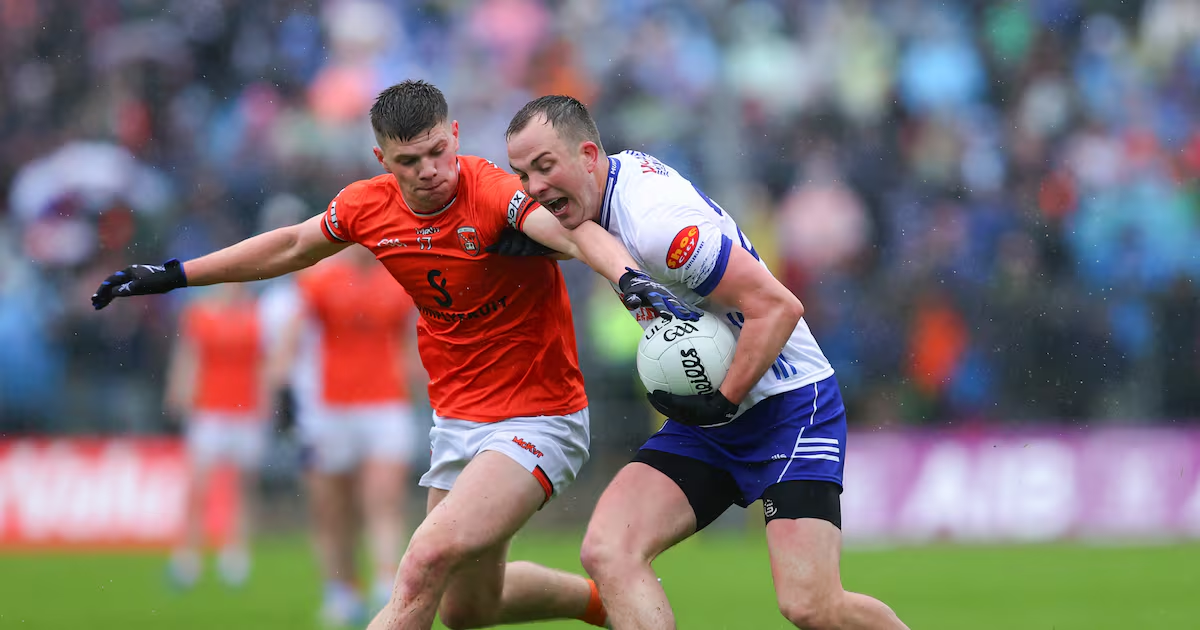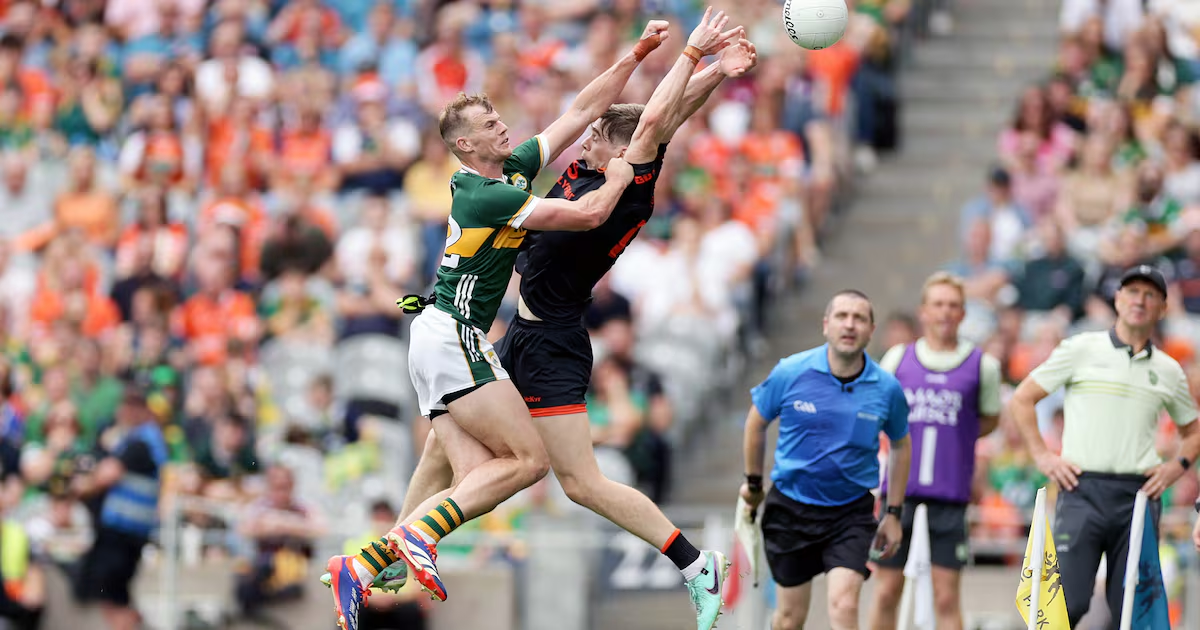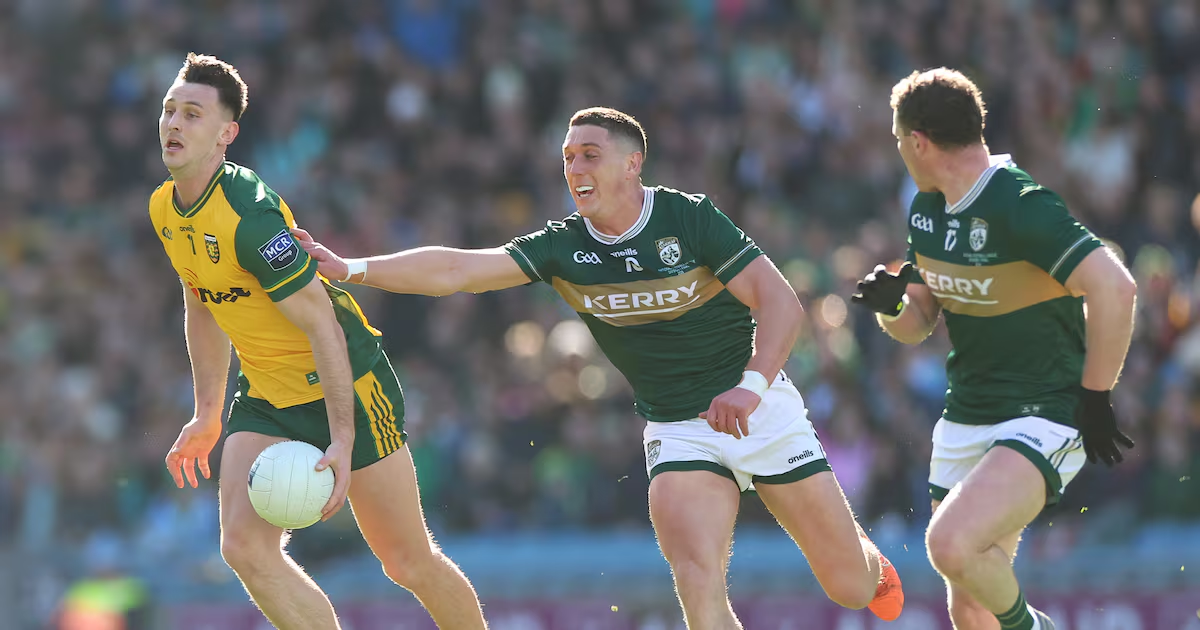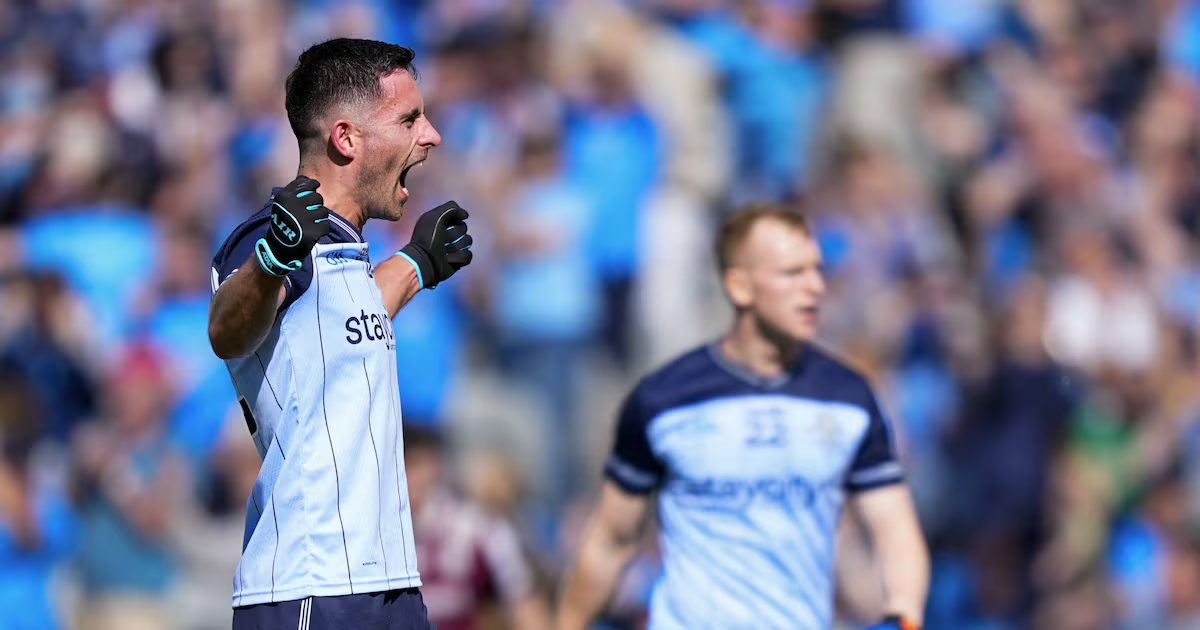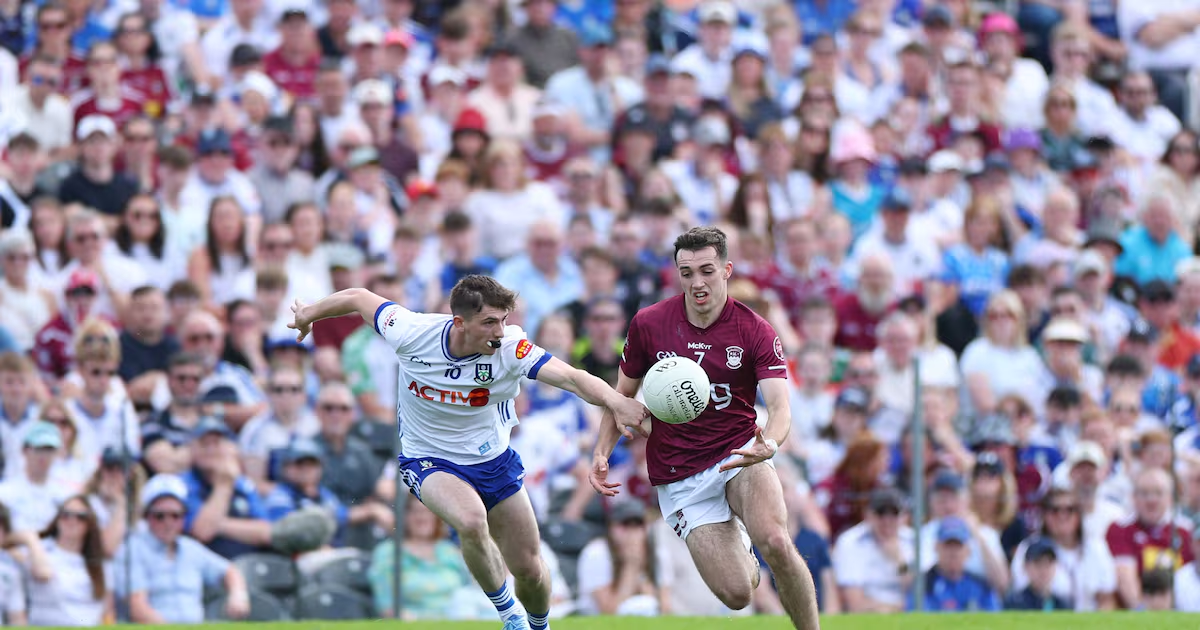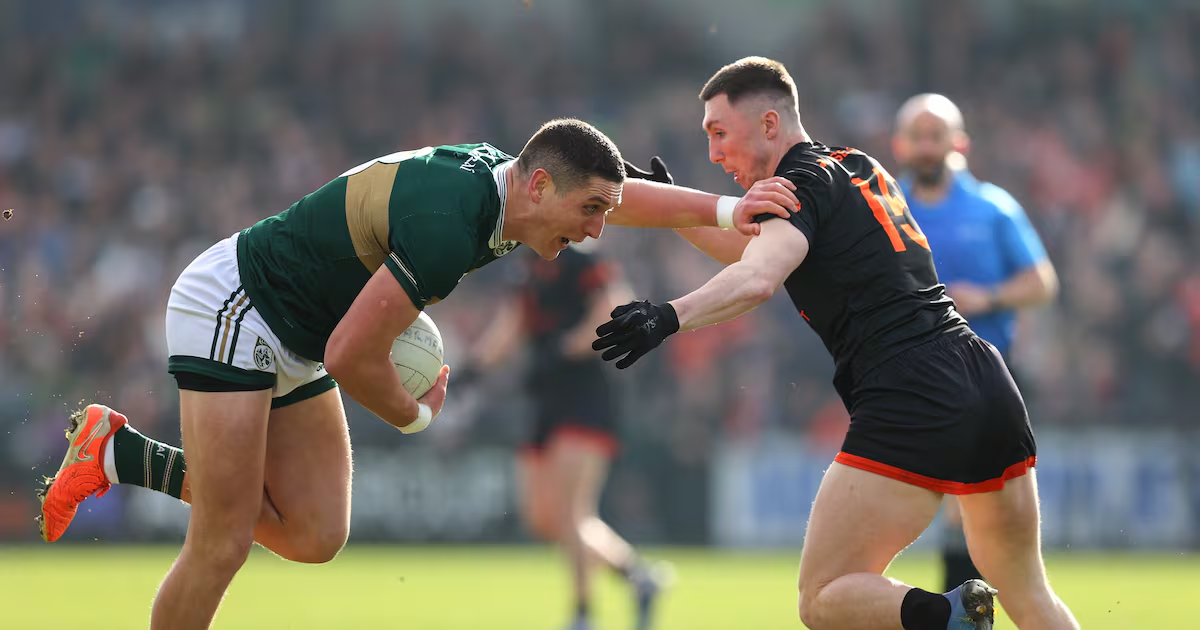
It’s the difference of seconds. How many times have we seen late, despairing shots at rescuing a result at the very end of a game? How many times have they worked? In the blink of an eye, Armagh went from safe passage through to the All-Ireland quarter-finals in two weeks’ time to having to hightail it down the road to Killarney six days later.Getting to the last eight now requires them to defeat arguably their biggest rivals this decade on their home patch. Donegal made a successful championship raid on Killarney – the first in more than 30 years – a month ago but it would have been very far from Kieran McGeeney’s plans to have to go there four weeks later and do the same thing.It’s a far cry from where they were with less than five seconds to go in Inniskeen.You have to hand it to Louth, who have been great since that halfhearted Leinster semi-final exit. Not many would have predicted them being within a freakish goal of Armagh at the end of the match, especially after the opening minutes.But they put themselves in a position to go for it before the whistle, although I imagine Sam Mulroy was looking for a two-pointer to tie it up.This wasn’t the only unexpected result at the weekend. If Louth winning was a bolt from the blue, Cork beating Donegal was anything but. They patiently came back into the match and overtook the home team.Donegal were seven up at one stage and didn’t kick on. They turned the ball over a couple of times, which is quite unlike them. Jim McGuinness referred to it afterwards, that they had opportunities to kick on and close the game out but didn’t and left Cork in it.Cork's Ian Maguire with Caolan McGonagle and Ciarán Moore of Donegal. Photograph: Laszlo Geczo/Inpho Meath winning in Derry wasn’t a big surprise for me after seeing them lose a 10-point lead to Monaghan. They were fragile enough after failing to get promotion and I couldn’t see them recovering from the nature of that defeat and how the game just fell apart on them.It has been an incredibly exciting championship with the number of underdogs winning and that was on view last weekend. Is there a particular reason for it?[ Joe Canning: Can Dublin or Clare shake off heavy summer losses to save championship season?Opens in new window ]The FRC rules have a lot to do with it. Two-pointers have been a complete momentum changer. Goals used to be the big score but the two-pointer has resulted in one-point goals if you respond fairly quickly.This has turned the old risk-reward calculation on its head. For the past 10 years, the emphasis was on control and nobody taking a shot that wasn’t a 100 per cent score. During this time, if you took on a shot like a two-pointer you had questions to answer in the dressingroom.Armagh's Ben Crealey with Mark O’Shea and Seán O’Brien of Kerry, at Athletic Grounds, Armagh in March. Photograph: Tom O’Hanlon/Inpho Now the incentive is there and it’s being worked on in training for this last two years. We’re seeing more of it now than we did last season, because that was the first year and there was maybe some reluctance for teams to go for it.Take Dublin as an example. They were a team that nearly played you into submission insofar as they kept the ball moving, and then somebody would inevitably come up 25, 30 yards out and pop the ball over the bar.Maybe it’s no surprise they have been slow adapters to taking advantage of the two-pointers but it costs teams that don’t have that in their locker.The levelling up isn’t solely down to two-pointers. Many teams are capable of kicking from distance, but a lot of teams weren’t capable of playing with the collective control we were used to seeing out from the top teams.The best teams and the best players, when they got the ball, didn’t give it away. That’s changed with the inability to take short kickouts and the requirement to keep three up. It means there’s far more space, and if you’re trying to control the game, the other team pushes up on you.There is no control in this. You’re liable to lose possession and you’re liable to get caught, whereas if Dublin were five or six points up on you in years gone by, you just didn’t get that ball back.[ Darragh Ó Sé: Ger Brennan has made a big mistake ahead of Donegal clashOpens in new window ]Stephen Cluxton put it down on the ground and it went to the corner back or it went to the centre-half and possession is nine-tenths of the law.Now, the ball’s going out long and you can get your hands on it again and very quickly, and be inside the opposition’s half with space and with your best forwards on the ball. And with players’ ability to kick from distance, there’s where the opportunities are coming.Big men have come back into the game, and that doesn’t lend itself to control: kickouts are going 50-50, and giving us “piggery”, as McGeeney put it. That’s the biggest element to broadening the whole landscape and it has brought other teams back into the mix – the inability to control like before.The most intense match I saw in this year’s league was the Armagh-Kerry draw in the Athletic Grounds. You wouldn’t have been surprised to be told that they would meet later in the championship but it would have been a shock to learn that it was going to be this early.Kerry are getting their best players back and have home advantage against a team probably dazed to find themselves in this position and with just six days to clear up injuries. It doesn’t look great for Armagh, and all because of a couple of seconds in Inniskeen.
What is driving the underdogs’ wins in the All-Ireland football championship?
It’s been an incredibly exciting championship, and the FRC rules have a lot to do with the unexpected results
985 words~4 min read