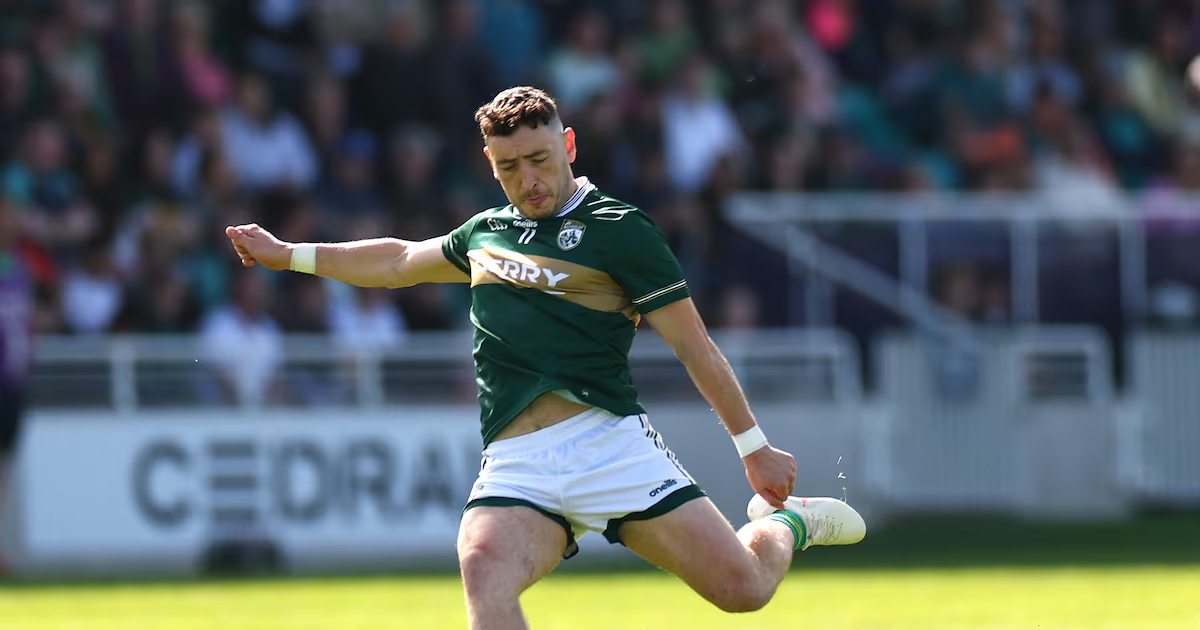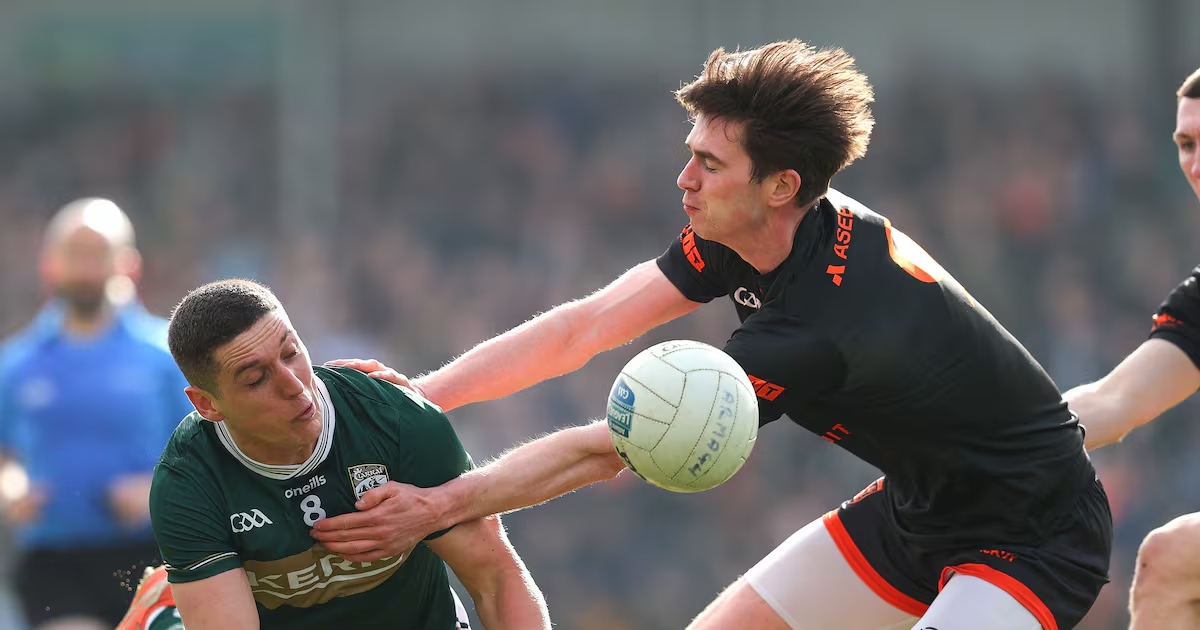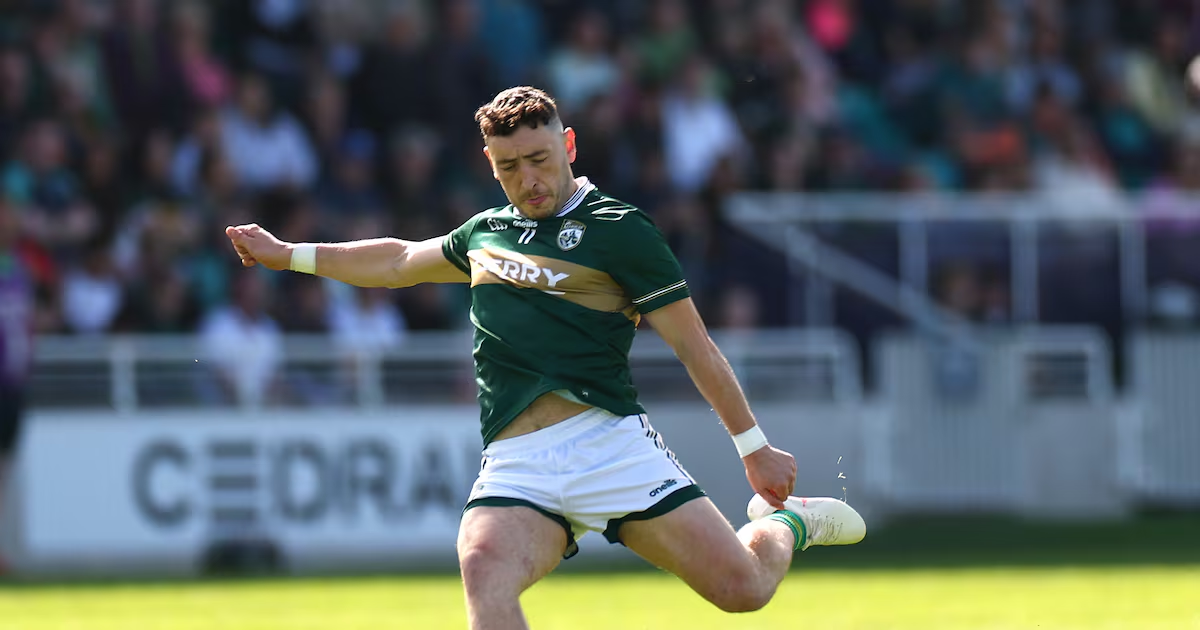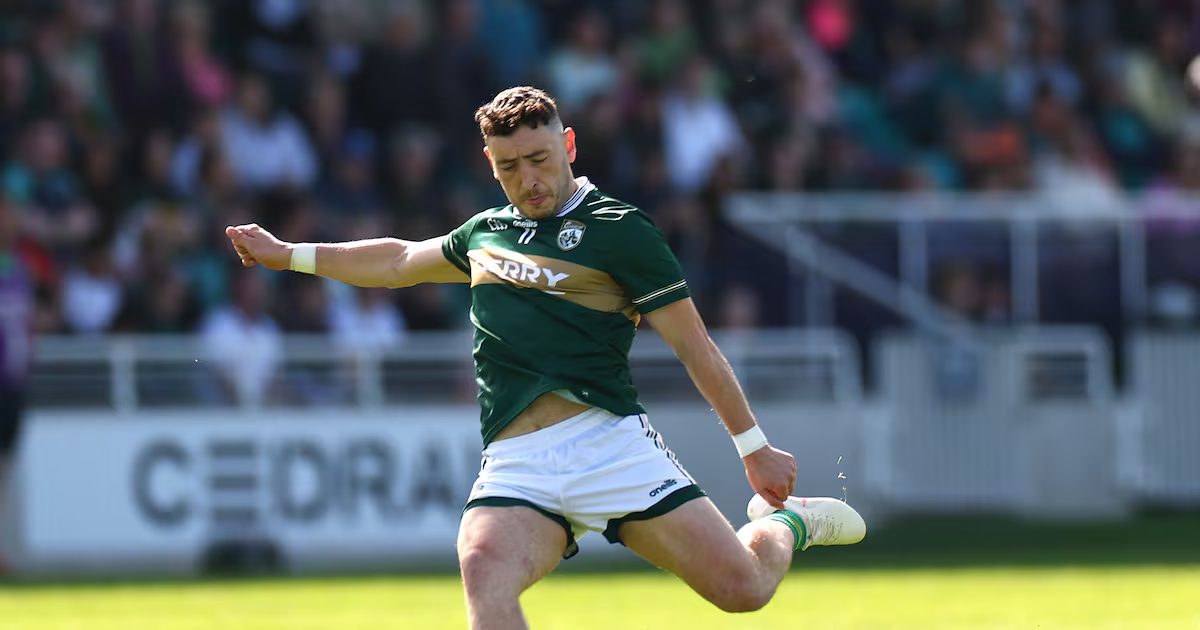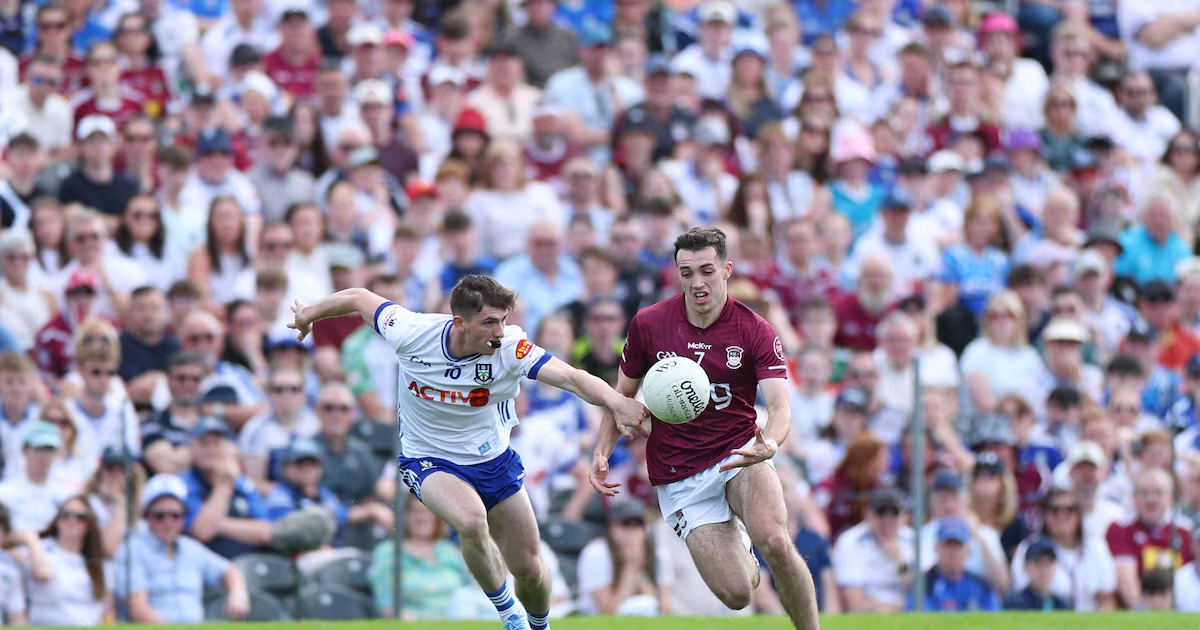
Trying to draw some home comfortsBefore last weekend’s four Round 3 All-Ireland SFC fixtures, there had been suggestions neutral venues might have been fairer for knockout clashes than one team having home advantage.And after all four home teams emerged victorious – Kerry beating Armagh in Killarney, Mayo beating Meath in Castlebar, Dublin beating Donegal in Croke Park and Monaghan beating Westmeath in Clones – there will now be more pressure on the GAA to tweak the regulations on that matter for 2027.Speaking after his side’s defeat to Monaghan, Westmeath manager Mark McHugh said: “It’s a huge advantage at this stage. I really think it should be a neutral venue.“Clones is not even that far for us but it is a huge advantage to the home team at this stage of the year when there is so much on the line. When you look at the four home teams winning this weekend, I know it’s the luck of the draw but it is balls coming out of hats. People are training for so long and for something so hard so maybe a neutral venue at this stage would be fairer.”Jarlath Burns has previously indicated that it could be something the GAA looks at ahead of next season so the wheels appear to be in motion already.Still, the counterargument remains that the home venue arrangement allowed for brilliant atmospheres around the host towns and in the various stadiums last weekend.Fitzgerald Stadium basked in the summer sun and Kerry’s samba football, MacHale Park came to life during Mayo’s comeback victory and the sight of Monaghan in full flow at St Tiarnach’s Park had the Farney Army out of their seats. It was a glorious weekend of action, with supporters lingering around in the local watering holes and restaurants for hours afterwards, nobody in much of a rush.By taking these games to neutral venues, there is also a danger of losing something special. Gordon ManningHave Kerry cracked the championship peak code?In the here and now of Kerry’s handsome win over Armagh in Killarney on Saturday evening, Jack O’Connor was musing on the immediate perception his team were starting to peak at exactly the right time. It’s been 22 years since he guided Kerry to his first All-Ireland title in 2004, and O’Connor, in his third coming as Kerry manager, should know something or everything about peak performance.Four weeks earlier, they lost heavily to Donegal at the same venue, having also been completely outplayed by Donegal in the league final. Against Armagh on Saturday, Kerry were the team playing with the superabundance of energy and enthusiasm, beating the Ulster champions by 13 points. Come Sunday afternoon, Donegal’s championship was also ended by Dublin.All the talk about Armagh and Donegal both motoring, while Kerry appeared off the pace, had been completed silenced by the summer solstice, and Kerry, just five weeks out from the All-Ireland final on July 26th, are suddenly the ones doing all the motoring.“I’d love to tell you that it’s all a masterplan,” said O’Connor, smiling at the suggestion he knew exactly what he was doing all along. “Six weeks ago, as I said the last day, we were half on life support. Fellas think that we do this deliberately. But we’ve kind of set up that accentuates positivity, rather than negativity. No one wanted to be beaten here by Donegal four weeks ago either.”O’Connor also pointed to the nature of the Kerry club championship, “the main reason why we can’t go hard on fellas, too early, we have to build it very gradually”, but there is something else in his experience which has programmed O’Connor not to panic, certainly not to push players overly hard, when results aren’t going their way.Before last year’s All-Ireland final win over Donegal, O’Connor was also asked about the task of peaking at the right time, and he said: “The mental side is very important in keeping players fresh because you don’t want what they are calling cognitive overload. You just can’t throw too much at players.”Peaking at the right time in any sport has never been an exact science, but maybe O’Connor is starting to crack the championship peak code better than any other manager. Ian O’RiordanHurling’s advantage rule could do with tweakingThe Clare crowd were still booing when Donal Burke scored a magnificent point from nearly the halfway line, six minutes before half-time. A Clare attack had ended with a shot for goal from Shane Meehan that was saved by Eddie Gibbons and cleared.In the lead-up to Meehan’s shot, though, Diarmuid Ryan appeared to be fouled and it was easy to imagine that Meehan believed he had a free shot at goal. The referee James Owens was standing behind him and while he had the whistle close to his lips he didn’t signal a free or indicate an advantage.A few minutes later, however, the Dublin forward Ronan Hayes was fouled while gathering possession in the left corner. Owens indicated an advantage but took his hand down after Hayes got his shot away. Eibhear Quilligan made a terrific save, the ball ricocheted back into play, another Dublin forward was fouled and this time the free was awarded.The problem with the advantage rule in hurling is, firstly, how it is being applied, and secondly, how it deviates from football. The advantage is supposed to elapse after five seconds, but in most instances, it lasts longer than that and it often means that a team has a free shot; when it goes wide or it’s saved, the free is then awarded. Nobody is counting the seconds.In the case of the Ronan Hayes shot and save, Owens applied the rule as it appears in black and white: the advantage had been given and the five seconds had elapsed. Dublin would have felt aggrieved if the second foul hadn’t been committed and they came away from the attack with nothing, but that is not how the rule is framed.Football’s advantage rule, however, changed with the FRC two years ago. There is no time limit and advantage continues “until it becomes clear that no advantage has accrued”.For hurling it would be a simple change to make. It is a perfectly reasonable interpretation of what advantage should mean, and it is what players and supporters already expect. In any case, the current rule is not being universally applied. Would it make referee’s lives a little easier? That too. Denis WalshGer Brennan’s return has freed up DublinSince his return from a 12-week suspension, Dublin manager Ger Brennan has overseen two championship victories on the bounce. Sunday’s was obviously the most striking win, bringing down one of the All-Ireland favourites even if Donegal eventually signed off on a campaign that comprised four matches and three defeats.There had been little in Dublin’s form – whatever about Donegal’s – to suggest that they were going to preserve a record of hitting the last eight going back 23 years.Brennan had caused some comment with his call for Dublin to go back to playing matches in Parnell Park to escape the pressure of a diminishing Croke Park record.They didn’t get it but on Sunday, played with a focus and commitment that hadn’t been seen all year in a league campaign that ended in relegation and a Leinster championship that culminated in defeat by Division Three Westmeath.Maybe it proved the manager correct. The team, up to the weekend, an underperforming amalgamation of old All-Ireland hands and a rising generation of newcomers, was playing largely without pressure against hot favourites.Apparently liberated by the lack of expectation, they gave a team performance, found scores at the right time, rode out adversity and reported yet again for the All-Ireland quarter-finals.Had they lost on Sunday, it would have been the 28th anniversary of the previous mid-summer championship exit, at the hands of Kildare after a replay.Next weekend, they face Galway, who beat them at the same stage two years ago for a first championship win over Dublin in 90 years.They also relegated their opponents in Salthill last March when Brennan got into that fateful contretemps on the sideline with opposition S+C coach Cian Breathnach McGinn.Presumably the Dublin manager will be on his best sideline behaviour (he did get a yellow card on Sunday for taking too long with a substitution). Again, his team will be underdogs and again won’t be under much pressure, as they are now in credit for the championship.Injuries threaten but that will just further reduce expectations. Supporters love a team on the way up and the Hill is no different. After two successive quarter-final defeats for the first time since 2009, next weekend promises to be the least angst-ridden Croke Park outing in a while. A free hit. Seán MoranEnda Hession sparks sleeping Mayo into lifeMayo gonna Mayo. They pulled off a massive turnaround on Saturday night against Meath, scoring 12 of the last 14 points to get back to Croke Park for the first time since 2023. Their All-Ireland series has comprised three one-score games – they came out the wrong side of the Tyrone one but now they’ve inched past Monaghan and Meath. In Andy Moran’s first year, this must count as genuine forward progress.It hasn’t stopped what dear old Boris Johnson would have described as the doomsters and gloomsters of Mayo football coming out in force. And it’s probably hard to blame them – not for the first time, Mayo went to sleep for pretty much a full half of football in Castlebar. They were 2-7 to 0-3 down after 29 minutes and were probably lucky to be even that close. Jack Livingstone pulled off a couple of remarkable saves in the Mayo goals but Meath were running through them at will.Enter Enda Hession. The Mayo wing back stormed into the game, scoring two points back-to-back at exactly the time when it was needed to stop the game getting away from Mayo. He had already been Mayo’s best player in the game, the one defender willing and eager to get hands on, strip tackling and harrying Meath players, generally raging against the dying of the season’s light.Throw his two points into the mix and it was the kind of thing Lee Keegan used to regularly do in a Mayo jersey. No higher praise, gloomsters bedamned. Malachy Clerkin
Is home advantage fair in Round 3 of All-Ireland series? What we learned from the GAA weekend
Kerry peaking at right time; hurling’s advantage rule; Mayo’s sleepy start; Dublin refreshed
1,711 words~8 min read