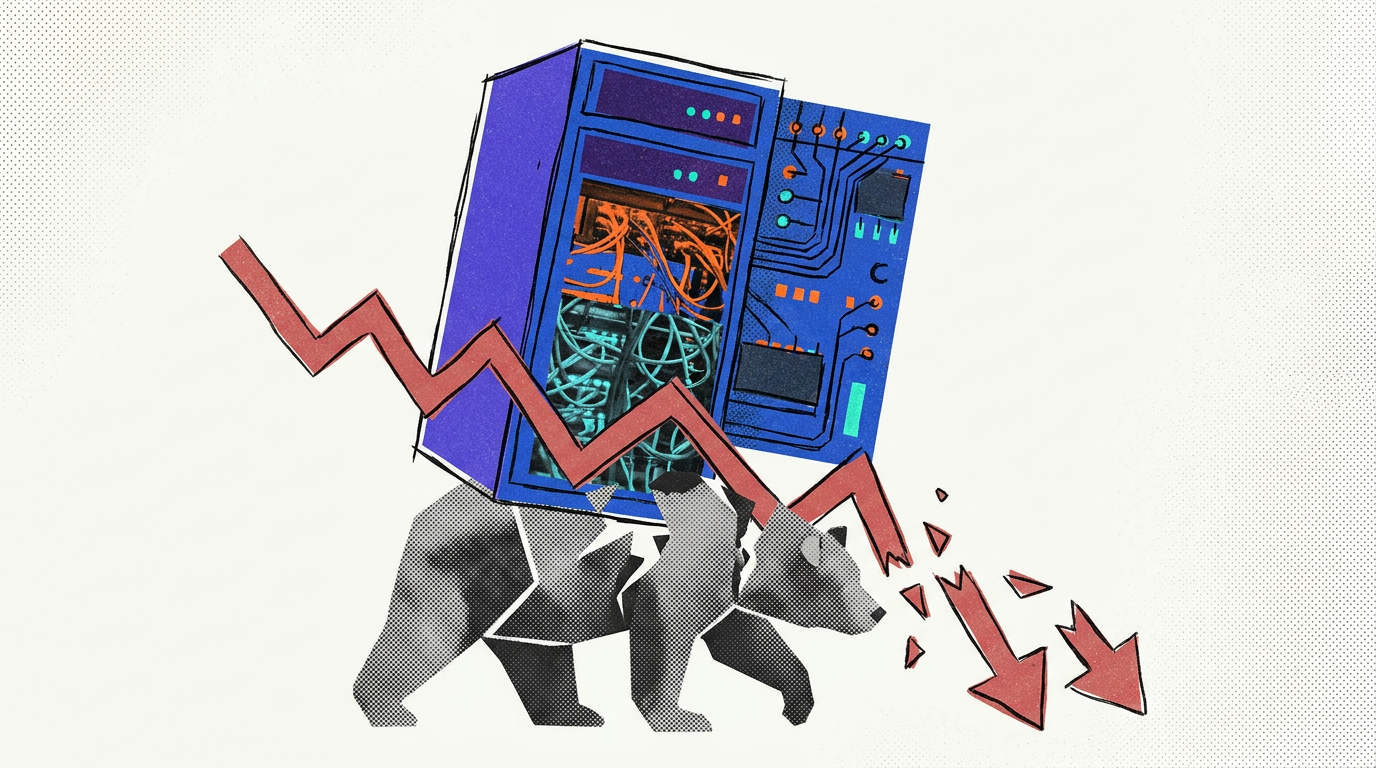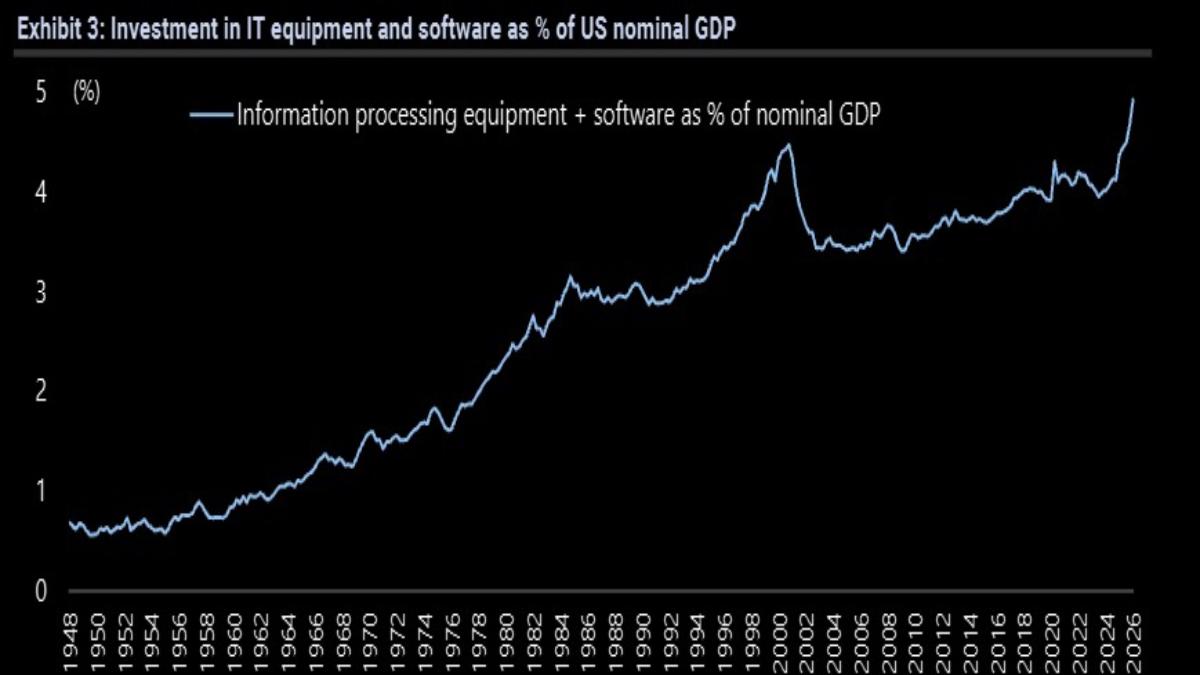
The global race to dominate artificial intelligence is triggering one of the biggest technology investment waves in history, with companies spending trillions of dollars on data centres, advanced chips and computing infrastructure. But Aswath Damodaran, the NYU Stern professor widely known as the “Dean of Valuation”, has warned that a future AI correction could create risks far beyond what the market saw during the dot-com crash. Damodaran believes the biggest difference between the late 1990s internet boom and today’s AI surge is not just the size of the investment, but how that investment is being financed. While the dot-com era was largely built around software ideas and internet businesses, today’s AI race involves massive physical infrastructure and billions of dollars in capital commitments.Also Read: Forget AI and EVs: Zerodha’s Nikhil Kamath spots next big billion-dollar opportunity hidden in India’s biggest problem What made the dot-com crash different? During the internet boom of the late 1990s, companies rushed to build online businesses, websites and digital platforms. Many startups attracted huge valuations despite having limited revenue, but most of the spending was focused on software development, marketing and user growth. When the bubble collapsed in 2000-01, technology stocks lost billions of dollars in market value. Several internet companies disappeared, and investors suffered heavy losses, many losing 70-90% of their money. However, the damage was largely concentrated among shareholders and equity investors. Banks and ordinary businesses were not dragged down en masse. “People started apps. They basically started going on it,” Damodaran said while comparing the internet boom with today’s AI expansion, pointing out that many companies during that period were not dependent on large physical investments. AI’s trillion-dollar infrastructure gamble The AI boom is taking a different path. Building advanced AI models requires enormous spending on GPUs, servers, electricity networks and specialised data centres. As per industry estimates, global data centre construction alone could hit nearly $3 trillion by 2028. A significant portion of this is being funded not just by company profits but through debt, including private credit markets. Companies are racing to build computing capacity, with global technology giants increasing investments to support AI services. The scale of this expansion has created a new challenge: companies are not only investing in software but also financing large physical infrastructure projects. A growing part of this spending is being supported through debt markets, raising questions about whether future AI revenues will be enough to justify today’s investments. This changes everything, according to the professor. If growth expectations are not met and revenues fail to cover the huge investments, companies could face defaults. Unlike equity losses that mainly affect shareholders, debt troubles can ripple through lenders, banks, and the wider financial system. “I’m not saying it’s going to be 2008, but 2008 is an example of what happens when lenders overreach,” Damodaran cautioned, referring to the global financial crisis triggered by bad loans and complex debt instruments.How companies are funding the AI race Elon Musk’s xAI: Building AI capacity with billions in funding Elon Musk’s AI company xAI has become one of the examples of the huge capital requirements of the AI race. The company has raised billions of dollars through a combination of equity and debt financing to expand its AI infrastructure and build computing capacity for its Grok chatbot. The funding approach highlights how AI companies today require far more than just software engineers and ideas. They need expensive computing infrastructure to compete.Google: AI expansion requires massive infrastructure spending Alphabet, Google’s parent company, is investing heavily in AI infrastructure, including data centres, cloud capacity and AI chips. While Google has a strong cash-generating business, the scale of AI investment by Google across the industry shows how companies are preparing for a future where computing power becomes a major competitive advantage.Microsoft: Betting billions on AI and cloud infrastructure Microsoft has committed heavily to artificial intelligence through its partnership with OpenAI and expansion of Azure cloud infrastructure. The company’s strategy is built around the belief that AI will drive a new wave of enterprise software and cloud demand.Amazon and Meta: Expanding AI capabilities Amazon is increasing investments in AI infrastructure through AWS, while Meta is spending heavily on AI models, chips and data centres. Both companies are betting that large-scale investment today will create long-term advantages as AI adoption grows.Why the AI correction risk matters for India India is closely connected to the global AI boom. The country’s technology sector, startups and digital infrastructure companies are increasingly building AI-based products and services. Companies such as Infosys, TCS and several Bengaluru and Hyderabad-based startups are investing in AI capabilities, while global technology firms are expanding their presence in India because of its engineering talent and growing digital ecosystem. A sharp slowdown in AI spending globally could impact India through: Lower foreign investment in technology companies Pressure on AI startup valuations Uncertainty in hiring across the technology sector Delays in data centre and infrastructure projects However, India could also benefit if AI adoption continues steadily. Unlike the dot-com era, many AI investments today are linked to practical use cases in healthcare, manufacturing, agriculture, finance and business automation.AI boom, bubble or both? Not everyone believes the AI rally is heading towards a collapse. Some argue that artificial intelligence is already creating measurable productivity gains and that today’s biggest technology companies have stronger balance sheets compared with many internet firms of the late 1990s. The internet bubble eventually produced some of the world’s most valuable companies after the correction. AI supporters believe a similar pattern could happen again, where excessive speculation is removed but the technology continues to transform industries. Damodaran’s warning is not that AI will fail. His concern is that extreme optimism can lead to excessive investment, especially when large projects are supported by borrowing. The AI revolution is moving at an unprecedented speed. The challenge for investors, companies and policymakers will be separating genuine long-term value from the hype surrounding the next big technology shift.
AI boom heading for a dot-com-style bust? ‘Dean of Valuation’ Aswath Damodaran warns correction could be more painful than 2008
Global finance expert Aswath Damodaran warns AI's massive infrastructure spending, funded by debt, poses a greater risk than the dot-com crash. Unlike the internet boom's light assets, AI's reliance on physical hardware and leverage could trigger wider economic fallout if growth falters. India, investing heavily in AI, faces potential impacts on foreign investment and job markets, urging a focus on sustainable models.
TL;DRAI
Damodaran warns the AI infrastructure boom ($3T debt-financed) risks a 2008-style financial crisis if revenues disappoint. Unlike dot-com, debt cascades through credit markets and banks, threatening enterprise AI budgets, vendor consolidation, and tech hiring.
991 words~5 min read