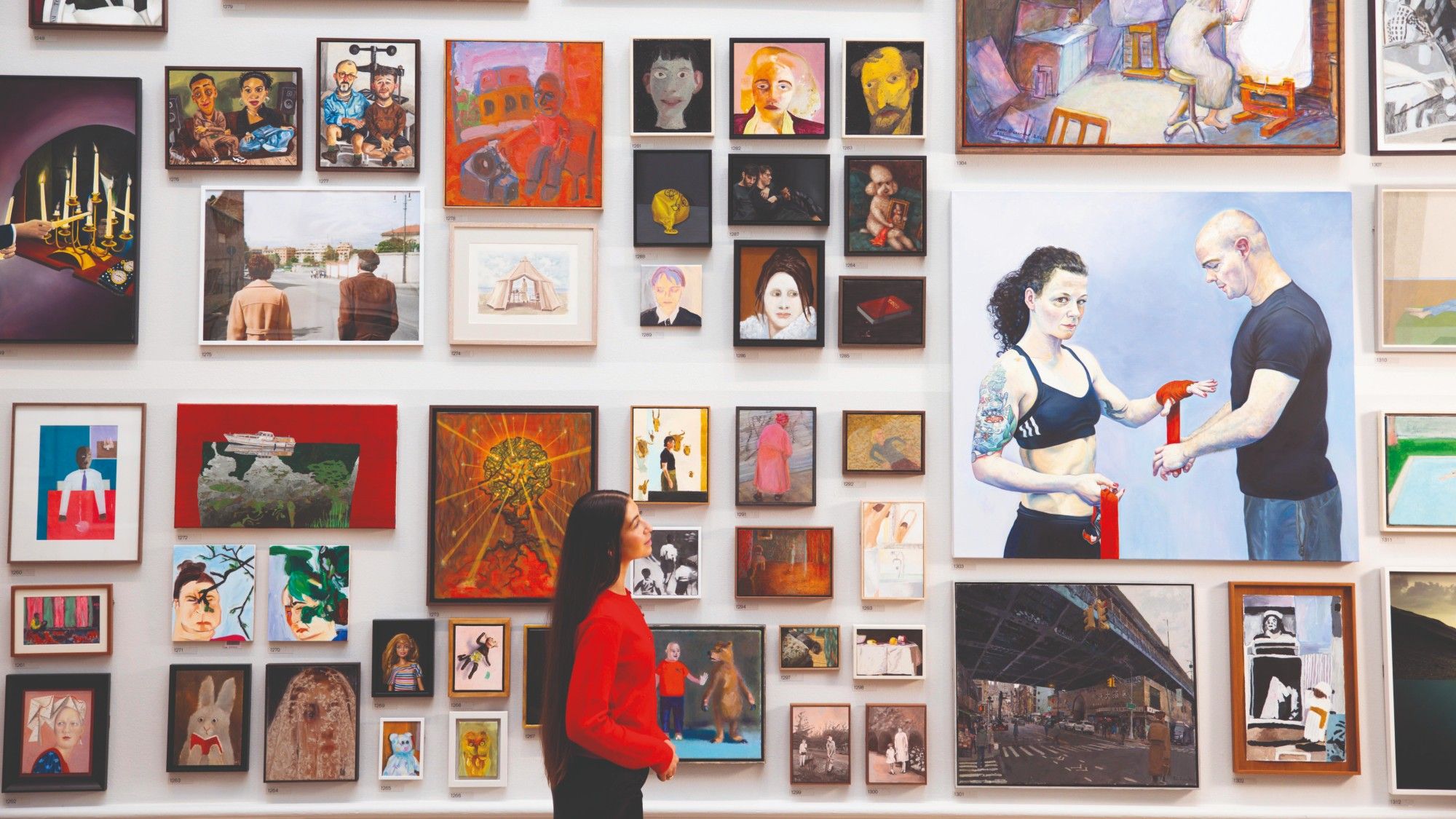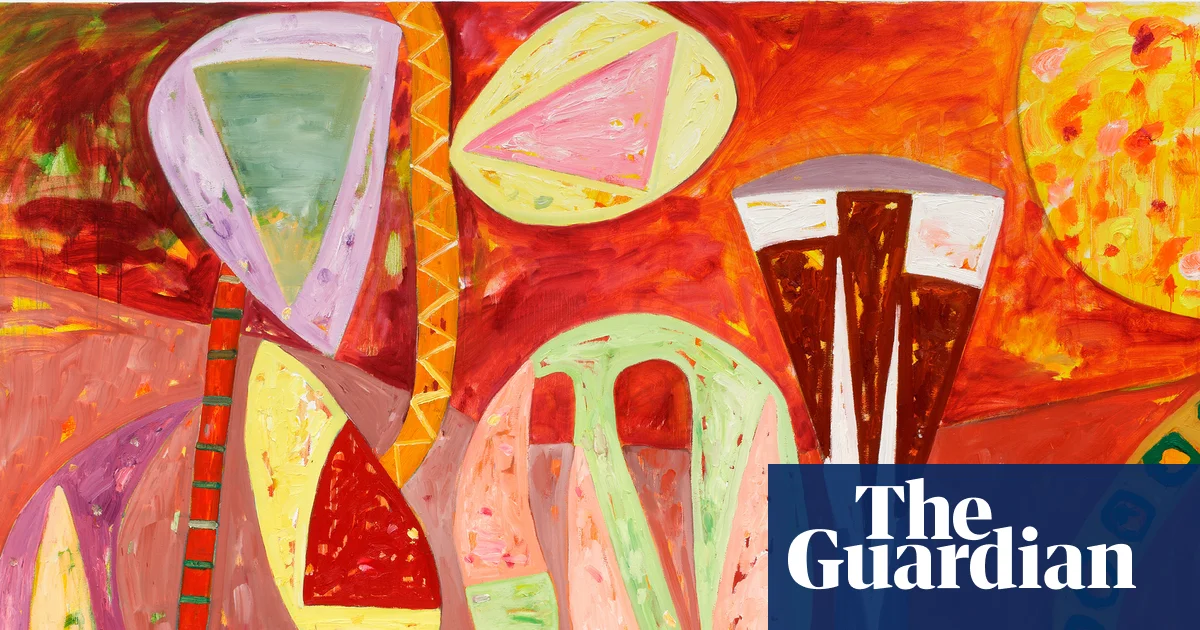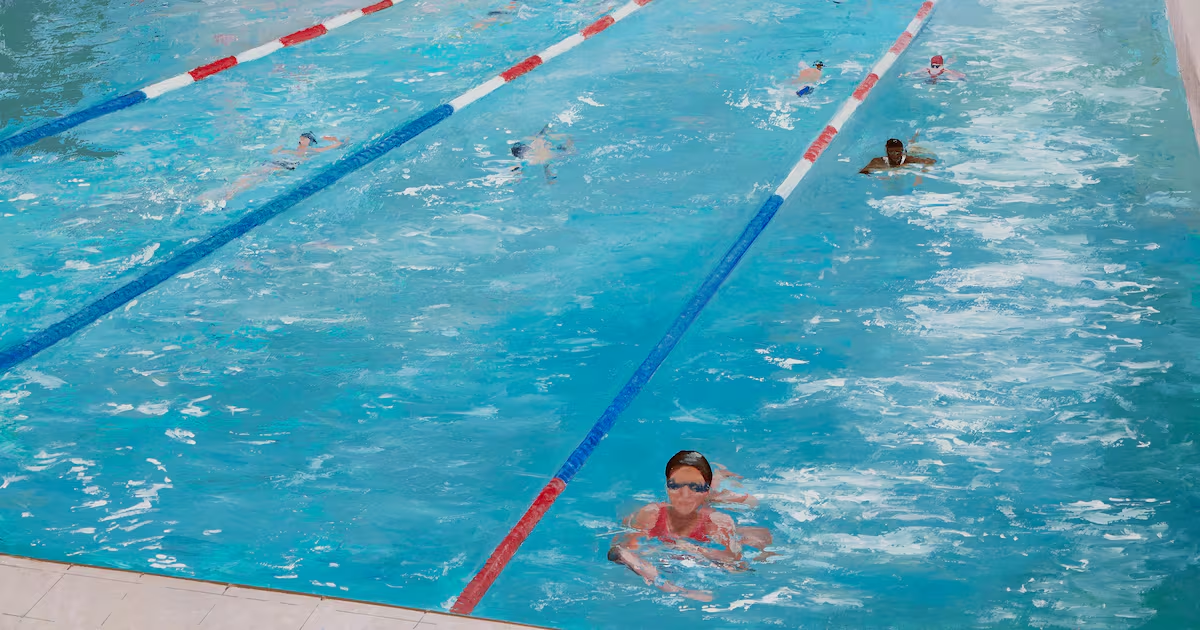
With the hindsight of history, we may look to the work of writers and artists to define the times. Things take a while to percolate, and inspiration and impulse need to bed down before emerging in words – or in pigment, clay, graphite, glass and all the other forms of art you might imagine.Sometimes it happens more quickly: in the years during and immediately after the Covid 19 restrictions a great many images of windows, with people staring both in and out, were in evidence in the Royal Hibernian Academy’s Annual Exhibitions.The largest and longest-running open-submission exhibition in Ireland, the Annual is seen as a barometer of the state of art, and the works on show are taken as a key to understanding the concerns and obsessions of artists of all generations in Ireland. This year something is missing. Given the current condition of the world – the local and global political battlegrounds, vicious wars, violent storms, a heating planet – what can we expect to see at the 196th edition? It turns out be swimming pools and seascapes, sunlit hillsides, shaded glens and bucolic barns.Where is the rage? Where is the protest, the indignation? Where are the calls for change? Artists are not obliged to be political, but, apart from some striking examples, anger seems curiously absent from the almost 600 works on show. Instead, to explore the hallways and galleries of the RHA building, at Ely Place in Dublin, is to immerse yourself in a sea of exceptionally well-wrought, multilayered escapism.First up, the sea: it is present in all its hues and moods, to an astonishing degree. There is a pair of Gary Coyle’s photographs from his continuing Lovely Water series. Dorothy Cross’s Sogang with Basket and Shark takes us to tropical waters, Adrian Geary’s Pink House looks out across a sunlit bay, and Bernadette Madden’s Calm Was the Day is a screen-printed rocky shore under blue skies. Bridget Flinn is also on the shore, this time with Through the Rocks to the Sea. Individually, these are excellent works, but collectively the mood is skewed.Brett McEntagart focuses on Dún Laoghaire Pier East with a pair of paintings of the lighthouse and moorings that have a hint of Edward Hopper. These are outliers in all those seascapes, in that here, at least, we have some grey skies. Back at the beach, Gordon Hart’s Vertices 1 spots the point where lines of a brick building meet the horizon, and the stones, sea and sky all manage to hint prettily at humanity and nature making mutual peace. Erica Coburn’s Different Strokes is a lively print of bathers having the time of their lives on yet another sunny afternoon. I could go on.Of bathers there are a great many more, in the sea and out of it. Bernadette Doolan’s Getting Out of My Comfort Zone is a charming ceramic sculpture of a girl in togs and goggles. Avril Murphy Allen’s The Swimming Pool is a glowing oil painting of a brightly lit indoor pool, laid out in lanes, the occupants diligently getting their lengths in. A smaller oil, Shea Dalton’s The Swimmer, presents as a riff on one of those 1950s instruction booklets from which we learned to do things before the internet answered everything.Elaine Byrne, Alessia, photographic print, RHA Annual Exhibition 2026 Two standouts in this watery world are both photographs: Elaine Byrne’s Alessia is a turquoise-hued close-up of a female swimmer in a pool, the body warped by the movement of the water. Beautiful from a distance, the distortions are uncomfortable close up, with the adjacent idea of being shaped by the elements and pressures around us. Nina McGowan (performer) in collaboration with Federico Buzzoni (photographer), Untitled / Blackout, giclée print In this vein, Nina McGowan’s Untitled/Blackout is a collaboration with the photographer Federico Buzzoni. Alongside, but now clearly part of her art practice, McGowan is a freediving champion, and the image shows her being aided to the surface by a companion diver in mask and snorkel. At first glance it is an image of rescue and care, the figures intimate and glistening with silver refracted light. Look longer, however, and you wonder at the power relationships hinted at within the frame, as the narrative transcends the story of the image’s origin in a powerful piece.Back to that escapism: Adrian Fitz-Simon shows beach chairs in Sibenik, in Croatia, and a sunlit garden of an evidently modernist building in Marseille in a pair of paintings. Blaise Smith’s Gloun Cross takes us to rural afternoon, again in the sunshine; and, with this artist’s characteristic painterly precision, we get a recently whitewashed roadside shed, plus trees and fields beyond. It all feels beautifully timeless, and timelessly beautiful, like a poem to the endurance of a certain way of life. Donald Teskey and James English give us lush green landscapes to get happily and meditatively lost in; and Clifton Rooney’s Route at Glendalough has echoes of David Hockney’s pioneering digital paintings, while drawing you into its heather-hued sunlit uplands.[ David Hockney: Single-minded star of contemporary art defied establishment derisionOpens in new window ]Staying on the Irish hillsides, David Stephenson’s photographic print Flock is such a study in the pastoral that you half-expect to hear Bach’s Sheep May Safely Graze playing in the background. The skies are blue here too. Have we really had so much sunshine this past 12 months? Whatever the weather, representation dominates over abstraction this year, although there are still some notable works in that vein. Conán Mac Oscair’s Devil’s Bit is a finely judged set of geometrics, which make nice work of being neither all grid nor purely amorphous. There also seems something happily either animalistic or sexual about it, but that’s part of the joy of abstraction: your own mind will take you where it will.Mac Oscair’s acrylic seems like spinning out of Richard Gorman’s more formal geometric abstractions. There is work by Gorman, who died earlier this year, in the upper gallery, and it is sad to realise that he will be painting no more. [ Richard Gorman obituary: An artist who wanted to leave himself ‘open to the possibility of surprise’Opens in new window ]The RHA’s president, Sinéad Ní Mhaonaigh, shows a single large abstract work, Macalla No 2, and it is possibly one of her best yet. Sinéad Ní Mhaonaigh, Macalla No 2, oil on canvas, RHA Annual Exhibition 2026 Strands from her work in recent years coalesce to make something that, once seen, it is hard to tear the eye from. Macalla translates from Irish as echo or, beautifully poetically, “son of a cliff”: gorgeous all on its own.Gillian Lawler’s Transformation is nicely restrained, while Janet Keith’s Midsummer is exuberantly the opposite; and two abstractions by the former RHA president Abigail O’Brien, Labyrinth I and II, are photographs of the front and reverse of a piece of embroidery, the reverse side showing the chaos that underlies formal order. There is a great deal of photography this year, and it is interesting to realise that it was just a short six years ago, in 2000, that the medium was formally accepted into the Annual.It was a long time coming, and last year’s Archipelago, the largest group exhibition of photography in the RHA’s long history, cemented the place of the medium. Does the practice of making photographic images push out abstraction, or do things come around in cycles and phases? There is less portraiture, and there are certainly fewer sculptural works, this year. Standouts here are Michael Foley’s Ciotola Inclinata, lovely for its formal perfection; Eilís O’Connell’s Unearthed, made from glowingly white Carrara marble; and Michael Quane’s Attachment, again in Carrara marble, this time a tender sculpture of the vulnerability of a young foal before the animal has taken possession of its full horse power.Michael Quane, Attachment, Carrara marble, RHA Annual Exhibition 2026 Elaine Byrne, Lament, photographic print and embroidery, RHA Annual Exhibition 2026 Another photograph by Elaine Byrne, Lament, is also of a horse, this time fully grown, giving us the side eye from an almost bare stable. Embroidered into the base of the image are the words “running around with a man on your back”. An essay in complex simplicity – or should that be simple complexity? Lament layers up uneasy relationships, power, oppression, submission, beauty and endurance, all haunted by a lingering sense of wrongness.And now we get to the edge of the rage, for there are some works that do reach for a fuller expression of the state we’re in. Rasher Mark Kavanagh’s oil painting Acid Rain intriguingly also features swimmers, but this pair have been destroyed by toxic waters, and it is all the more shocking for having such cheerful company. Barry Delaney’s Brexit tiles nine photographs to show the worst of a certain kind of jingoistic Britishness, although it undermines its message with an absence of nuance – or perhaps politics like those depicted need the sucker punch.Comment is not entirely absent, and the housing crisis gets a look-in: Sean O’Rourke’s Garda Eviction shows masked, uniformed figures, painted on metal “salvaged from a derelict social housing flat complex”; and Abigail Burton’s Undercover is a small oil of sheets of white canvas over a pile of pallets, hinting at homelessness, and that which society both discards and covers up. Abigail Burton, Undercover, Oil on Panel, RHA Annual Exhibition 2026 Dorothy Smith, My Place III, Watercolour, RHA Annual Exhibition 2026 Gary O'Hare, Warzone, oil on canvas, RHA Annual Exhibition 2026 Dorothy Smith’s My Place III is a watercolour of a half-demolished, or perhaps bombed-out, apartment block. Home and security are vulnerable concepts these days.Gary O’Hare’s War Zone shows burnt bins on a patch of tarmac in an anonymous space that could be an alley or a piece of ruined city, the work’s title lending it the weight of the latter. Michael Wann’s charcoal drawing Prospect of Constantinople (via Khartoum International Airport) has a plume of black smoke arising beside the runway, and with it an urgency lacking in so much of the work on show. Michael Wann, Prospect of Constantinople (via Khartoum International Airport), charcoal on paper, Suzanne Dolan, The Bear, Obviously, coiled earthenware vessel, RHA Annual Exhibition 2026 Another small sculptural piece, The Bear, Obviously, by Suzanne Dolan, is an earthenware pot that Grayson Perry would be happy to have made. The ti le comes from an online debate, where women are asked whether they would prefer to run into a bear or a man if alone in the woods.Doreen Kilfeather, Laundry on two chairs, analogue film print, RHA Annual Exhibition 2026 Chris Reid’s No Way Out: Image from a Magdalene Laundry and Doreen Kilfeather’s Laundry on Two Chairs are another pair of photographs that touch, explicitly and obliquely, on Ireland’s past, but while photography has only been in the frame for the past six years, video, time-based and performance work are still absent. This means both Aideen Barry and Claire Langan’s exceptionally strong recent film works are represented by stills, which, while well worth looking at, are shadows of the full experience. Barry shows three images from her recent film Embroidering the Earth’s Mantle, inspired by the surrealist artist and two-time refugee Remedios Varo.Aideen Barry, The Creator of Birds, After Varo, limited edition print, RHA Annual Exhibition 2026 Langan’s Ice Fossil, Bird 1 comes from her four-channel film Earthbound, on show at the Irish Cultural Centre in Paris until June 30th. The film explores a future post-Ice Age world, where the history of humanity may be pieced together from the objects we have discarded, released from the now melting ice. The performance artist Amanda Coogan shows a photograph, Falling, After FE McWilliam, an homage to the latter artist’s Women of Belfast series of sculptures depicting women’s bodies contorted by bomb blasts.Amanda Coogan, Falling, after F.E. McWilliam, photography Jos McGookin, RHA Annual Exhibition 2026 The RHA Annual excludes film, conceptual and time-based work: one reason why it seems skewed towards escapism this year. The exhibiting artists are, in the main, making the work they are known for, although one wonders what the selectors rejected. The RHA Annual is not only an showcase but a key source of income for the organisation, and there is nothing wrong with that, but the exclusions do mean a significant area of creative concern is missing from an event that has come to be seen as defining. Will change come? The academy’s new director, Séamus Kealy, takes up his role in July, after an extended recruitment process, during which Nathalie Weadick has been interim director, and as such RHA’s first female director in its 200-year history.Kealy was director of the Model in Sligo from 2008 to 2013, and after that was at the Blackwood Gallery and Oakville Galleries, in Canada, and the Salzburger Kunstverein, in Austria. During his tenure at the Model he curated and hosted shows by Ilya and Emilia Kabakov, Duncan Campbell, Isabel Nolan and Omer Fast, whose powerful co-commissioned film 5000 Feet Is the Best, from 2011, explored drone warfare. Later shown at the Venice Biennale, it is now part of the collection of the Imperial War Museum in London.What future RHA Annual Exhibitions look like will be Kealy’s conundrum to solve. In the late 1960s and early 1970s the Land Artists in the United States made work that tried to escape the art market as a form of protest. The art market quickly demonstrated in return that there’s not much that can’t be monetised. Interesting times lie ahead, but for now we can always go to the beach.The 196th Royal Hibernian Academy Annual Exhibition, in association with McCann FitzGerald, runs until Sunday, August 9th
The 196th RHA Annual Exhibition is full of escapism. Where’s the rage?
Artists are not obliged to be political, but, apart from some striking examples, anger seems curiously absent from the almost 600 works on show
2,271 words~10 min read