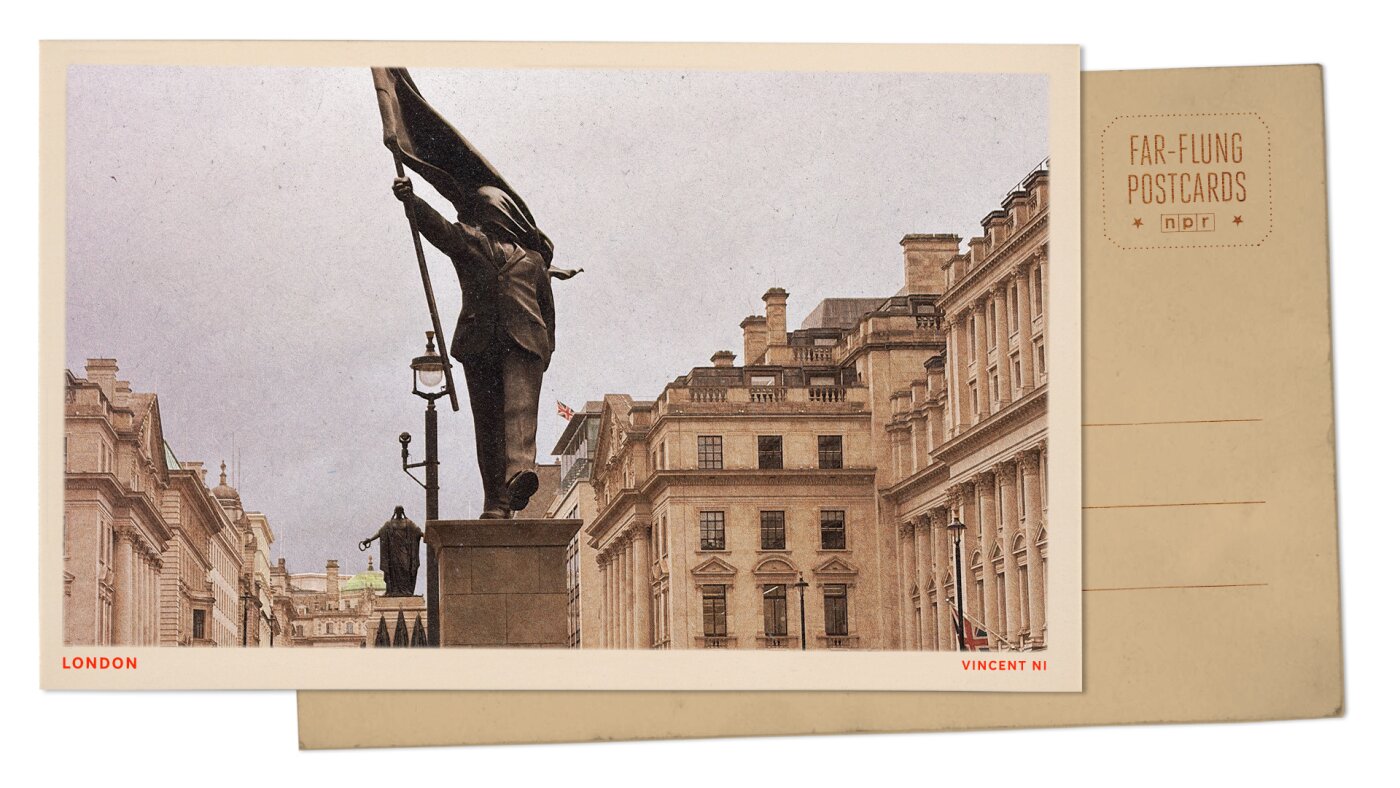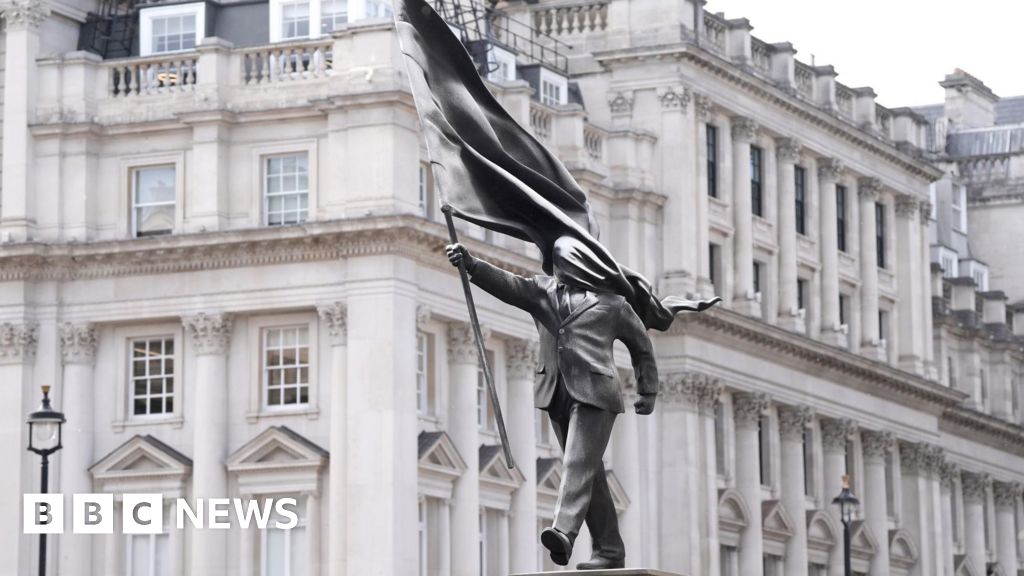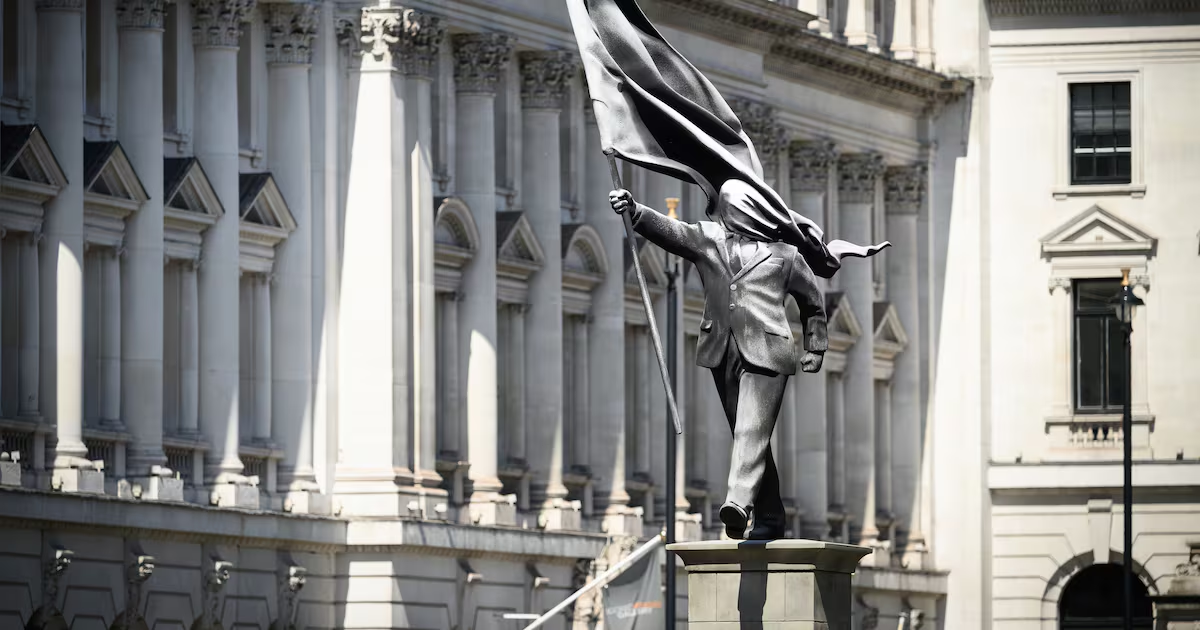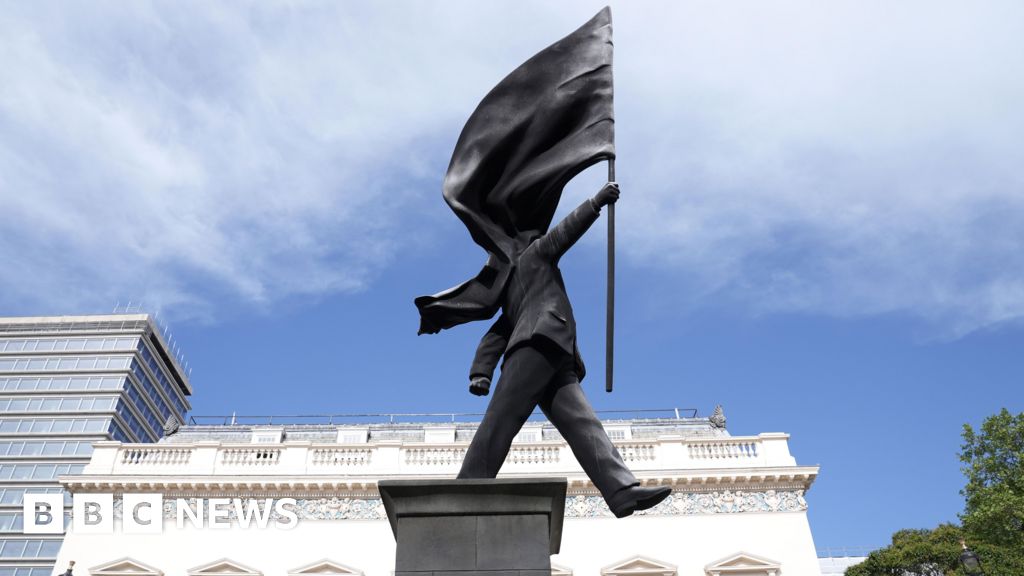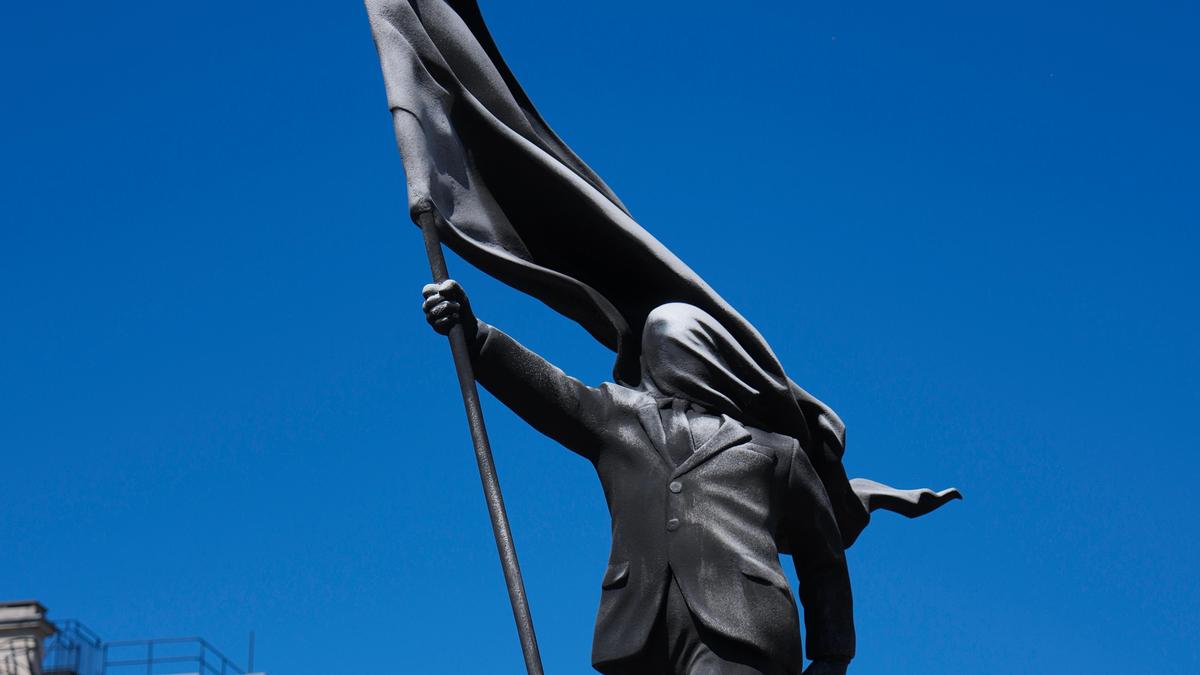
The sun was still soft and faint from rising when Londoners, in the midst of their morning walks and commutes, near Waterloo Place (a street known for its fantastic collection of statues), were offered an artistic surprise. Even when viewed from a distance, the silhouette, its outlines, and the visual message were stark.A new statue, erected overnight without anyone’s notice. Atop a plinth it stood; a proud man marching forward, in a well-tailored uninteresting suit, holding a huge flag up in his right hand.The problem, though, is that this proud man is blinded by his wind blown flag. It literally covers his face, and thus his next step, unknowingly, is off the plinth on which he is standing. The signature of the artist spelled ‘Banksy’ — anonymous and one of the most popular “artivists” of our time.
Banksy’s sign at the base of the plinth.
| Photo Credit:
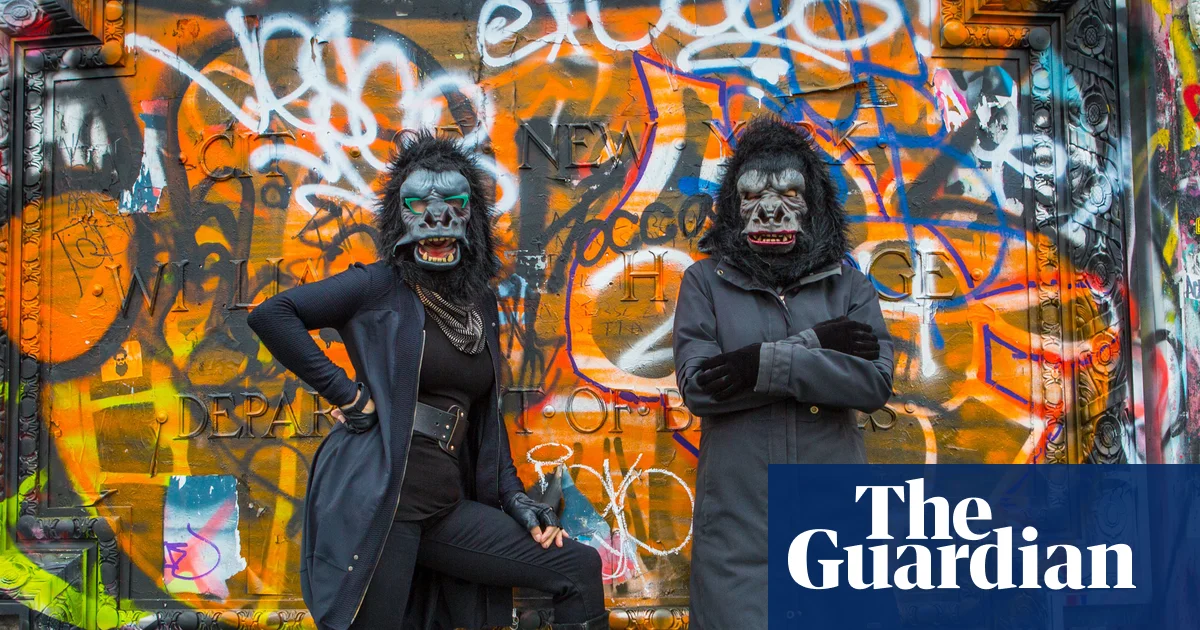
ArtivismThe word artivism, as you may immediately note, is a portmanteau word combining “art” and “activism”. The meaning is, as suggests, art as activism or art as a form of protest.The philosophy of the word is not something new and it is in the soul of anyone making art (say, simple things like when you write poem about how people should turn to each other instead of hating or larger things like making a succinct statue, like Banksy here, about the effect of blindly following a cause or dressing up as a coral reef to raise awareness about dying corals). Even before the existence of the word artivism, artists have combined art and social activism together.