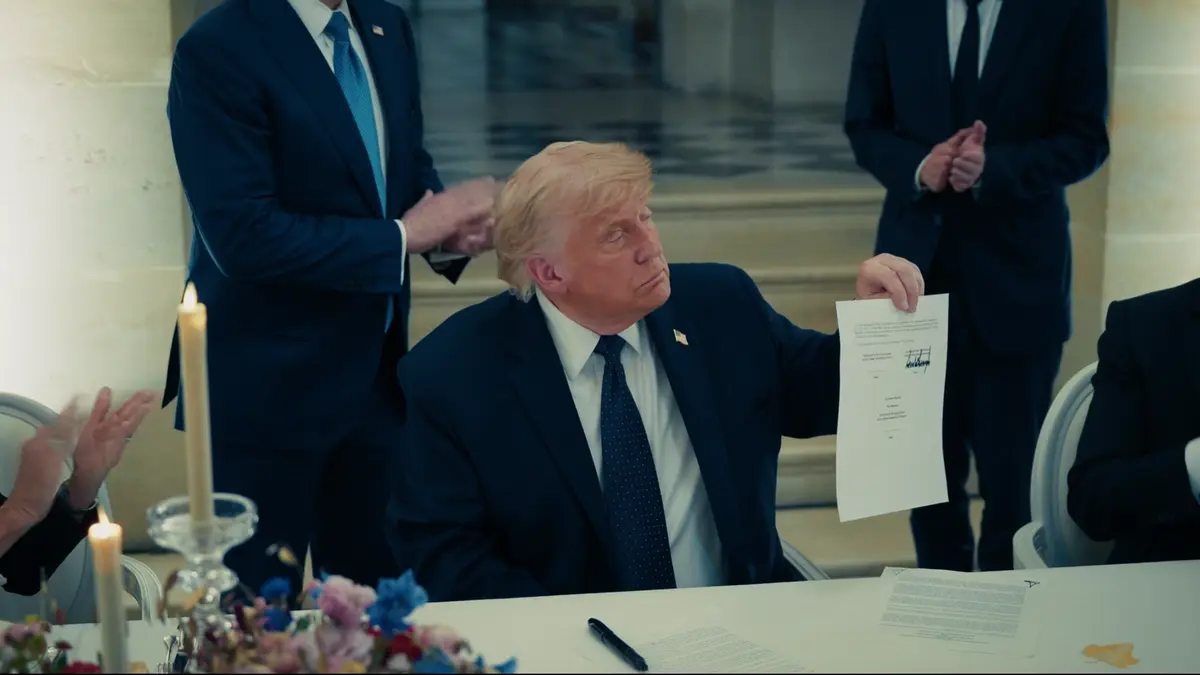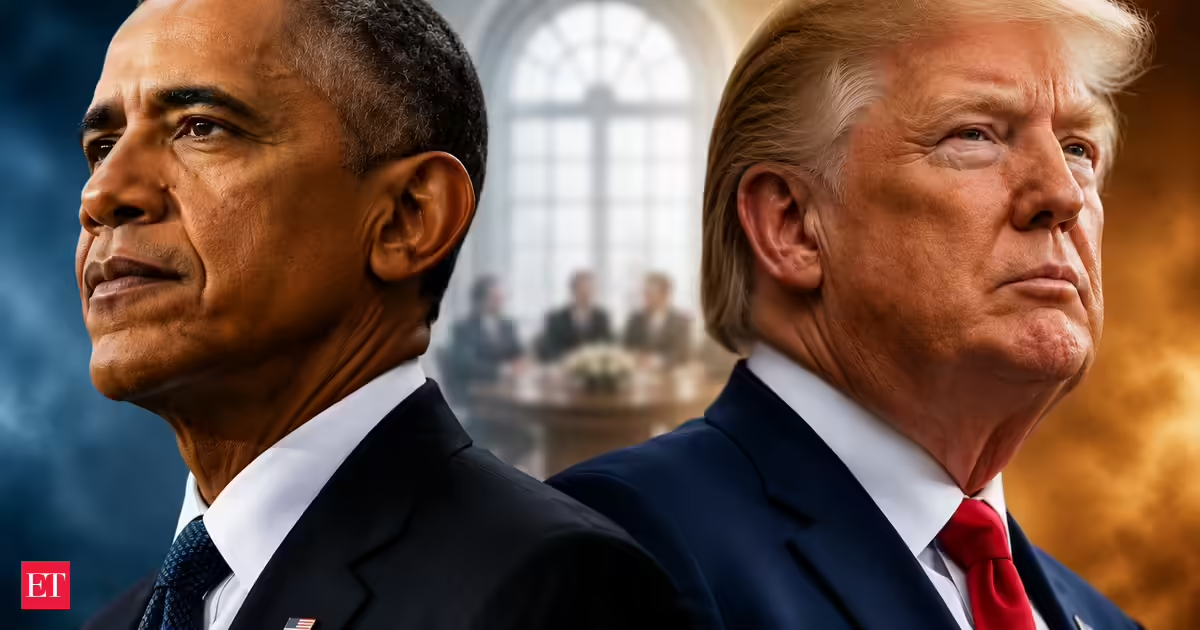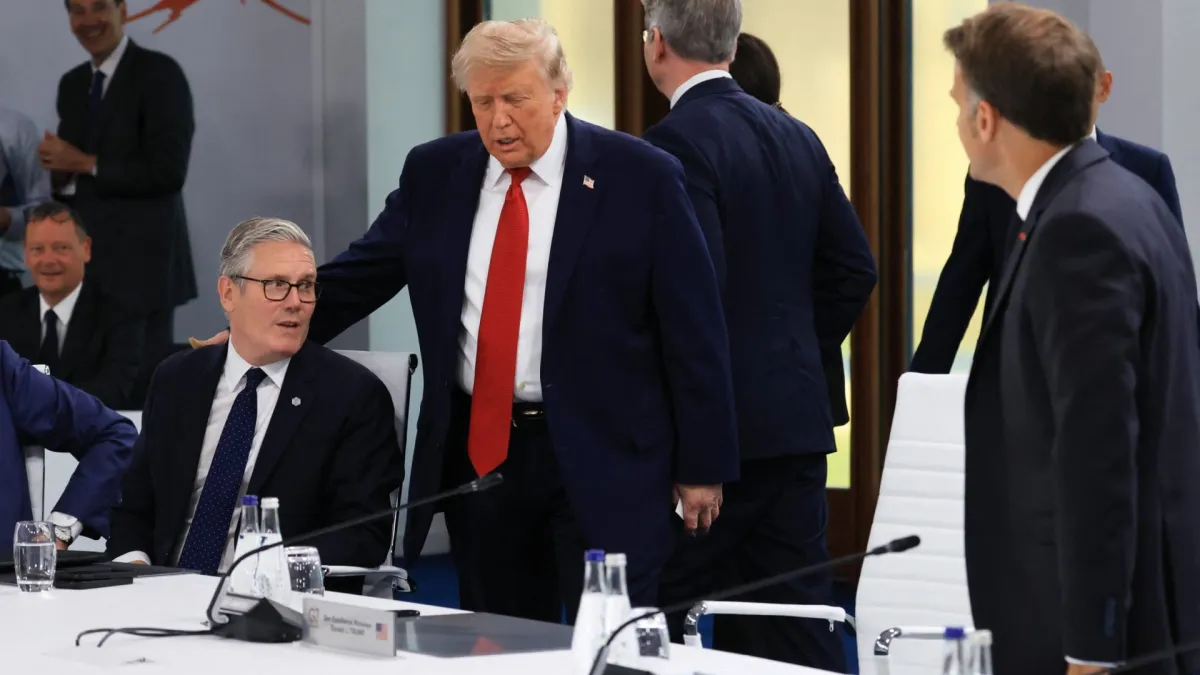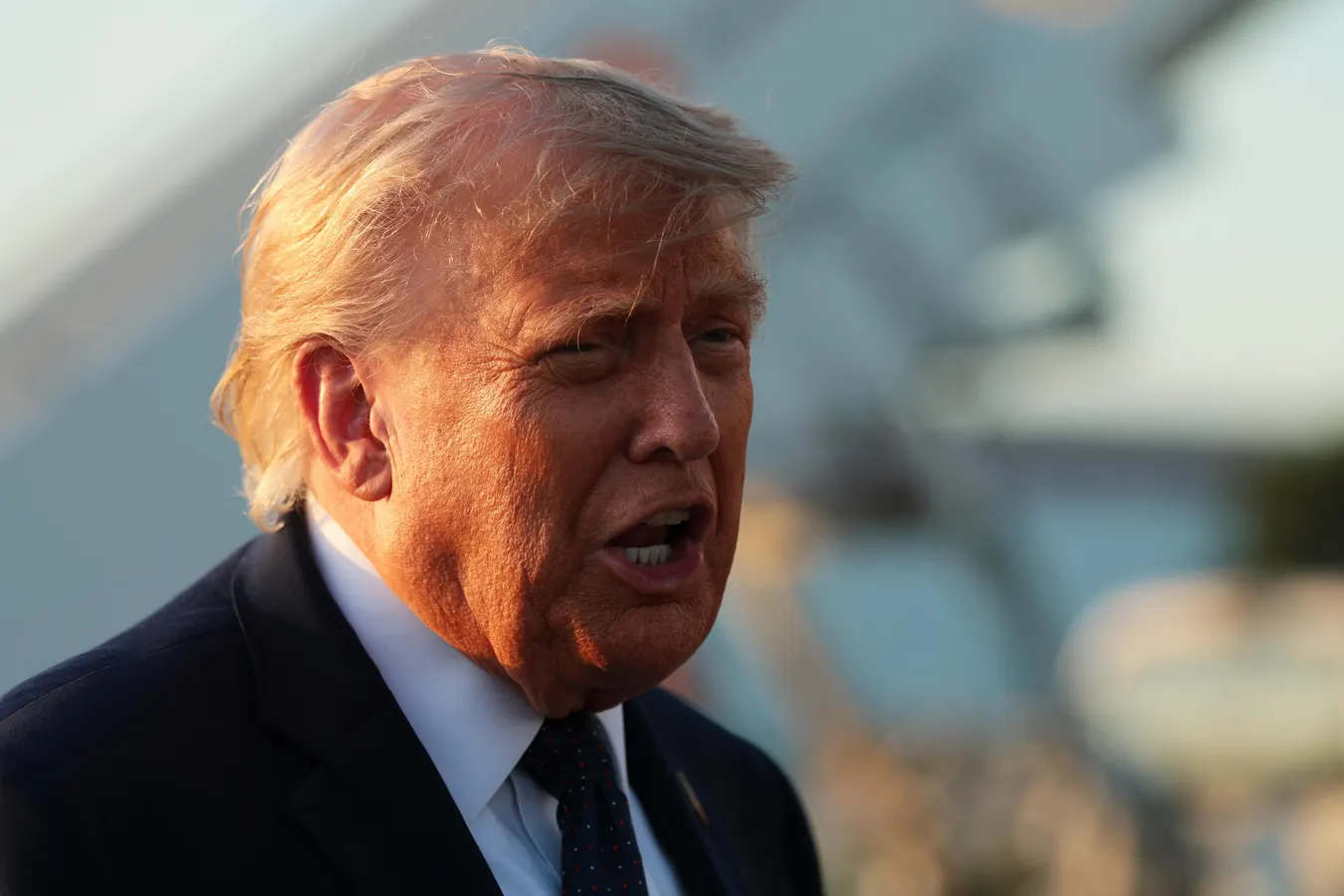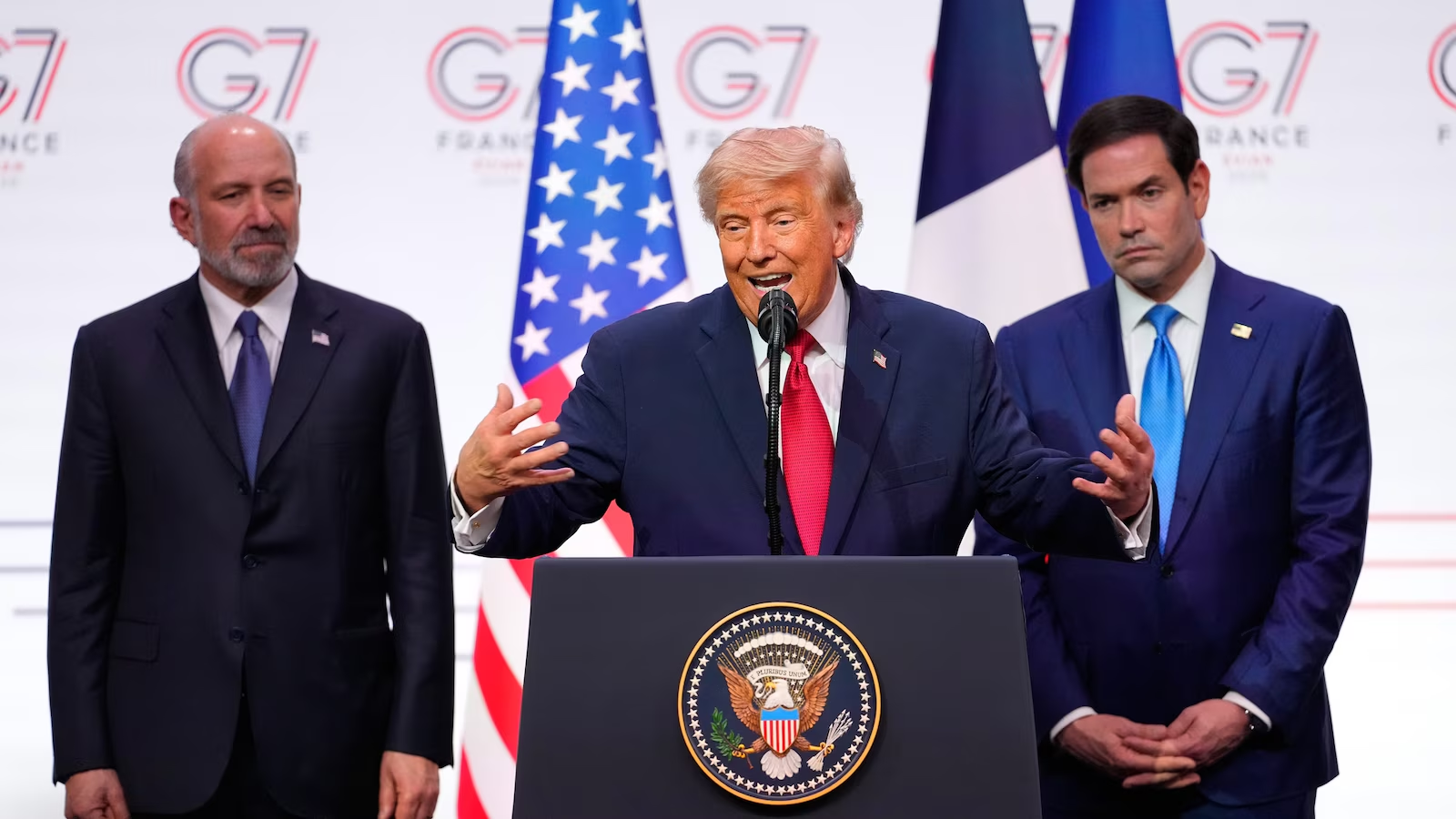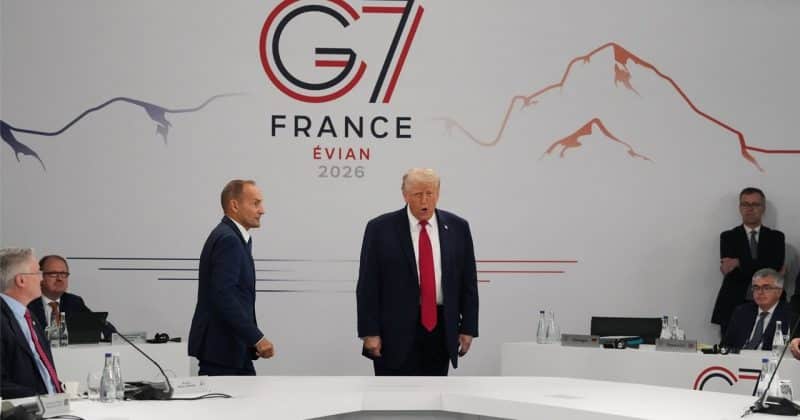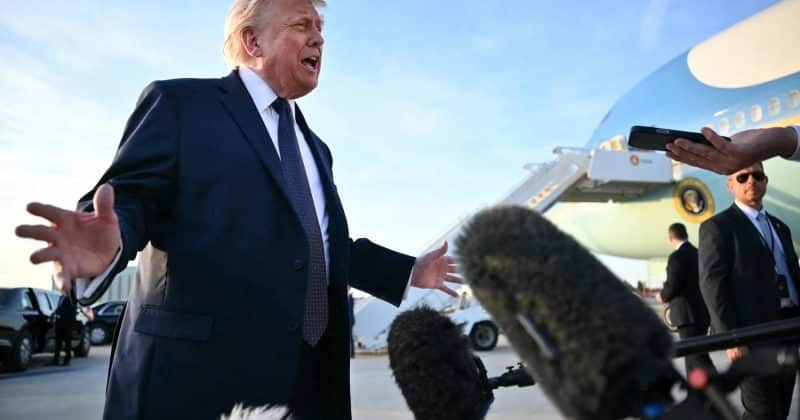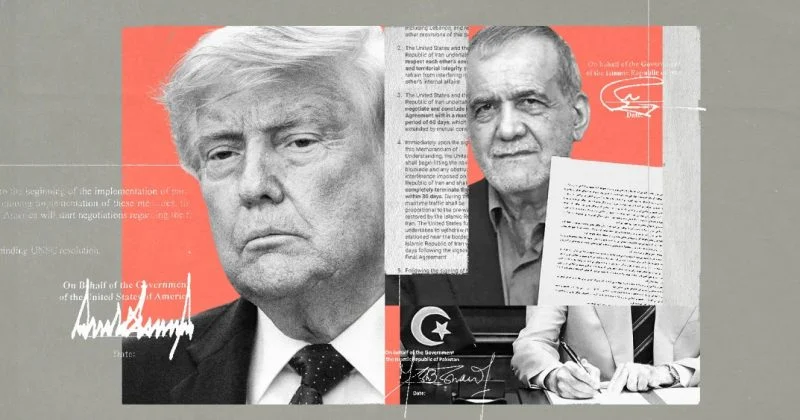
President Trump signed a preliminary memorandum of understanding with Iran during the G7 summit at the Palace of Versailles, marking the most significant diplomatic pivot in the Middle East since the US withdrew from the Obama-era JCPOA in 2018. The 14-point MOU, electronically signed by Trump, Vice President JD Vance, and Iranian Parliament Speaker Mohammad Bagher Ghalibaf, sets a 60-day timetable for resolving the hardest questions: enriched uranium stockpiles, sanctions relief, and the terms of a proposed $300 billion reconstruction fund for Iran.
What’s actually in the deal
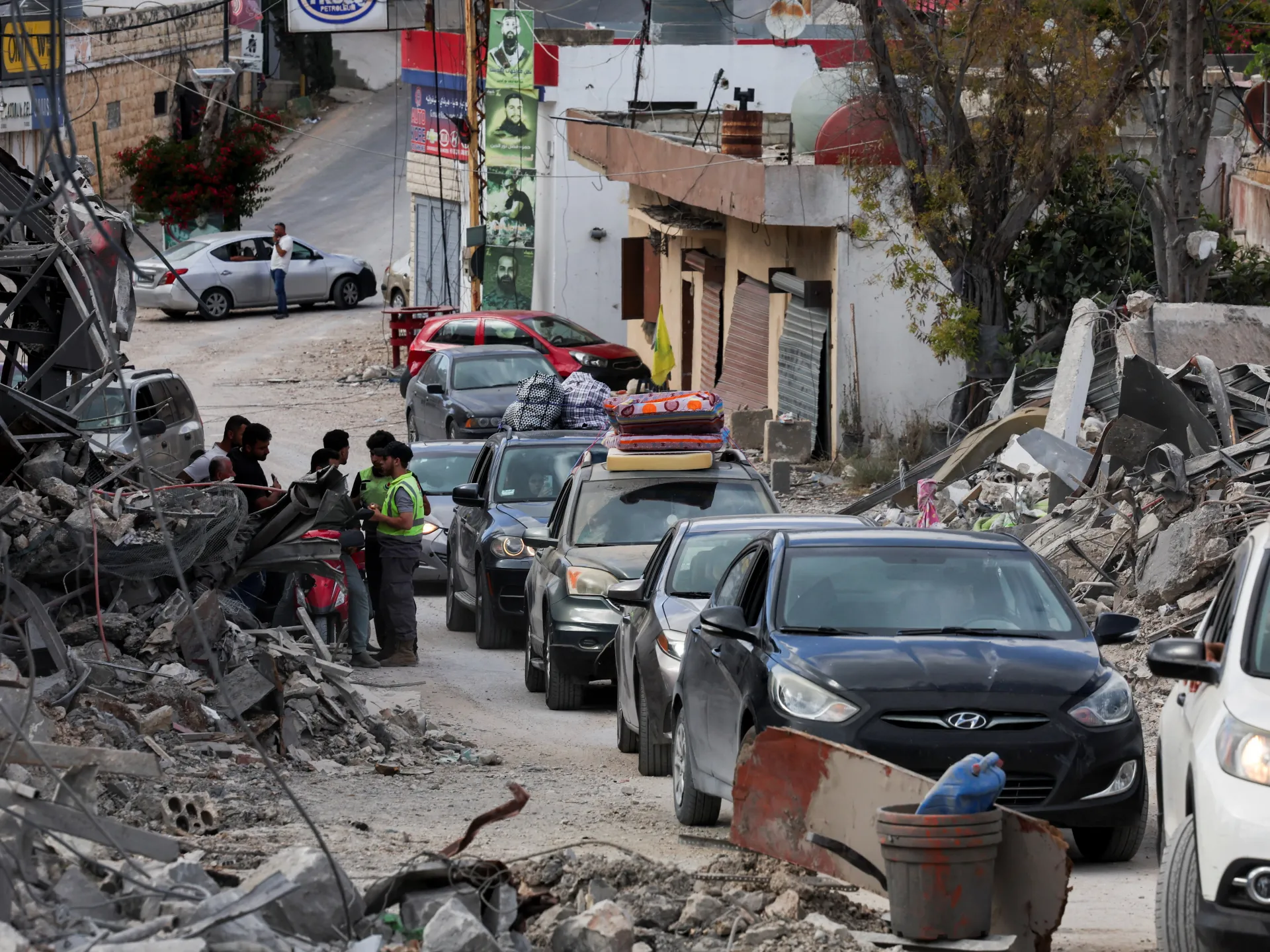
The core of the MOU revolves around two immediate actions. First, Iran agrees to reopen the Strait of Hormuz, the narrow waterway through which roughly a fifth of the world’s oil supply passes. Second, the US temporarily lifts aspects of its naval blockade on Iranian ports.
Everything else, including the nuclear question, gets pushed to a 60-day negotiation window.
The $300 billion reconstruction fund is perhaps the most eyebrow-raising element. The administration has been careful to note that the fund would not draw from US taxpayer dollars, though the mechanics of how it would actually be financed remain unclear. For context, $300 billion is roughly comparable to the entire annual GDP of a mid-sized European country like Finland.