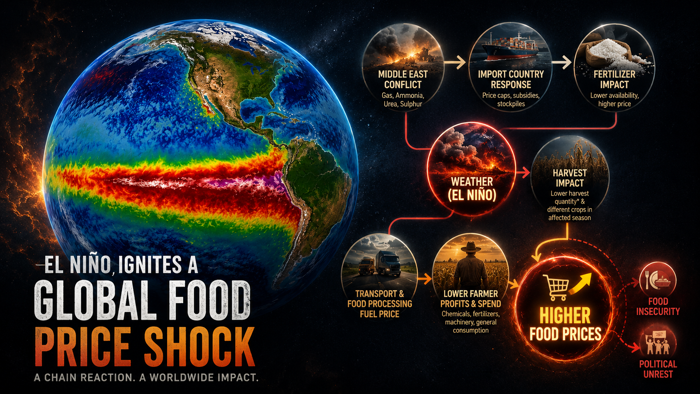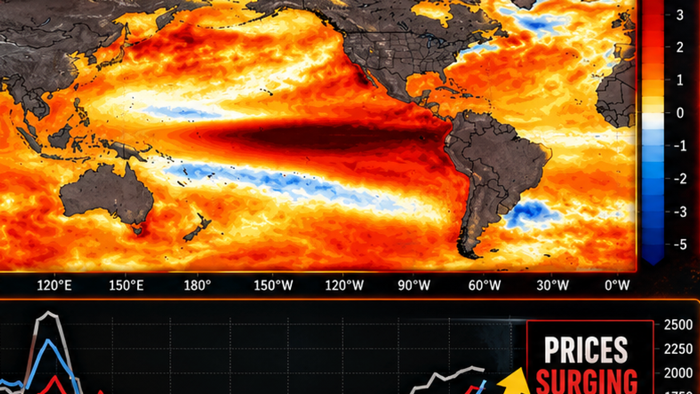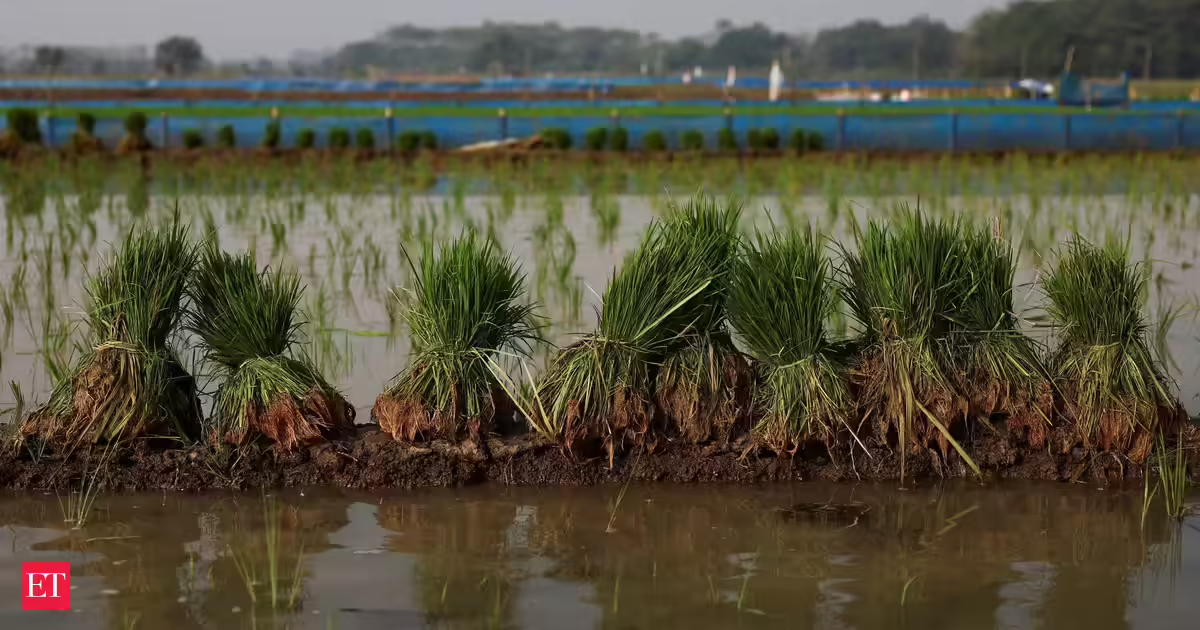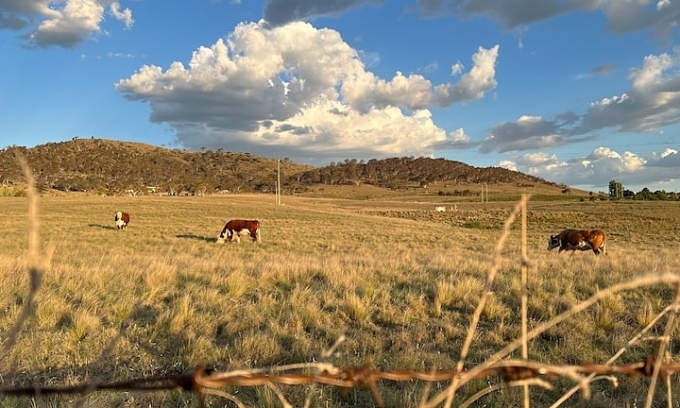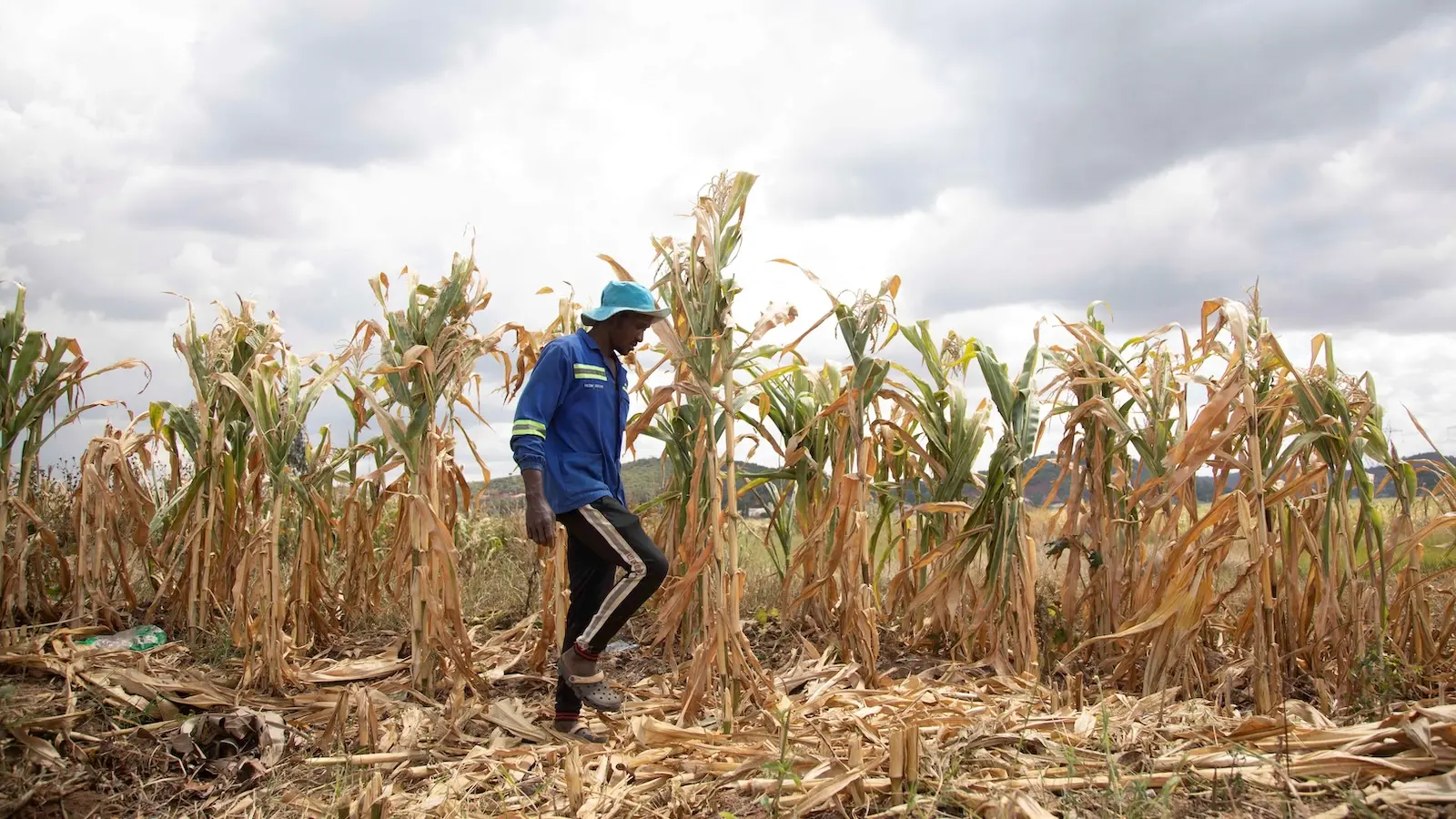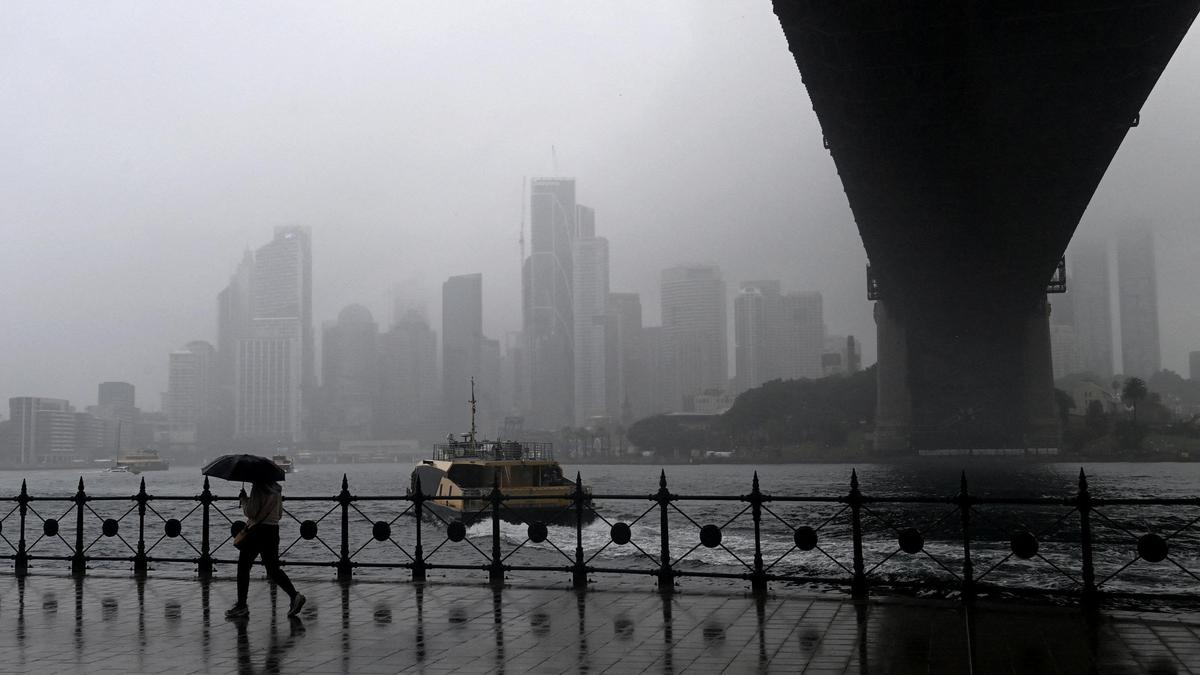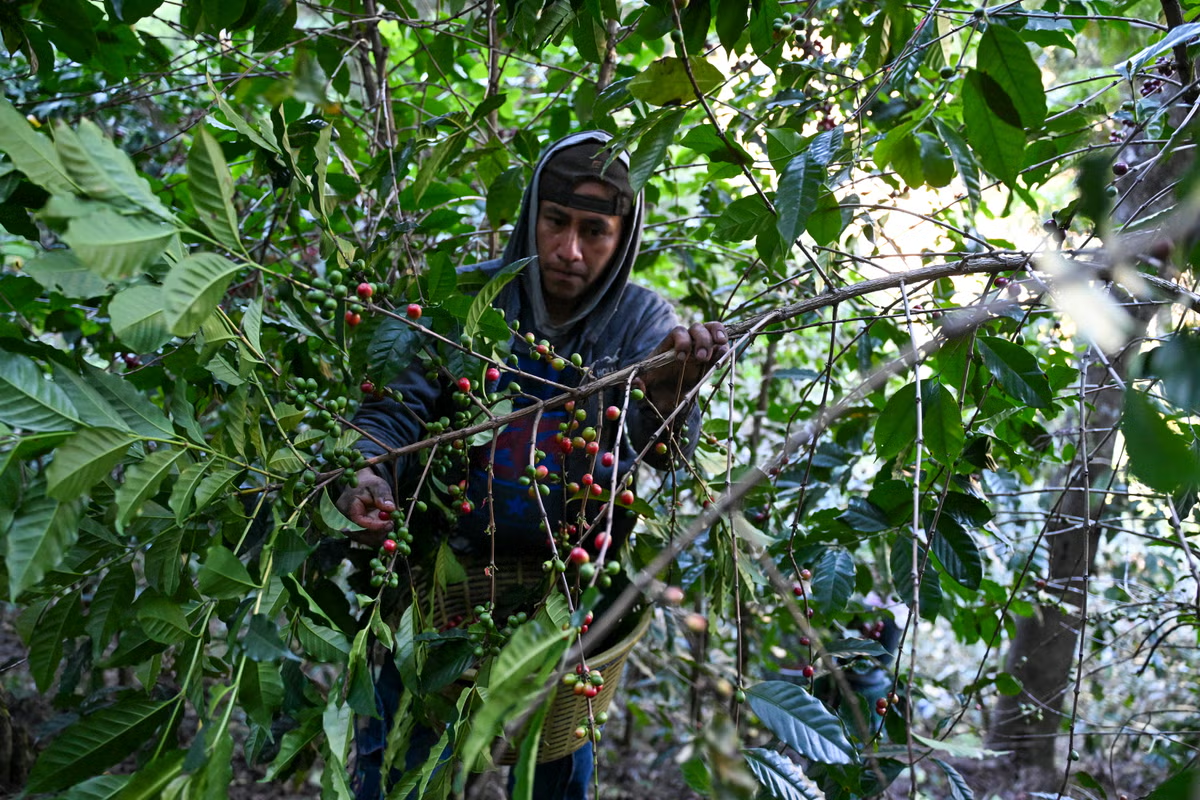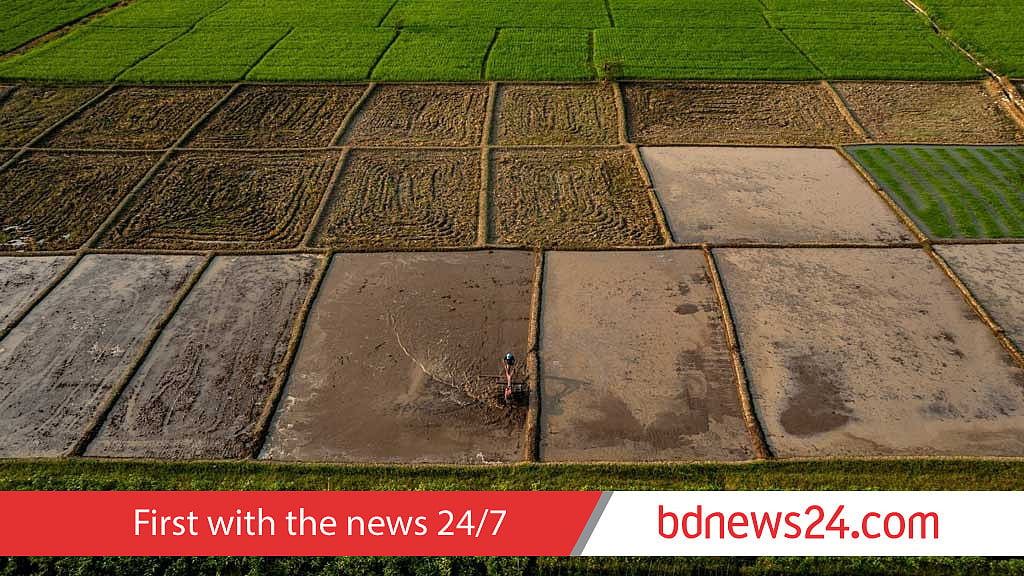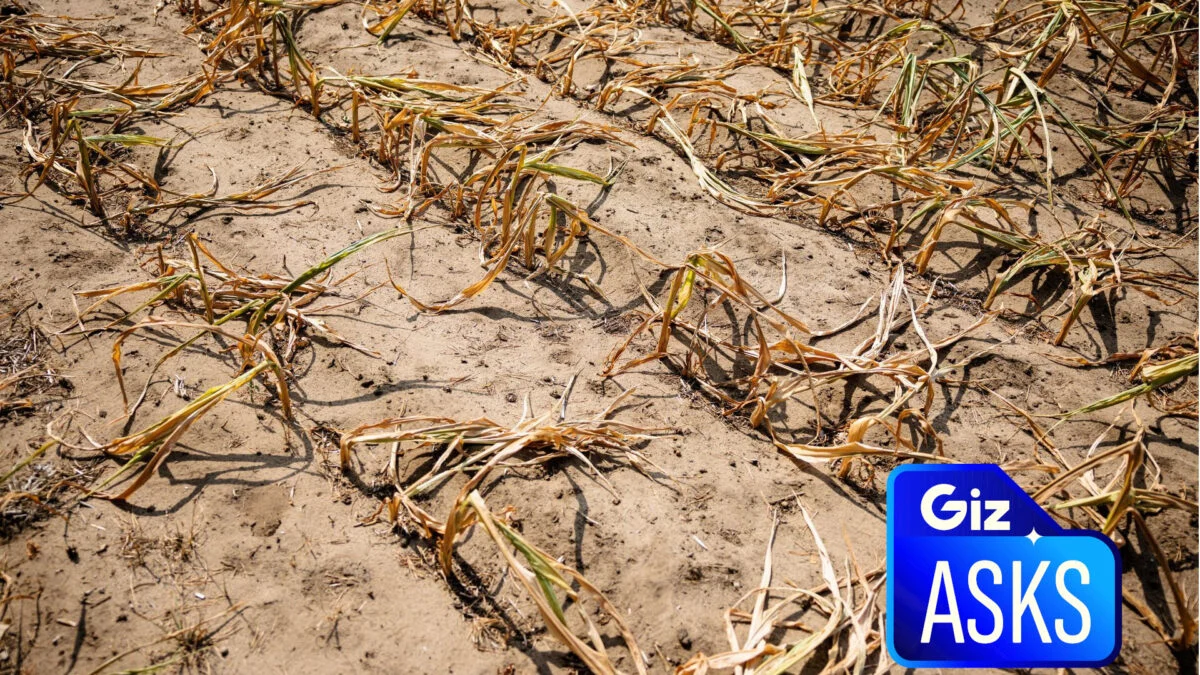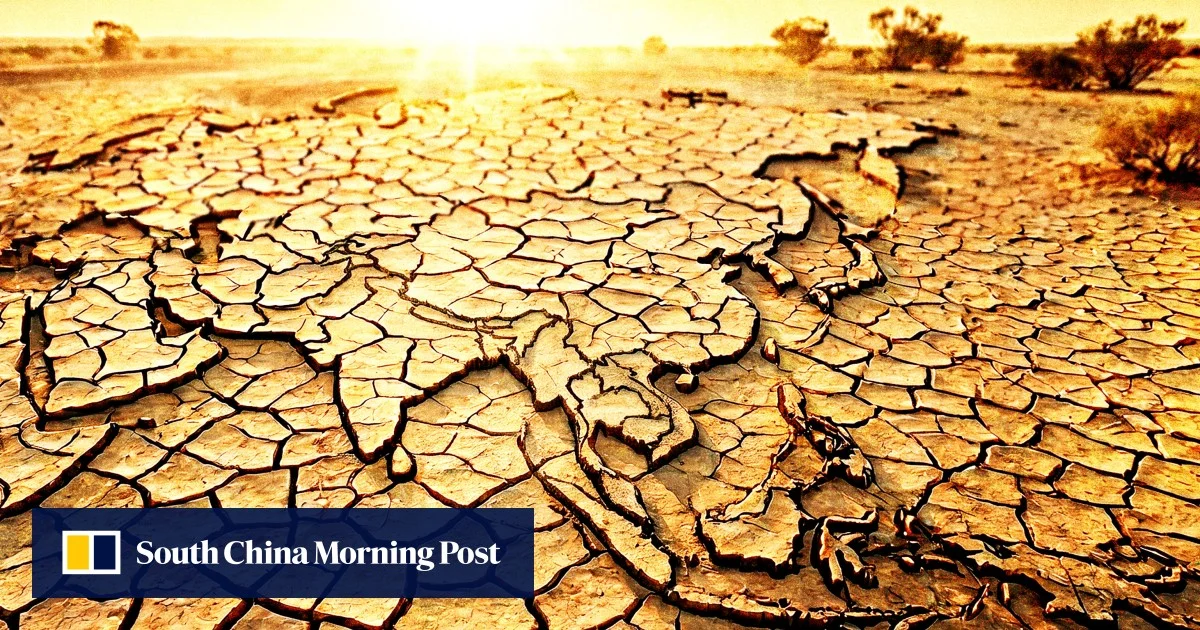
In the mist-wrapped hills of northern Thailand, where cacao trees erupt from the rich, nutrient-dense soil, three little words are spreading fear through a community of farmers.“There is no way to know for certain,” Koranut Rattanayanyong told This Week in Asia. “But it could be a total wipeout.”Earlier this month, the climate phenomenon officially started to form over the Pacific, with a bloom of ocean heat running 2.5 degrees Celsius (4.5 degrees Fahrenheit) above normal temperatures.The forecasts emanating from meteorological agencies across the world in the days since have been almost uniform in their alarm.A tropical storm forms over the Pacific Ocean on June 3. El Nino tends to intensify Asia’s tropical storms. Photo: CIRA/NOAA/APAustralia’s Bureau of Meteorology said on Tuesday that this year’s El Nino “could peak at levels among the highest observed since 1950”. Its US counterpart gave almost two in three odds that it would be “very strong”.
Asia’s shaky food supply shudders as ‘super’ El Nino arrives
Every few years, the Pacific runs a fever. This year, it could be worse than anything seen for decades, scientists warn.
TL;DRAI
El Niño reaches post-1950 peak intensity (+2.5°C anomaly), threatening widespread crop failures across Asia including Thailand cocoa supply. Supply chain volatility accelerates demand for predictive analytics and resilience planning; supply chain infrastructure becomes a critical competitive decision.
151 words~1 min read