Most startups do not ignore security because they do not care. They ignore it because the roadmap is crowded, the team is small, and every new tool feels like another monthly cost.
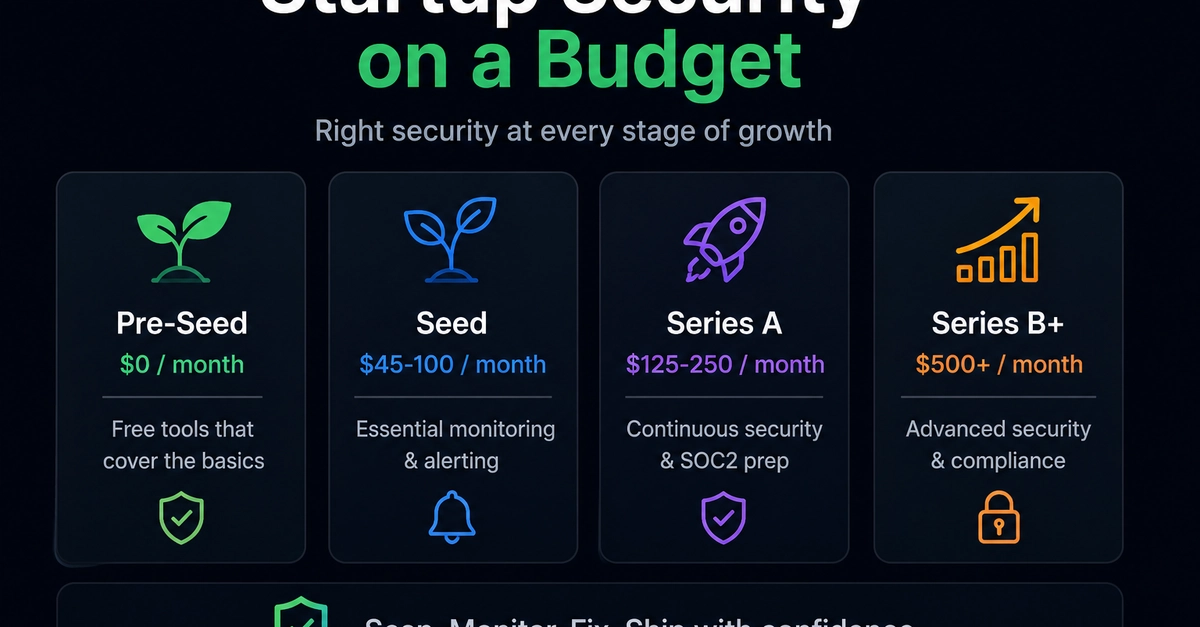
That is exactly why startup vulnerability management needs a stage-based approach. A pre-seed founder does not need the same security stack as a Series B company preparing for enterprise procurement. But every startup needs a basic way to know when its open source dependencies, secrets, and production systems create real risk.
The Startup Security Reality
Vulnerability management is the process of finding, prioritizing, fixing, and tracking security weaknesses. For startups, this usually starts with open source dependencies, leaked secrets, outdated packages, and missing security review in the release process.
The challenge is budget. A startup may not have a security engineer, compliance officer, AppSec program, or formal risk committee. The same developer building product features may also handle deployment, infrastructure, customer support, and urgent bug fixes. Security tooling has to fit that reality.